

Table of Contents
- What Your Skin Microbiome Actually Does
- Skincare Ingredients That Disrupt Skin Microbiome Balance
- Step 1: Switch to a Gentle Cleanser and Stop Over-Washing
- Step 2: Build a Gentle Skincare Routine for Sensitive Skin
- Step 3: Use Probiotic Skincare Benefits to Support Beneficial Microbes
- Step 4: Moisturize, Protect, and Limit Environmental Stressors
- How to Restore Skin Microbiome After Damage
- When to See a Dermatologist
- Frequently Asked Questions
Last Updated: October 14, 2026
What Your Skin Microbiome Actually Does
Your skin microbiome is the collection of trillions of bacteria, fungi, and other microorganisms living on your skin's surface.
At Clean Beauty by Joy, we explain it this way: your skin has its own ecosystem, and when it's balanced, your skin looks and feels better. When it's thrown off, you see redness, breakouts, and irritation.
This invisible community does three critical jobs:
- Protects your skin barrier by crowding out harmful bacteria
- Supports skin hydration by helping retain moisture
- Calms inflammation by keeping your immune response in check
The microorganisms on your skin outnumber your skin cells. They form a living shield that no serum or cream can fully replace.
The common advice to "kill all bacteria" on your skin is outdated. Current best practice is to support the good microbes while limiting the bad ones.
Skincare Ingredients That Disrupt Skin Microbiome Balance
Not every ingredient that sounds harsh actually harms your microbiome. The effect depends on concentration, pH, contact time, and how often you use it. Understanding the mechanism matters more than memorizing a blacklist.
Here's what the evidence supports:
- Antibacterial agents (triclosan, benzalkonium chloride, chlorhexidine). These are designed to kill bacteria broadly. They reduce total microbial load and can select for resistant strains. The FDA banned triclosan from consumer antiseptic washes in 2016 because manufacturers couldn't show it was safe and effective for long-term daily use, a signal that routine antibacterial cleansing isn't the neutral habit it was marketed as.
- Harsh surfactants (sodium lauryl sulfate, high-concentration sodium laureth sulfate). These strip lipids and proteins from the stratum corneum along with surface microbes. The disruption is dose-dependent: a brief rinse-off cleanser at low concentration is very different from a leave-on product or a daily foaming wash.
- High-concentration alcohols (denatured alcohol, SD alcohol 40). At high percentages in toners and astringents, they dehydrate the skin surface and can shift the microbial environment. Small amounts used as solvents in a well-formulated product are usually not a problem.
- Preservatives (parabens, phenoxyethanol, methylisothiazolinone). Preservatives are necessary to prevent pathogenic overgrowth in water-based formulas. The realistic concern is not 'preservatives kill your microbiome', it's contact dermatitis and sensitization from certain preservatives in susceptible people. Broad-spectrum preservatives at regulated levels are generally compatible with a healthy skin barrier.
- Synthetic fragrances. Fragrance mixes are a leading cause of allergic contact dermatitis. Repeated low-grade inflammation can indirectly disturb the skin environment, even if the fragrance itself isn't antimicrobial.
- Physical scrubs and high-concentration acids. Micro-tears and over-exfoliation compromise the barrier, which changes what microbes can colonize. This is a barrier problem first and a microbiome problem second.
A useful rule: rinse-off products with a short contact time have far less impact on your microbiome than leave-on products used daily. If you're trying to protect your skin microbiome, scrutinize your toner, serum, and moisturizer before you panic about your cleanser.
If you've been using several of these at once, don't try to fix it by adding more products. Strip back to a gentle cleanser, a simple moisturizer, and sunscreen, and give your skin two to four weeks to stabilize before reintroducing anything.
Step 1: Switch to a Gentle Cleanser and Stop Over-Washing
The first step to protect skin microbiome health is changing how you wash. Most people cleanse too often and with products that are too harsh.
Follow these guidelines:
- Cleanse twice daily maximum. Once in the morning and once at night is enough for most skin types.
- Use lukewarm water. Hot water strips oils and irritates your skin barrier.
- Choose a gentle cleanser. Look for fragrance-free, low-foaming formulas with a pH close to skin's natural level.
- Skip the scrub. Physical exfoliants create micro-tears that let harmful bacteria in.
- Pat dry, don't rub. Rubbing with a towel causes friction and irritation.
A common mistake is washing your face after every workout or whenever it feels oily. Each wash removes some of your beneficial microbes, and they need time to recover.
If you wear makeup, double cleansing at night is fine. Just use gentle products for both steps.
Step 2: Build a Gentle Skincare Routine for Sensitive Skin
A simple, consistent routine works better than a complicated one. This gentle skincare routine for sensitive skin focuses on supporting your skin barrier instead of attacking it.
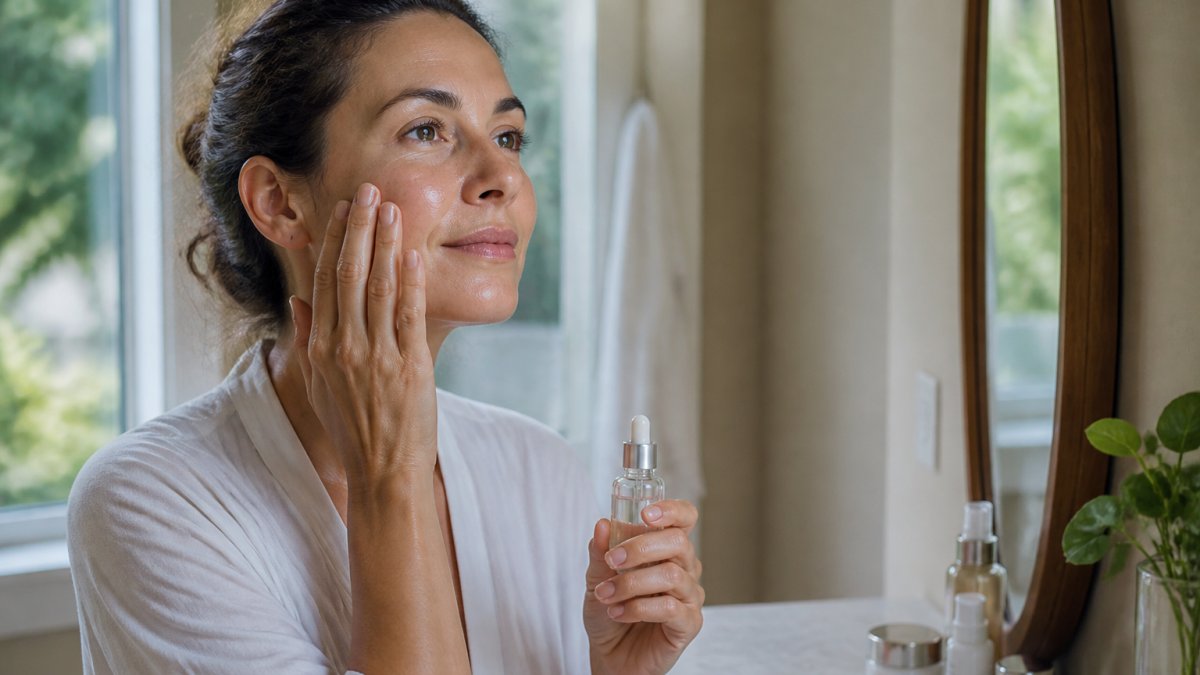
Here's what a microbiome-friendly routine looks like:
Morning:
- Rinse with lukewarm water or use a gentle cleanser
- Apply a hydrating serum or moisturizer
- Finish with sunscreen
Evening:
- Remove makeup with a gentle cleanser
- Apply a restorative serum like our Organic Radiance Serum
- Seal in moisture with a simple moisturizer
Our Organic Radiance Serum uses organic botanical oils like jojoba, rosehip seed, and black seed to nourish skin without disrupting its natural balance. It's free from parabens, synthetics, and fragrance, making it a safe choice for reactive skin.

The thing nobody tells you about sensitive skin is that fewer products often means better results. Give your skin time to adjust before adding anything new.
Step 3: Use Probiotic Skincare Benefits to Support Beneficial Microbes
Probiotic skincare is one of the most hyped and least regulated categories in the industry. Most competitors repeat the same list of ingredients without telling you what's actually proven. Here's the honest version.
What's established:
- The skin microbiome exists, varies by body site and person, and interacts with the skin barrier and immune system.
- Certain topical ingredients, notably oat extract, niacinamide, and some fermented ingredients, have been shown in small studies to support barrier function and reduce irritation.
- Prebiotics (ingredients that feed existing microbes) are more stable in formulas than live probiotics, which are difficult to keep viable in water-based products.
What's still emerging:
- Whether topical live probiotics meaningfully colonize the skin. Most evidence suggests they don't persist, they may act transiently rather than take up residence.
- Whether 'microbiome-friendly' claims translate into measurable clinical outcomes. There is no standardized test, no required disclosure, and no FDA definition for the term.
- Whether postbiotics (fermentation byproducts like lactic acid and peptides) deliver benefits through the microbiome or simply through their own direct effects on skin.
How to evaluate a product's claims:
- Look for specific strains, not just 'probiotics.' A label that names a genus and species (for example, Lactobacillus plantarum) is more credible than one that says 'probiotic complex.'
- Check whether the product is water-based or anhydrous. Live bacteria generally don't survive long in water-based formulas without special preservation.
- Be skeptical of diversity claims. No at-home test can tell you whether a product improved your skin's microbial diversity in a clinically meaningful way.
- Ignore 'balances your microbiome' as a standalone claim. Ask what measurable outcome the product is supposed to produce, less redness, better hydration, fewer flares.
Ingredients worth knowing:
- Oat extract and beta-glucan, well-studied for barrier support and soothing.
- Inulin and other prebiotic fibers, feed existing microbes; evidence is promising but not definitive.
- Fermented ingredients (galactomyces, sake, rice ferment), may provide postbiotic benefits; marketing often outpaces data.
- Niacinamide, supports barrier lipids and has a stronger evidence base than most 'microbiome' ingredients.
How to introduce and stop these products safely:
- Introduce one new product at a time, and wait at least one to two weeks before adding another.
- Patch test on your inner forearm for three nights before using on your face.
- If you develop stinging, redness, or new breakouts, stop the product, don't 'push through.'
- If you're stopping a product, you can usually stop abruptly. There is no withdrawal effect from prebiotic or probiotic skincare.
- If you're also using exfoliants or retinoids, don't start a new probiotic product in the same week. You won't be able to tell what's causing a reaction.
A common mistake is expecting overnight results. Supporting your skin microbiota takes weeks, not days. Give a new product at least four weeks before judging whether it works, and if it doesn't, stop using it rather than layering on more.
If you're pregnant or nursing, check with your doctor before trying new active ingredients. Many options are considered low-risk, but it's worth confirming with a clinician who knows your history.
Step 4: Moisturize, Protect, and Limit Environmental Stressors
Environmental factors damage your skin microbiome every day. Pollution, UV rays, and blue light from screens all take a toll.
Here's how to protect skin microbiome health from external stressors:
- Apply moisturizer daily. Hydrated skin maintains a stronger barrier and supports beneficial microbes.
- Wear sunscreen with SPF 30 or higher. UV radiation damages skin cells and disrupts microbial balance.
- Limit blue light exposure. Screen time can increase oxidative stress on your skin.
- Cleanse after being outdoors. Pollution particles settle on your skin and clog pores.
For those dealing with hormonal skin changes, whether from pregnancy, nursing, or menopause, a gentle approach matters even more. Our products are designed for these life stages, using nontoxic ingredients that support skin without harsh chemicals.
According to American Academy of Dermatology guidance on sun protection, daily sunscreen use protects against both UV damage and the inflammation that follows.
How to Restore Skin Microbiome After Damage
If you've been using harsh products or antibiotics, you can rebuild your skin microbiota. It takes patience, but the process works.
Here's how to restore skin microbiome balance:
- Stop all harsh products immediately. This includes antibacterial soaps, strong exfoliants, and high-alcohol toners.
- Simplify your routine. Use only a gentle cleanser, moisturizer, and sunscreen for two weeks.
- Add prebiotic or probiotic products. Introduce one at a time, waiting a week between new items.
- Support from the inside. Eat fermented foods and fiber, which may support skin health.
- Be patient. Visible improvement often takes four to six weeks.
Research from the National Institutes of Health on the human microbiome shows that microbial communities can recover, but the timeline varies by person.
If your skin doesn't improve after several weeks of gentle care, it may be time to get professional help.
When to See a Dermatologist
Some skin issues need medical attention beyond what home care can fix. Knowing when to seek help saves you time and prevents worsening problems.
Book an appointment with a dermatologist if you notice:
- Persistent redness or swelling that doesn't improve with gentle care
- Painful bumps or cysts that keep returning
- Signs of infection like warmth, pus, or fever
- Sudden changes in moles or skin texture
- Severe reactions to any product, including burning or blistering
A dermatologist can test for conditions like rosacea, eczema, or perioral dermatitis. These need targeted treatment that goes beyond microbiome support.
For ongoing skin conditions, your doctor may recommend prescription treatments. You can still use gentle, microbiome-friendly products alongside medical care.
Your skin's microbiome is fragile, and everyday habits can damage it without you noticing. Every product is designed for sensitive skin, including during pregnancy, nursing, and menopause.
Frequently Asked Questions
What skincare ingredients can disrupt the skin microbiome?
Harsh surfactants like sodium lauryl sulfate, high concentrations of denatured alcohol, antibacterial agents such as triclosan, and strong preservatives can reduce microbial diversity on the skin. Overusing exfoliating acids and retinoids may also strip the barrier that beneficial microbes rely on. Check labels for these ingredients and introduce active ingredients slowly, one at a time, so your skin has time to adjust.
Does probiotic skincare actually work?
Research on probiotic skincare benefits is promising but still developing. Topical probiotics and prebiotics may help support beneficial microbes, calm irritation, and strengthen the skin barrier. However, formulations vary widely, and many products do not contain live cultures. Look for products with prebiotic ingredients like oat or inulin, and treat bold marketing claims with healthy skepticism. Consult a dermatologist for persistent skin conditions.
How long does it take to restore the skin microbiome?
There is no fixed timeline, and how long it takes depends on what caused the disruption. If you stop harsh products and switch to a gentle routine, many people notice reduced irritation and improved comfort within two to four weeks. Full microbial balance may take longer. Consistency matters more than speed: stick with gentle cleansing, moisturizing, and sun protection daily.
Can over-cleansing damage the skin microbiome?
Yes. Cleansing more than twice a day, using hot water, or reaching for antibacterial soaps can strip oils and remove beneficial microbes along with dirt. This often leads to dryness, redness, and sensitivity. A gentle, fragrance-free cleanser used once in the morning and once at night is enough for most people to protect skin microbiome balance without over-washing.

