

Table of Contents
- Is Nontoxic Makeup for Pregnancy Actually Worth It?
- Makeup Ingredients to Avoid During Pregnancy
- What Pregnancy-Safe Makeup Actually Means
- Pregnancy-Safe Foundation and Complexion Products
- Nontoxic Makeup Brands and Price Reality
- The Real Difference: Conventional vs. Nontoxic Makeup
- Making Your Decision: Risk Tolerance and Budget
- Frequently Asked Questions
Last Updated: October 11, 2026
Is Nontoxic Makeup for Pregnancy Actually Worth It?
The short answer: it depends on your risk tolerance, budget, and how much ingredient transparency matters to you. Many pregnant women worry about topical exposure to chemicals during pregnancy, but the science is more nuanced than marketing claims suggest. At Clean Beauty by Joy, we help expectant mothers navigate this decision without fear-based marketing or oversimplified answers.
Nontoxic makeup for pregnancy worth it isn't a simple yes or no. Some ingredients genuinely warrant caution during pregnancy. Others are safe at typical topical exposure levels, but switching to pregnancy-safe alternatives gives peace of mind. The real question isn't whether you must switch, it's whether the performance, ingredient transparency, and skin benefits justify the cost difference.
Here's what matters: pregnancy changes your skin. Hormonal shifts trigger sensitivity, dryness, melasma, and acne. Conventional makeup may irritate already-reactive skin. Pregnancy-safe formulations often include soothing botanicals and skin-supporting ingredients that address these changes, not just avoid certain chemicals. That's where the value lives.
Below, we'll break down which ingredients deserve your attention, what "pregnancy-safe" actually means, and whether switching is worth your money and effort.
Decision Factor |
Conventional Makeup |
Nontoxic Pregnancy-Safe Makeup |
|---|---|---|
Ingredient transparency |
Limited; proprietary blends common |
Full disclosure; botanical-based |
Skin reactivity during pregnancy |
Often triggers sensitivity |
Formulated for hormonal skin changes |
Typical price point |
$8-$18 per product |
$18-$46 per product |
Performance |
Reliable; designed for durability |
Comparable; often with added skin benefits |
Peace of mind |
Variable; depends on research comfort |
High; third-party ingredient review |
Best for |
Budget-conscious; stable skin |
Sensitive skin; ingredient-conscious; pregnancy peace of mind |
Makeup Ingredients to Avoid During Pregnancy
Not every conventional makeup ingredient poses a risk. But some warrant discussion with your healthcare provider, especially if you use them daily across multiple products.
Chemicals That Cross the Placental Barrier
Certain chemicals absorb through skin at higher rates than others. The ones most discussed during pregnancy are retinoids, salicylic acid, and specific preservatives. Retinoids (vitamin A derivatives) are well-documented to carry risk at high oral doses during pregnancy, though topical exposure is lower. Salicylic acid, a common acne treatment, absorbs systemically at high concentrations, less of a concern in light makeup use, but worth minimizing during pregnancy if you're already using it in cleansers or treatments.
Parabens and phthalates appear in many conventional foundations and mascaras. These endocrine disruptors mimic hormones in the body. Topical exposure levels are typically low, but during pregnancy, when hormone levels are already elevated, many women prefer to eliminate unnecessary exposure. The same applies to triclosan, an antimicrobial found in some makeup primers and long-wear formulas.
Hormone Disruptors and Why They Matter
Phthalates soften plastics and extend fragrance in cosmetics. They're not always listed on labels, "fragrance" is a catch-all term that can hide phthalate content. During pregnancy, when your body is already managing complex hormonal shifts, avoiding known endocrine disruptors makes practical sense, even if the topical dose is technically small.
Oxybenzone and avobenzone, UV filters in some makeup primers and tinted moisturizers, absorb through skin and appear in bloodstream samples. They're not banned in makeup, but many pregnancy-focused dermatologists recommend mineral sunscreens (zinc oxide, titanium dioxide) instead. These sit on skin rather than absorbing, making them a safer choice during pregnancy.
The evidence isn't that these chemicals will harm your baby at makeup-level exposure. Rather, it's that safer alternatives exist, so why not use them?
What Pregnancy-Safe Makeup Actually Means
"Pregnancy-safe" is a marketing term, not a regulated category. It typically means the product avoids known risk ingredients and emphasizes ingredient transparency. True pregnancy-safe makeup should list every ingredient clearly, avoid synthetic fragrances, and exclude parabens, phthalates, retinoids, salicylic acid, and high-concentration chemical sunscreens.
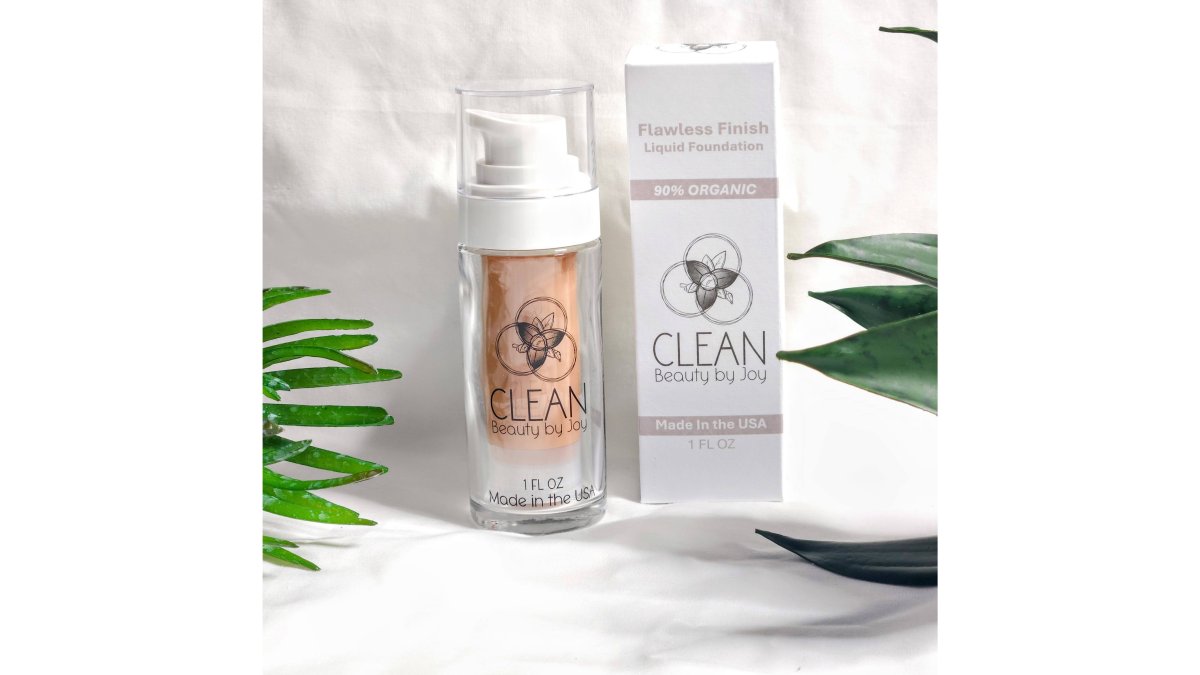
Clean Beauty by Joy's approach goes further. Our formulations support your skin's healthy microbiome. We use organic botanical extracts, chamomile, rosemary, green tea, that calm inflammation rather than irritate. Our Flawless Finish Liquid Foundation includes aloe vera and glycerin, ingredients that hydrate hormonal skin changes instead of sitting on top of them.
Pregnancy-safe doesn't mean less effective. It means formulated with pregnancy in mind: no unnecessary chemicals, full transparency, and active ingredients that restore rather than just cover.
Pregnancy-Safe Foundation and Complexion Products
Foundation is your most important makeup choice during pregnancy. You wear it daily, across large facial surface area, and it sits on skin for hours. If you're going to switch anything, start here.

Why Foundation Matters Most
Conventional foundations often contain silicones, talc, and synthetic fragrances designed for long wear and oil control, not for pregnancy skin. Pregnancy hormones increase oil production in some areas and dryness in others, creating unpredictable skin. Silicone-heavy foundations trap moisture and bacteria, worsening acne. Talc carries contamination risks if not carefully processed.
Pregnancy-safe foundations address this. The Flawless Finish Liquid Foundation from Clean Beauty by Joy includes zinc oxide to protect your skin from the sun and glycerin to reduce the appearance of fine lines and wrinkles. Ten shade options in cool, warm, and neutral undertones mean you're not forced into a one-size-fits-all match.
Coverage, Wear Time, and Skin Health
You don't have to sacrifice coverage for safety. Pregnancy-safe foundations deliver buildable coverage, sheer with one pump, medium with two, full with three. This flexibility means you control how much product touches your skin daily, reducing cumulative exposure.
Wear time matters differently during pregnancy. Your skin temperature fluctuates. Sweat increases. Conventional long-wear formulas often contain volatile silicones that feel uncomfortable as your skin changes. Pregnancy-safe formulas prioritize comfort over extreme durability. The Flawless Finish stays put through a normal day without feeling heavy or triggering heat sensitivity.
The real difference: conventional foundations are engineered for everyone. Pregnancy-safe foundations are engineered for skin that's actively changing. That specificity is where the value lives.
Nontoxic Makeup Brands and Price Reality
Switching to pregnancy-safe makeup costs more upfront. A conventional foundation runs $8-$18. Pregnancy-safe options typically start at $30-$50. Over nine months of pregnancy, that's a meaningful difference. But cost-per-use tells a different story.
Clean Beauty by Joy: Performance Without Compromise
Our Flawless Finish Liquid Foundation costs $46.
What you get: ten shades, full ingredient transparency, formulation designed for hormonal skin changes, and ingredients that restore your skin barrier rather than compromise it. The foundation includes aloe vera to heal, glycerin to hydrate, and zinc oxide for sun protection. You're not paying for marketing. You're paying for formulation specificity.
Our Ultra-Lush Lashes Mascara ($21) includes chamomile hydrosol, a natural anti-inflammatory perfect for pregnancy-sensitive eyes. The Baked Mineral Eye Shadow Trio ($26) uses jojoba and safflower seed oils. The One Organic Lipstick ($22) combines organic castor seed oil and shea butter for nourishment without synthetic fragrances.

Cost-Per-Use and Long-Term Value
Many pregnant women also find they prefer pregnancy-safe products after birth and during breastfeeding.
The Real Difference: Conventional vs. Nontoxic Makeup
The gap between conventional and pregnancy-safe makeup comes down to two factors: ingredient selection and skin support.
Topical Exposure and Absorption Rates
Conventional makeup sits on skin. Pregnancy-safe makeup works with skin. The difference matters because pregnancy increases skin permeability.
A conventional foundation with parabens and phthalates at typical topical exposure levels poses minimal risk. But "minimal" isn't zero, and during pregnancy, many women reasonably choose to eliminate that exposure entirely. Pregnancy-safe formulas use alternative preservatives like grapefruit seed extract and plant-based antimicrobials.
The same logic applies to fragrance. Conventional makeup often lists "fragrance" as a catch-all. You don't know what's in it. Pregnancy-safe makeup discloses every ingredient. That transparency alone is worth something, it's peace of mind, which matters during pregnancy.
Ingredient Transparency and Third-Party Testing
Clean Beauty by Joy publishes every ingredient on our product pages. No proprietary blends. No hidden fragrance compounds. You can research each ingredient individually if you want to. That's the standard pregnancy-safe brands maintain.
Many conventional brands don't offer that level of transparency. They're not hiding anything illegal, they're just using industry-standard opacity around fragrance and preservative systems. During pregnancy, when you're already anxious about what you're exposing your baby to, that opacity feels risky even if it isn't.
Third-party testing adds another layer. Some pregnancy-safe brands pursue certifications (Leaping Bunny for cruelty-free, NSF for ingredient verification). Clean Beauty by Joy is Leaping Bunny certified and made in the USA with rigorous quality control.
Making Your Decision: Risk Tolerance and Budget
Here's the honest framework: nontoxic makeup for pregnancy worth it depends on three variables: your risk tolerance, your budget, and how much your skin is changing.
High risk tolerance + tight budget: Stick with conventional makeup. The evidence doesn't show harm at typical topical exposure levels. If your skin is stable, conventional products work fine. You're paying for peace of mind with pregnancy-safe brands, not preventing a known danger.
Moderate risk tolerance + flexible budget: Switch foundation and daily-wear products. Foundation is your largest topical exposure. Switching just that product eliminates most of the ingredient concern. Skip the premium eyeshadow and mascara if budget is tight. The difference there is smaller.
Low risk tolerance + flexible budget: Go full pregnancy-safe. It's not excessive. Many women find pregnancy-safe products perform better on hormonal skin anyway. You're not compromising quality. You're gaining transparency and formulations designed for your skin's current state.
Skin reactivity during pregnancy: This is the real decider. If pregnancy triggered acne, sensitivity, or melasma, pregnancy-safe makeup is practical. Pregnancy-safe formulas with soothing botanicals and skin-supporting ingredients actively help.
The Flawless Finish Liquid Foundation works for all three groups because it delivers on performance and ingredient safety. You're not sacrificing coverage or wear time. You're getting a foundation that addresses pregnancy skin changes specifically.
Switching to pregnancy-safe makeup during pregnancy isn't about fear. If ingredient transparency matters to you, if your skin is reacting to hormonal changes, or if you want formulations designed for your current skin state, pregnancy-safe makeup is worth the investment.
Frequently Asked Questions
What makeup ingredients should you avoid during pregnancy?
Avoid retinoids, salicylic acid, benzoyl peroxide, high-concentration vitamin A derivatives, and products containing phthalates, parabens, oxybenzone, triclosan, and phenols. These ingredients have been linked to potential reproductive or developmental concerns. Nontoxic makeup formulations eliminate these compounds, replacing them with natural botanicals and organic alternatives that deliver color and coverage without the risk.
Is nontoxic makeup for pregnancy worth the extra cost?
Yes, if you're concerned about chemical exposure during pregnancy. Nontoxic options like Clean Beauty by Joy's Flawless Finish Liquid Foundation ($46) cost more upfront but offer peace of mind, better ingredient transparency, and often superior skin health benefits.
How can I tell if makeup is truly pregnancy-safe?
Look for third-party certifications like Leaping Bunny (cruelty-free), which indicate rigorous testing. Check the full ingredient list for banned chemicals and research each ingredient independently. Brands like Clean Beauty by Joy publish complete ingredient transparency and are made in the USA under strict standards. If a brand won't disclose ingredients or hides behind vague terms like 'natural fragrance,' that's a red flag.
Do I need to replace all my makeup when I get pregnant?
Not necessarily. Focus on products that contact your skin directly and remain on your face longest: foundation, primers, and lip products. Eyeshadow, mascara, and blush pose lower risk if formulated without the most harmful chemicals. Many pregnant women keep their existing makeup for occasional use while switching their daily staples to pregnancy-safe alternatives. This staged approach reduces cost while addressing the highest-exposure products first.
What makes Clean Beauty by Joy's nontoxic makeup different?
Clean Beauty by Joy formulates with organic botanicals and ingredients that support your skin's microbiome, not just avoid harmful chemicals. Products like the Ultra-Lush Lashes Mascara ($21) include chamomile hydrosol for sensitive skin, while the Flawless Finish Liquid Foundation ($46) contains aloe vera and glycerin for hydration. Our makeup is made in the USA, vegan, gluten-free, and designed specifically for pregnant, nursing, and hormonally sensitive skin.

