

Table of Contents
- What "Nontoxic Makeup Without Parabens and Phthalates" Actually Means
- Where the Word "Nontoxic" Stops Being Useful
- Why Parabens and Phthalates Top the Avoid List
- How to Read a Paraben-Free Makeup Label Without Getting Fooled
- Phthalate-Free Makeup: What to Check Before You Buy
- EWG Verified Makeup and Other Third-Party Checks Worth Trusting
- Nontoxic Makeup Brands: What Separates a Real One From a Label
- Building a Full Face Without Parabens or Phthalates
- Frequently Asked Questions
Last Updated: October 12, 2026
What "Nontoxic Makeup Without Parabens and Phthalates" Actually Means
Nontoxic makeup without parabens and phthalates is makeup formulated to leave out two specific preservative and plasticizer chemical families, and to reduce overall exposure to ingredients that raise health questions.
Here's the uncomfortable truth: "nontoxic" is not a regulated term in cosmetics. No federal agency approves it, defines it, or enforces it. A brand can print it on a label tomorrow without proving a single thing.
This guide breaks down what parabens and phthalates actually are, how to read a label without getting fooled, which third-party verifications are worth trusting, and how to build a full face that performs.
Where the Word "Nontoxic" Stops Being Useful
Nontoxic describes a product formulated without ingredients linked to health concerns, but the term carries no legal definition in cosmetics. It's a marketing claim, not a safety certification.
That distinction matters more than most shoppers realize. The FDA's guidance on cosmetics labeling explains that the agency does not pre-approve cosmetic ingredients or products before they hit shelves, with the exception of color additives. So when a label says "nontoxic," nobody verified it.
What you can verify:
- The full ingredient list, printed in descending order of concentration
- Third-party certifications like EWG Verified or Leaping Bunny
- Whether the brand publishes an exclusion list and sticks to it
What you can't verify:
- A vague "clean" badge the brand designed itself
- "Chemical-free" (water is a chemical, so this is nonsense)
- "Doctor-approved" with no doctor named
A common mistake is trusting the front of the package. The back tells the real story.
Why Parabens and Phthalates Top the Avoid List
Parabens and phthalates earn their reputation because of how they behave in the body, not because of a single scary headline. Both are associated with hormone-related concerns, which is why pregnant, nursing, and menopausal women ask about them first.
Parabens: What the Research Does and Doesn't Show
Parabens are preservatives that stop bacteria and mold from growing in water-based products. They're effective and cheap, which is why they became ubiquitous.
The concern centers on endocrine activity. Some research suggests parabens can mimic estrogen in the body, and they've been detected in breast tissue samples in published studies. What that research does not show is a direct cause-and-effect link between paraben use in cosmetics and disease.
For anyone who wants to reduce exposure during pregnancy or nursing, avoiding parabens is a reasonable, low-cost choice. You'll see them listed as methylparaben, propylparaben, butylparaben, and ethylparaben.
Phthalates Hide Behind One Word: "Fragrance"
Phthalates are used to make fragrances last longer and to keep formulas flexible. The problem is that they rarely appear by name.
Under current labeling rules, a brand can list "fragrance" or "parfum" and legally conceal the dozens of compounds inside that word, phthalates included. This is the single biggest loophole in clean beauty. You can buy a product labeled "phthalate-free" and still be exposed if the fragrance is undisclosed.
The practical takeaway: fragrance-free beats "phthalate-free" every time. Look for products that list no fragrance at all, or that disclose every aromatic ingredient by name.
How to Read a Paraben-Free Makeup Label Without Getting Fooled
A paraben-free label only means the four common parabens are absent. It says nothing about phthalates, sulfates, or synthetic fragrance. Read the full list, not the claim.
Here's the two-minute screening method we recommend:
- Scan for the paraben family. Methyl-, ethyl-, propyl-, butyl-, and isobutylparaben. If none appear, the paraben claim holds.
- Check for "fragrance" or "parfum." This is where phthalates hide. No fragrance listing means no hidden phthalate carrier.
- Look for sulfates. Sodium lauryl sulfate and sodium laureth sulfate, common in cleansers and some mascaras.
- Check for mineral oil and petrolatum. These are occlusive, meaning they sit on top of skin rather than supporting it.
- Confirm the preservative system. A truly paraben-free product still needs preservation. Look for what replaced it, such as vitamin E, rosemary extract, or oregano leaf extract.
That last point trips people up. Some "paraben-free" products swapped in preservatives with their own question marks. A clean formula replaces parabens with plant-derived antioxidants, not with something worse.
| Red Flag on Label | What It Usually Means | What to Look For Instead |
|---|---|---|
| "Fragrance" or "parfum" | Undisclosed compounds, possible phthalates | Fragrance-free or fully disclosed botanicals |
| Methylparaben, propylparaben | Paraben family preservative | Vitamin E, rosemary extract |
| "Chemical-free" claim | Unenforceable marketing term | Full ingredient list |
| Mineral oil near top of list | Occlusive, sits on skin surface | Jojoba, squalane, shea butter |
| No preservative listed at all | Risk of bacterial growth | Plant-derived preservation system |
Phthalate-Free Makeup: What to Check Before You Buy
Phthalate-free makeup is makeup with no phthalates added, but the claim is only meaningful when the fragrance is also disclosed or absent. Otherwise the label can't back it up.
Where to look first:
- Lip products. You ingest trace amounts, so this is the highest-priority category.
- Anything scented. Fragrance is the primary carrier.
- Pressed powders. Binders and fragrance carriers are common here.
If a product is genuinely phthalate-free and proud of it, the brand will say how they know. That usually means a supplier statement or a third-party test. Vague reassurance isn't verification.
EWG Verified Makeup and Other Third-Party Checks Worth Trusting
EWG Verified makeup carries a mark from the Environmental Working Group, which screens products against its own ingredient database and restricts ingredients of concern.
Other marks worth knowing:
- Leaping Bunny certifies no animal testing anywhere in the supply chain. It says nothing about ingredient safety, but it's rigorously audited.
- USDA Organic means agricultural ingredients meet organic standards. It doesn't cover the whole formula.
- Vegan means no animal-derived ingredients. Again, not a safety claim.
The pattern here matters: most certifications verify one thing well. EWG Verified covers ingredient screening. Leaping Bunny covers animal testing. Neither is a general "safe" stamp, and brands that imply otherwise are stretching.
For a deeper look at how ingredient databases score products, the Environmental Working Group's Skin Deep database lets you search individual ingredients and see their hazard ratings. It's a useful starting point, not a final verdict.
Nontoxic Makeup Brands: What Separates a Real One From a Label
Nontoxic makeup brands differ from "clean" pretenders in one measurable way: they publish a written exclusion list and hold to it over time. Everything else is packaging.
Here's what to check before you trust a brand:
- A published exclusion list. Not just "we avoid parabens," but a full list of what's banned from every formula.
- Full ingredient disclosure. Every product, every shade, listed on the site, not just on request.
- Consistency across the line. A brand that's clean in foundation but uses fragrance in lip gloss isn't clean. It's selective.
- Willingness to answer. Ask about a specific ingredient. Real brands respond with specifics.
Where most guides miss the mark is treating "nontoxic" as binary. It isn't. It's a spectrum, and the useful question is how far a brand goes and whether they can prove it.
This is the standard we hold ourselves to at Clean Beauty by Joy. Our Leaping Bunny certification standards align with cruelty-free verification we can point to, and our products are made in the USA.
Building a Full Face Without Parabens or Phthalates
You can build a complete routine without parabens or phthalates, and it doesn't require sacrificing coverage or wear time. The key is choosing products with disclosed ingredients at every layer, from primer to lip.
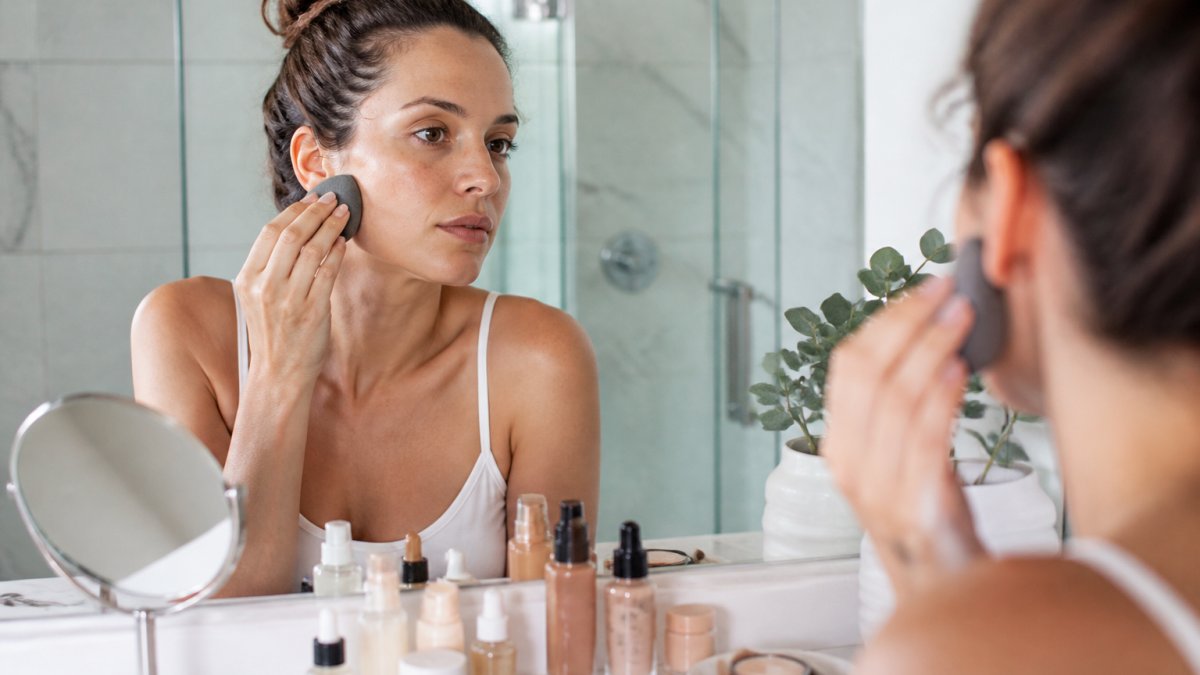
Start with the base, because foundation covers the most skin and stays on longest. Then work outward to eyes and lips, where sensitive skin tends to react first.
Foundation and Primer: The Base Layer
The base layer does the most work, so it deserves the most scrutiny. A primer protects skin from environmental stressors, and a foundation should even tone without clogging pores.
Our Pro Prep Face Primer ($37) is refillable, which cuts packaging waste and cost over time.
For coverage, our Flawless Finish Liquid Foundation ($46) comes in eight shades across cool, warm, and neutral undertones. It's buildable, so you can go sheer with one pump or full with three. Aloe vera, glycerin, and zinc oxide round out the formula, and it's 90% organic.
Eyes and Lips: Where Sensitive Skin Reacts First
Eyes and lips are thinner-skinned and more reactive, so this is where ingredient quality shows up fastest.
For eyes, our Ultra-Lush Lashes Mascara ($21) uses chamomile hydrosol, a natural anti-inflammatory, which makes it a fit for sensitive eyes prone to irritation and watering.
For lips, our The One Organic Lipstick ($22) is built on organic castor seed oil, candelilla wax, and shea butter, in seven shades from Ballet Slippers to Red Poppies.

If you want to start with skincare underneath, our Organic Radiance Serum ($65) is free from parabens, synthetics, and fragrance, and it's formulated to support a healthy skin microbiome.
| Product | Price | Best For | Key Ingredients |
|---|---|---|---|
| Pro Prep Face Primer | $37 | Blue light protection, smooth base | Aloe vera, jojoba oil, vitamin E |
| Flawless Finish Foundation | $46 | Buildable coverage, eight shades | Aloe vera, glycerin, zinc oxide |
| Ultra-Lush Lashes Mascara | $21 | Sensitive eyes | Chamomile hydrosol |
| Baked Mineral Eye Shadow Trio | $26 | Long-wear eye color | Jojoba, safflower, green tea |
| Define & Sculpt Eyebrow Pomade | $22 | Defined brows | Castor oil, candelilla wax |
| The One Organic Lipstick | $22 | Creamy lip color | Castor seed oil, shea butter |
| Vanilla Bean Lip Glaze | $18 | Glossy, hydrating finish | Shea butter, jojoba, aloe |
| Organic Radiance Serum | $65 | Skin barrier support | Black seed, rosehip, frankincense |
The hardest part of clean beauty isn't finding products. It's finding products that are genuinely clean and still perform.
Frequently Asked Questions
How can you tell if makeup contains parabens or phthalates?
Read the full ingredient list, not the front label. Parabens appear as methylparaben, propylparaben, butylparaben, or ethylparaben. Phthalates rarely appear by name; they hide inside the catch-all term "fragrance" or "parfum," and occasionally show up as diethyl phthalate (DEP) or dibutyl phthalate (DBP). A product that lists fragrance without disclosing what is in it cannot be confirmed phthalate-free. Look for brands that publish complete ingredient lists and state their exclusion policy in writing.
Are products labeled clean or natural always free of phthalates?
No. "Clean" and "natural" are marketing terms with no legal definition in the United States, so a product can carry either label and still contain phthalates hidden in a fragrance blend. The only reliable signals are a published full ingredient list, an explicit phthalate-free and paraben-free claim, and third-party verification such as EWG Verified or Leaping Bunny certification. Treat the front of the package as advertising and the back as evidence.
What ingredients replace parabens in paraben-free makeup?
Formulators typically swap parabens for phenoxyethanol, sodium benzoate, potassium sorbate, or natural preservative systems built from rosemary, oregano, thyme, and goldenseal extracts. Some brands reduce water content so less preservation is needed. None of these replacements are automatically safer or riskier than parabens; what matters is the full formula and whether it is preserved well enough to stay stable. A preservative-free water-based product is a bigger concern than a well-preserved one.
How do you choose nontoxic makeup without parabens or phthalates for sensitive skin?
Start with fewer products and patch test one at a time. Choose formulas with short, fully disclosed ingredient lists and no undisclosed fragrance. Look for soothing ingredients such as aloe, chamomile, shea butter, and jojoba oil, which appear in products like the Flawless Finish Liquid Foundation and Ultra-Lush Lashes Mascara. Avoid layering several new products at once, and give each one a week before adding the next so you can identify what caused a reaction.

