

Last Updated: November 7, 2026
Quick Summary
Botanical ingredients support hormonal skin by delivering antioxidant defense, barrier hydration, inflammation calming, and support for tone and texture. Match plant extracts to your skin stage, since the same botanical can help at one stage and cause congestion at another. Patch test every new product for 24 to 48 hours before use.
- Botanical extracts are projected to account for 34% of natural cosmetic ingredient revenue in 2026.
- A 2024 Cosmetics study found a botanical blend raised skin FRAP by 21.9% and moisturization by 9.5%.
- Soy isoflavones are the one botanical with a published ingredient-specific link to postmenopausal skin.
- Patch test new products on your inner forearm for 24 to 48 hours before using them on your face.
- Apply four to five drops of Organic Radiance Serum to clean, damp skin morning and night.
Table of Contents
- Why Hormonal Skin Needs a Different Approach
- Botanical Extracts Benefits for Changing Skin
- Botanical Extracts for Face: Matching Plants to Your Skin Stage
- Plant Extract Examples That Earn Their Place
- Pure Plant Extracts for Menopausal Skin
- Safety First: Allergies, Irritation, and Patch Testing
- Building a Botanical Routine for Hormonal Skin
- Choosing Your Botanical Serum for Hormonal Skin
- Frequently Asked Questions
Why Hormonal Skin Needs a Different Approach
Hormonal skin is skin whose behavior shifts with the rise and fall of estrogen, progesterone, and testosterone, and it rarely responds to the same routine twice. For a deeper look at how natural and chemical moisturizers compare for menopausal skin, see our natural moisturizer vs chemical cream for menopause comparison. Botanical extracts are projected to account for 34% of natural cosmetic ingredient revenue in 2026, according to Persistence Market Research's natural cosmetic ingredients forecast, largely because of their antioxidant and soothing properties. At Clean Beauty by Joy, we hear from pregnant, nursing, and menopausal customers who have cycled through product after product looking for something their skin will tolerate.
How Hormones Reshape the Skin Barrier
Estrogen supports the skin barrier by helping maintain moisture retention and structural proteins, so when levels fall, skin often becomes drier, thinner, and more reactive. That drop shows up as increased transepidermal water loss (TEWL), the steady escape of water through the outer layer. A 2009 review in the Journal of Drugs in Dermatology notes that soy appears to be a safe and effective treatment for postmenopausal women and for certain hyperpigmentation disorders, which is one of the few ingredient-specific findings tied directly to hormonal skin. For readers who want a fuller explanation of why menopause brings itch and tightness, our breakdown of why menopause causes itchy skin walks through the barrier mechanics.
Botanical Extracts Benefits for Changing Skin
The core benefits of botanical ingredients for hormonal skin come down to four functions: antioxidant defense, barrier hydration, inflammation calming, and support for tone and texture. Botanical extracts are concentrated preparations of plant material valued for phytochemicals, the naturally occurring compounds that give plants their color and defensive properties. A 2024 study in Cosmetics reported that a specific botanical extract blend raised skin FRAP by 21.9%, moisturization by 9.5%, and radiance by 24.9%, while reducing wrinkles. Note what that study does not show: it was not conducted on hormonally changing skin, so treat the numbers as evidence the category can work, not proof it will work for you.
Botanical Extracts for Face: Matching Plants to Your Skin Stage
A botanical extracts for face routine should match the stage your skin is in, not the stage a marketing page assumes. Hormonal skin changes across the full lifespan, and the same plant extract can be the right call at one stage and the wrong call at another. Most guides skip straight to menopause; the more useful approach is to walk the whole timeline, because the mechanism driving your breakouts at 16 is not the mechanism driving your tightness at 52.
Puberty and the Teen Years
Rising androgen levels enlarge the sebaceous glands and increase sebum output, which is why puberty brings oily skin, clogged pores, and inflammatory acne rather than dryness. The botanical focus here is oil-balancing and soothing, not rich nourishment. Look for lightweight gels or lotions built on aloe vera, green tea, and niacinamide-rich botanicals rather than heavy plant butters. Chamomile and calendula help calm the redness around active breakouts. Watch out: occlusive oils like coconut and wheat germ can worsen congestion in acne-prone teenage skin, so patch test on the jawline before committing to a full-face oil.
The Menstrual Cycle
Estrogen peaks around ovulation and then falls in the luteal phase, and many people notice their skin shifts with it, oilier and more breakout-prone in the week before menstruation, calmer mid-cycle. A stage-matched routine can flex with that rhythm: keep a gentle salicylic or clay-based cleanser on hand for the luteal week, and lean on soothing chamomile, calendula, and aloe when reactivity spikes. Jojoba is a useful year-round base because its structure closely resembles sebum, so it conditions without overloading pores. Track your skin for two cycles before adding products; most people find the pattern is more predictable than they expected.
Pregnancy and Nursing
The priority during pregnancy and nursing is a short, fragrance-free ingredient list and gentle hydration. Hormonal shifts in pregnancy can bring melasma, increased sensitivity, and unpredictable breakouts, and the safety margin for what you put on your skin narrows. Stick to well-studied, low-irritation botanicals, aloe vera, jojoba, rosehip seed oil, chamomile, and calendula, and avoid essential-oil-heavy formulas, high-concentration exfoliating acids, and anything with a strong fragrance. Bring your full ingredient list to your doctor or midwife rather than relying on a brand's marketing, and introduce one new product at a time so a reaction is easy to trace.
Perimenopause
As estrogen begins its irregular decline, natural oil production drops, transepidermal water loss rises, and skin becomes drier, thinner, and more reactive. Barrier repair and antioxidant support matter more than oil control now. Rosehip seed oil, squalane, and aloe support moisture retention; frankincense and helichrysum are used in firming formulas; and antioxidant-rich botanicals help defend against environmental stress that thinner skin tolerates less well. This is also the stage when adult acne can reappear alongside dryness, a frustrating combination that calls for gentle, non-stripping cleansing and a lightweight botanical serum rather than a heavy cream.
Menopause
In menopause, richer plant oils and soothing extracts help offset dryness and reactivity. Estrogen's support for moisture retention and structural proteins is largely gone, so the routine should lean on barrier-replenishing oils, jojoba, rosehip, black seed, and soothing extracts like blue tansy and black spruce to calm redness. Soy isoflavones are the one botanical with a published ingredient-specific link to postmenopausal skin and certain hyperpigmentation disorders.
The high-end botanical herbal skin care market was valued at $9.54 billion in 2025 and is projected to reach $20.24 billion by 2034, per Dataintelo's high-end botanical herbal skin care market report, which tells you how many brands are now competing for this exact shopper.
Plant Extract Examples That Earn Their Place
Here are the plant extract examples worth keeping in your routine, grouped by what they actually do:
- Soy isoflavones: phytoestrogens with the strongest published link to postmenopausal skin and hyperpigmentation.
- Rosehip seed oil: rich in essential fatty acids and natural vitamin A precursors; supports moisture retention.
- Jojoba oil: structurally close to skin sebum, so it conditions without heavy residue.
- Chamomile and calendula: traditional soothing extracts used for sensitive, irritated skin.
- Frankincense and helichrysum: aromatic resins used in firming and rejuvenating formulas.
- Aloe vera and squalene: lightweight hydration that supports the barrier without occlusion.
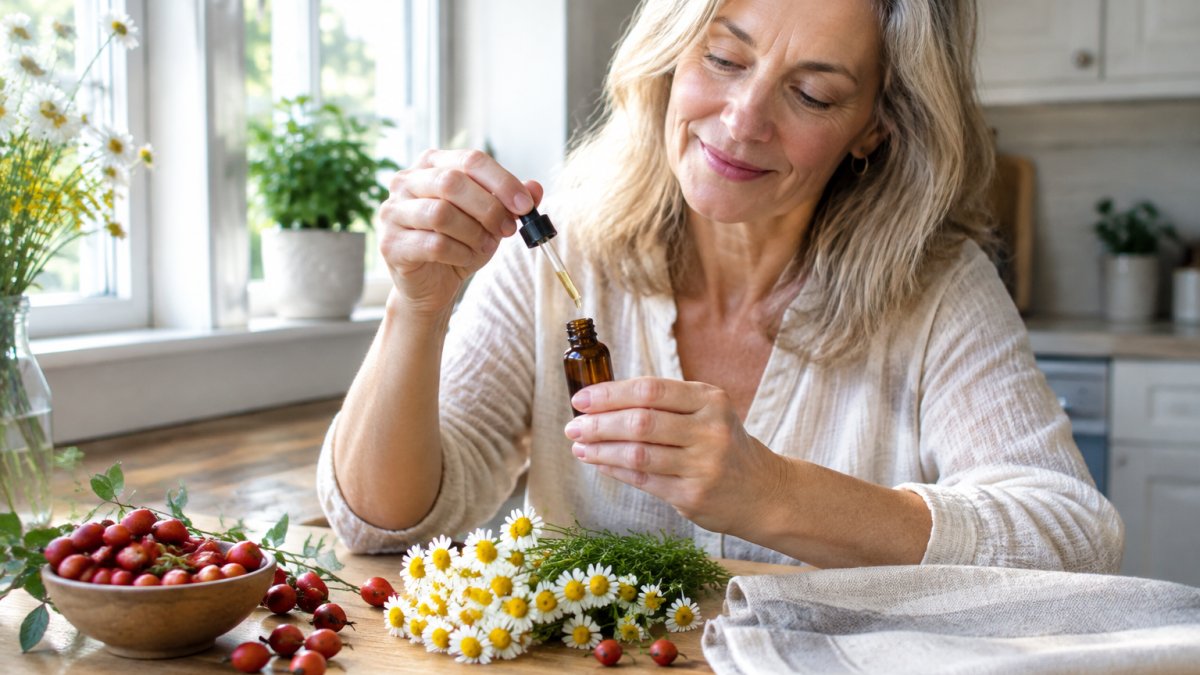
Soy Isoflavones and Phytoestrogens: What the Evidence Shows
Phytoestrogens are plant compounds that can bind weakly to estrogen receptors, and soy isoflavones are the most studied of them. The evidence is promising but narrow. The 2009 Journal of Drugs in Dermatology review describes soy as safe and effective for postmenopausal women and certain hyperpigmentation disorders, but it does not establish that topical phytoestrogens replace declining hormones or treat every hormonal skin concern. Be skeptical of any product promising estrogen-like effects from a cream. The honest claim is that soy may support tone and moisture in postmenopausal skin, not that it restores hormonal balance.
Pure Plant Extracts for Menopausal Skin
Pure plant extracts for menopausal skin work best when they are simple and richly formulated. Our Organic Radiance Serum is built on cold-pressed jojoba, rosehip seed, black seed, neem, and castor oils, with frankincense for elasticity and tone, plus blue tansy and black spruce to calm redness. It is free of parabens, synthetics, and fragrance, and it is safe for use under the eyes. Apply four to five drops to clean, damp skin morning and night, then follow with moisturizer.
Safety First: Allergies, Irritation, and Patch Testing
Botanical does not mean hypoallergenic. Plant extracts can trigger contact dermatitis, and essential oils are a common culprit. Patch test any new product on your inner forearm for 24 to 48 hours before using it on your face, and introduce one product at a time so you can identify what caused a reaction. If you are pregnant or nursing, bring your full ingredient list to your doctor rather than relying on a brand's marketing. Readers weighing makeup options for sensitized skin can review our nontoxic foundation guide for menopause.
Building a Botanical Routine for Hormonal Skin
A workable routine is short: a gentle cleanser, one botanical serum, a moisturizer, and sunscreen in the morning. Add a plant oil at night if your skin feels tight. Change one product at a time, and give each change two to three weeks before judging it. If you want to assemble a complete lineup, you can browse our full face collection.
| Skin Stage | Primary Concern | Botanical Focus | Routine Change |
|---|---|---|---|
| Pregnancy/nursing | Reactivity, safety | Chamomile, calendula, jojoba | Shorten the list |
| Perimenopause | Barrier decline | Rosehip, squalane, aloe | Add barrier support |
| Menopause | Dryness, tone | Soy, frankincense, rosehip | Richer night oil |
| Post-hyperpigmentation | Uneven tone | Soy isoflavones | Consistent sunscreen |
Choosing Your Botanical Serum for Hormonal Skin
Choose a serum by its oil base and its essential oil content, not by the word "botanical" on the label. If your skin is reactive, start with a fragrance-free formula built on jojoba or rosehip. Our Organic Radiance Serum combines both in a small-batch formula, and it is the one we recommend first for hormonally changing skin.

Your skin will keep changing, and your routine should change with it. Clean Beauty by Joy formulates with organic botanical extracts and nontoxic ingredients to support a healthy skin microbiome, defend against environmental stressors, and reduce hormone-related redness and breakouts.
Frequently Asked Questions
Can botanical ingredients help with hormonal skin changes?
Some can, but the evidence is ingredient-specific rather than category-wide. A 2009 review in the Journal of Drugs in Dermatology describes soy as appearing safe and effective for postmenopausal women and certain hyperpigmentation disorders. A 2024 study in Cosmetics reported that a specific botanical extract blend raised skin FRAP by 21.9%, moisturization by 9.5%, and radiance by 24.9% while reducing wrinkles. Neither result proves all botanicals work for hormonal skin, so judge each formula on its own ingredients and testing.
Which plant extract examples work best for sensitive, changing skin?
Look for oils and extracts with a long record of soothing use: chamomile, calendula, aloe vera, and frankincense appear throughout the botanical skincare literature for calming irritation and supporting the skin barrier. Rosehip oil and squalene-based plant oils help with moisture retention and transepidermal water loss, which matters when hormonal dryness makes skin flaky. Patch-test any new product on your inner forearm for 48 hours before applying it to your face, especially if your skin is reactive.
How do I choose botanical skincare if my skin is sensitive?
Start with a short ingredient list you can read. Choose products built on plant oils and extracts rather than fragrance blends, since fragrance is a common irritation trigger. Check whether the brand publishes what is in the formula and why. For hormonal skin that is dry and reactive, a facial oil such as Clean Beauty by Joy's Organic Radiance Serum ($65.00), which combines jojoba, rosehip seed, and black seed oils with blue tansy and black spruce, gives you a small number of recognizable ingredients to test. Introduce one new product at a time so you can tell what works.
Can botanical ingredients irritate the skin?
Yes. Plant-derived does not mean hypoallergenic. Essential oils, particularly citrus and mint, and some botanical extracts can trigger contact dermatitis in sensitive skin. A 2009 review of botanicals in skin care makes the point that effectiveness and suitability should be judged per ingredient, not assumed because something is natural. If your skin is reacting during a hormonal shift, strip your routine back to gentle cleanser, a single botanical oil, and sunscreen, then reintroduce products one at a time once your barrier settles.


