

Last Updated: November 17, 2026
Quick Summary
The best organic lipstick shades for mature complexions are mid-tone colors with warm or neutral undertones, one step brighter than your natural lip color. Rosy pink, soft melon, and muted berry flatter most, while a creamy satin finish with organic castor seed oil, shea butter, and candelilla wax keeps lips comfortable.
- Skip shades dramatically lighter or darker than your natural lip, since both emphasize thinning lips and vertical lines.
- Fair skin glows with rosy pink and soft pink, medium complexions carry melon and peony, and deeper complexions look striking in poppy red and hibiscus.
- Check for a real certification seal such as USDA Organic, NSF/ANSI 305, or COSMOS rather than the word organic alone.
- Apply color with a lip brush and press it in with your fingertip to soften edges and restore fading definition.
- Trace just outside your natural lip line with a nude liner to stop feathering, and skip heavy powder on top.
Table of Contents
- Why Mature Lips Need a Different Lipstick
- The Best Lipstick Color for Aging Skin
- The Best Lipstick for Older Lips: Formula Before Color
- The Best Organic Lipstick Shades for Fair Skin
- Application Techniques for Lip Lines and Fading Lip Definition
- Build Your Mature-Complexion Lip Routine with Clean Beauty by Joy
- Frequently Asked Questions
Why Mature Lips Need a Different Lipstick
Most lipstick advice is written for lips that don't change. Yours have. After menopause, declining estrogen reduces oil production and thins the skin, so lips lose moisture faster and fine lines around the mouth become more pronounced. That's why the best organic lipstick shades for mature complexions have to solve two problems at once: color that flatters changing skin tone, and a formula that doesn't settle into lines or dry out by noon.
At Clean Beauty by Joy, we hear the same thing from customers in their fifties and sixties: the shade they loved at forty now looks harsh, and matte formulas that once felt modern now feel like sandpaper. Both complaints have the same root cause. Mature lips need moisture first, pigment second.
Below, we'll cover how to pick shades by undertone, which formulas hold up on drier lips, and the application tricks that keep color from feathering.
The Best Lipstick Color for Aging Skin
The best lipstick color for aging skin is a mid-tone shade with warm or neutral undertones, one step brighter than your natural lip color. Mid-tones flatter because they add definition without the contrast that makes thinning lips and vertical lines more visible.
The rule we give customers: skip anything dramatically lighter or darker than your natural lip.
- Too pale: washes out mature complexions and highlights every flake
- Too dark: creates hard edges that emphasize lip lines
- Too matte: flattens volume you want to keep
- Just right: a rosy pink, soft melon, or muted berry that reads as "your lips, but better"
Fair skin glows with rosy pink and soft pink. Medium complexions carry melon and peony beautifully. Deeper complexions look striking in poppy red and hibiscus. Over 40, a satin finish beats both matte and high gloss: it reflects light without pooling in lines.
The Best Lipstick for Older Lips: Formula Before Color
The best lipstick for older lips is a creamy, hydrating formula built on plant oils and butters, not a longwear matte. Wear time matters, but comfort matters more. A formula that dries your lips will crack, feather, and look patchy within an hour, no matter how good the shade.
Read the ingredient list before the shade name. Look for organic castor seed oil, shea butter, and candelilla wax near the top, they give creamy texture, moisturizing color, and enough slip for smooth application. Vitamin E and sweet almond oil add nourishment. Avoid drying alcohols or heavy synthetic fragrance listed high up, especially with sensitive skin or dry lips.
Watch out: "longwear" and "moisturizing" are often opposites. A 12-hour matte that survives dinner will usually cost you comfort by mid-afternoon.
American Academy of Dermatology guidance on dry skin care
The Best Organic Lipstick Shades for Fair Skin
Most shade guides hand you a list of color names and hope one sticks. That fails on mature complexions because two fair-skinned women with the same depth can need opposite shades depending on undertone and natural lip pigmentation.
Step 1: Confirm your depth. Fair skin burns easily, has visible veins that read blue or purple, and looks pink or ivory rather than golden in daylight.
Step 2: Confirm your undertone. Hold a white sheet of paper next to your bare face in indirect daylight.
Step 3: Adjust for natural lip pigment. This is the step almost every guide skips. Press your lips together and look at the color at the center of your lower lip in daylight.
| Depth | Cool undertone | Warm undertone | Neutral undertone |
|---|---|---|---|
| Fair | Rosy pink, mauve pink, soft plum | Soft melon, warm nude pink, peach rose | Dusty rose, muted coral-pink |
| Light-medium | Berry rose, muted raspberry | Coral, warm apricot, terracotta nude | Peony, warm mauve |
| Medium | Plum, fig, cool berry | Brick rose, warm poppy, spiced peach | Rosewood, soft brick |
| Medium-deep | Blackberry, cool wine | Hibiscus, warm red-brown | Muted brick red, warm berry |
| Deep | Cool plum, blue-red | Poppy, warm copper-red, burnt orange-red | Hibiscus, warm wine |
For fair skin, the shades that flatter most often are a rosy pink with a touch of gold, a mauve pink that warms without turning orange, and a soft nude pink with warm coral undertones for no-makeup days.
Why the finish matters as much as the shade on fair skin. Fair mature complexions show texture and flaking more readily, so a flat matte amplifies every vertical line while a satin reflects light and blurs them.
A note on natural lip pigmentation and shade testing. Swatching on the back of your hand tells you almost nothing, because hand skin differs in depth and undertone and carries no natural lip pigment.
- Full ingredient list published on the product page, in descending order of concentration
- Organic oils and waxes named specifically, not lumped into "botanical blend"
- No parabens or phthalates, stated plainly
- Fragrance disclosed by component or omitted entirely, since "fragrance" can hide dozens of undeclared compounds
- Vegan and cruelty-free claims that name the certifying body
- Gluten-free labeling if you have celiac disease or a sensitivity
- Real customer feedback, including critical reviews
Watch out: A brand that lists "organic" in its name or tagline but publishes no certification and no full ingredient list is asking you to take the claim on faith. That is not automatically a red flag, but it means the word is unverified, and you should judge the formula on its named ingredients instead.
Fragrance and sensitivity deserve their own line item. For mature lips that are dry, thinning, or reactive, added fragrance is one of the most common sources of irritation, and "fragrance" or "parfum" can stand in for an undisclosed blend of compounds. If your lips sting, peel, or turn red after wearing a lipstick, fragrance and certain essential oils are the first suspects to eliminate.
For a deeper look at how to vet clean beauty brands overall, our guide to the best clean beauty brands breaks down what to check. If your priority is avoiding parabens and phthalates specifically, our nontoxic makeup guide covers those ingredients in detail. And if menopausal dryness is your main concern, these ways to hydrate dry skin during menopause are worth reading before you shop.
American Academy of Dermatology guidance on dry skin care
Application Techniques for Lip Lines and Fading Lip Definition
Technique can rescue a shade that's slightly off and make a good one look custom. The goal is definition without hard edges.
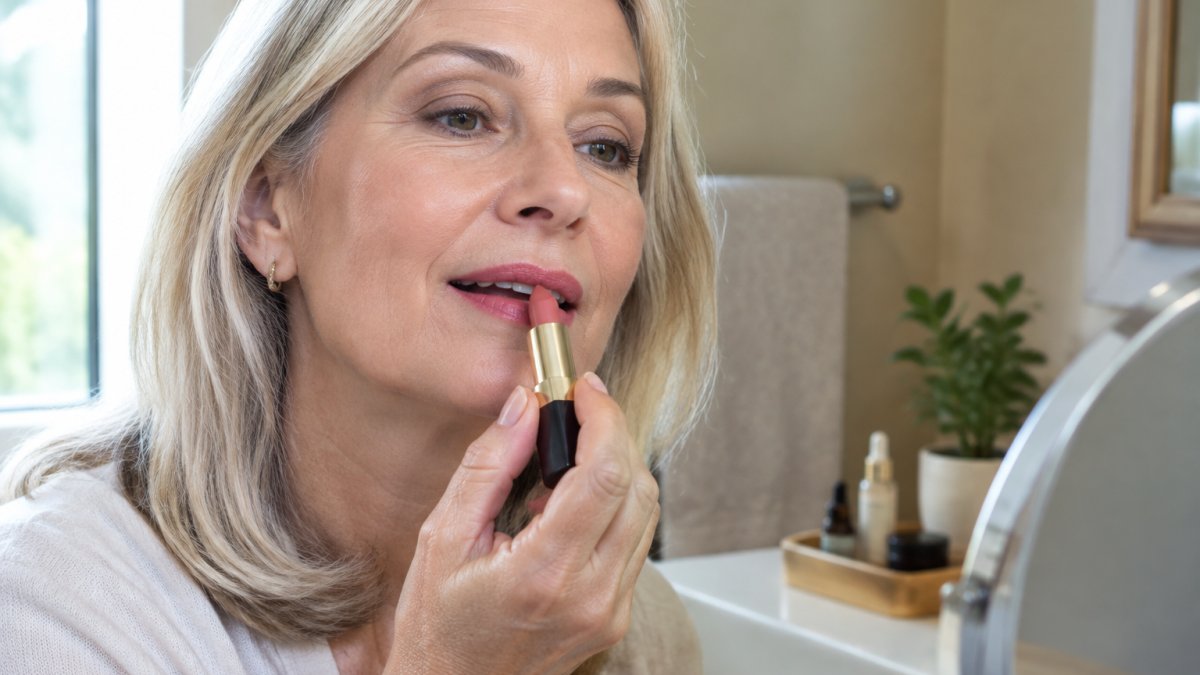
Start with a thin layer of balm and let it absorb for a minute. Blot, then apply color with a lip brush rather than straight from the tube; brushes give you control at the lip line, where precision matters most as definition fades. Press the color in with your fingertip to soften edges, then build a second layer only in the center of the lip for a fuller look.
To stop feathering, trace just outside your natural lip line with a nude liner, then blend inward. Skip heavy powder on top; it settles into vertical lines. A satin or glossy finish naturally blurs the appearance of fine lines better than matte.
One insider tip: apply lipstick before concealer, not after. Concealer applied last around the mouth creates a clean border and keeps color from migrating.
Build Your Mature-Complexion Lip Routine with Clean Beauty by Joy
A flattering shade only performs as well as the lips underneath it. Our routine for mature complexions starts with skincare, then color.
Begin with your skincare routine before makeup goes on. Pair it with a gentle routine built around doTERRA's Ikise skincare line. Then finish with color.
Our The One Organic Lipstick is built on organic castor seed oil, candelilla wax, and shea butter in a creamy formula, with seven shades from Ballet Slippers to Red Poppies. It's made in the USA,
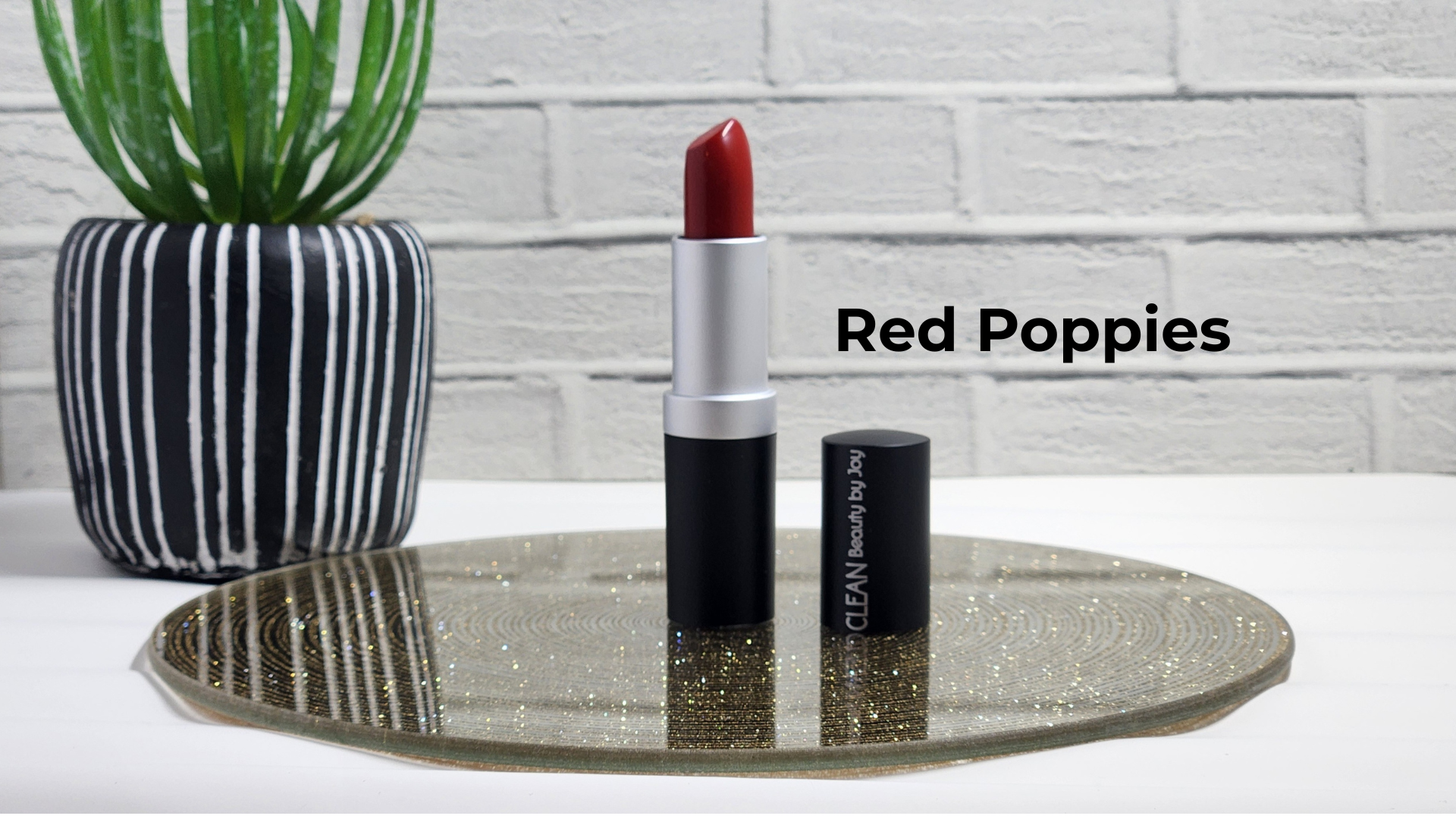
Mature lips deserve better than a formula that fights them. Clean Beauty by Joy formulates with organic botanicals that support your skin's microbiome, protect against environmental stressors, and deliver creamy, comfortable color. Explore The One Organic Lipstick in seven flattering shades, pair it with our Organic Radiance Serum, and build a routine that works with your skin instead of against it.
Frequently Asked Questions
What is the best lipstick color for aging skin?
Rosy pinks, soft mauves, and warm nudes flatter most mature complexions because they restore color without overpowering thinning lips. A muted rose or mauve with a satin or creamy finish softens the look of lip lines better than a flat matte. If your lips have lost definition, a shade one step deeper than your natural lip color adds shape. Clean Beauty by Joy's Pink Dream (a mauve pink with gold undertones) and Mauve in Bloom (a deep mauve with raspberry undertones) both work well for this.
Are matte or moisturizing lipsticks better for mature lips?
Moisturizing formulas are usually the better choice for older lips. Matte lipsticks can emphasize dryness, flaking, and vertical lip lines, especially during menopause when lips lose moisture. A creamy, satin, or glossy finish glides over texture and reflects light, which makes lines less visible. Look for plant oils and butters near the top of the ingredient list. The One Organic Lipstick uses organic castor seed oil, shea butter, and candelilla wax for a creamy, long-lasting finish rather than a drying matte.
How can I keep lipstick from settling into lip lines?
Prep matters more than the lipstick itself. Exfoliate gently once or twice a week, apply a hydrating balm and let it absorb for a minute, then blot before applying color. Use a lip brush to press color into the lips instead of dragging it across lines, and build in thin layers. Avoid heavy powder setting, which dries the lips and makes lines more obvious. A creamy organic lipstick shades formula with oils and butters stays flexible and moves with your lips instead of cracking into them.
Which organic lipstick brands are worth trying for sensitive skin?
Look for short ingredient lists built on plant oils, waxes, and butters, plus mineral pigments rather than synthetic dyes. Fragrance and essential oils are common irritants, so check the label if your lips react easily. The One Organic Lipstick from Clean Beauty by Joy is made with organic castor seed oil, candelilla wax, shea butter, and vitamin E, with color from titanium dioxide, manganese violet, mica, and iron oxides. Patch test any new lipstick on your inner arm for a day before wearing it regularly.


