

Last Updated: November 4, 2026
Quick Summary
To hydrate dry skin during menopause, repair your skin barrier first with a gentle, fragrance-free cleanser and barrier-supporting ingredients like ceramides, squalane, glycerin, and niacinamide. Then apply moisturizer to damp skin within about a minute of washing to trap water in, and swap long hot showers for short, lukewarm ones under ten minutes.
- Cut exfoliation to once or twice a week and avoid foaming cleansers with harsh surfactants.
- Apply serum or oil first to damp skin, then follow immediately with a moisturizer to seal it.
- Choose a lotion combining a humectant, an emollient, and a light occlusive for menopausal dry skin.
- Moisturize legs and body within minutes of showering, using a richer cream for elbows and legs.
- Follow a simple morning and evening routine twice a day rather than a ten-step ritual.
Table of Contents
- Why Menopause Leaves Skin So Dry (and What Actually Helps)
- 1. Repair the Skin Barrier First
- 2. Apply Moisturizer to Damp Skin, Every Time
- 3. Swap Hot Showers for Short, Lukewarm Ones
- 4. Choose the Best Lotion for Menopausal Dry Skin
- 5. Treat Menopause Dry Skin on Legs and Body
- 6. How to Get Rid of Menopausal Dry Skin With a Daily Routine
- 7. Dry Skin Menopause HRT: What Hormone Therapy Can and Can't Do
- Frequently Asked Questions
Why Menopause Leaves Skin So Dry (and What Actually Helps)
Menopause changes how skin holds water. Declining estrogen is a big reason why. A 2025 review in PubMed Central on menopausal skin changes describes estrogen as helping skin maintain its water-holding capacity, so as estrogen falls, skin loses moisture more easily and feels tight, rough, or flaky.
Many women notice that the moisturizer that worked for years suddenly isn't enough. That's not your imagination, and it's not a failure on your part. Skin is genuinely changing.
There's more to it than hormones alone. Collagen and elastin production slow down, skin thins, and the barrier that keeps water in becomes less efficient. Add in long hot showers, drying indoor heat, and harsh cleansers, and you've got a recipe for persistent dryness.
The good news: you can hydrate dry skin during menopause with a handful of consistent habits. Below are seven ways to do it, in the order that matters most, plus a simple routine you can start tonight.
1. Repair the Skin Barrier First
The skin barrier is the outermost layer of skin, and its job is to keep water in and irritants out. When that layer is compromised, no amount of moisturizer will fix the problem, because moisture escapes as fast as you add it.
So before you buy another cream, look at what's stripping your barrier. Common culprits:
- Foaming cleansers with harsh surfactants
- Daily exfoliation with scrubs or acids
- Alcohol-based toners
- Very hot water
- Over-washing your face
Switch to a gentle, fragrance-free cleanser and cut exfoliation to once or twice a week. Then support the barrier with ingredients that reinforce it. Ceramides, squalane, glycerin, and niacinamide are common barrier-supporting ingredients.
For a facial oil that feeds the barrier with organic botanicals, our Organic Radiance Serum is built around jojoba, rosehip seed, and black seed oils. It's designed to be applied to damp skin, which pairs directly with the next step.

If your dryness comes with itching, that's a separate problem worth understanding on its own. Our Why Menopause Causes Itchy Skin: Relief Strategies explains the causes and how to find relief.
2. Apply Moisturizer to Damp Skin, Every Time
Timing matters more than most people realize. Apply moisturizer within about a minute of washing, while skin is still damp, and you trap that water where it can do some good. Wait until skin is fully dry and you're mostly sealing in nothing.
Here's the sequence we recommend:
- Pat skin gently with a clean towel, leaving it slightly damp.
- Apply your serum or oil first, pressing it in with your palms.
- Follow immediately with a moisturizer to seal it.
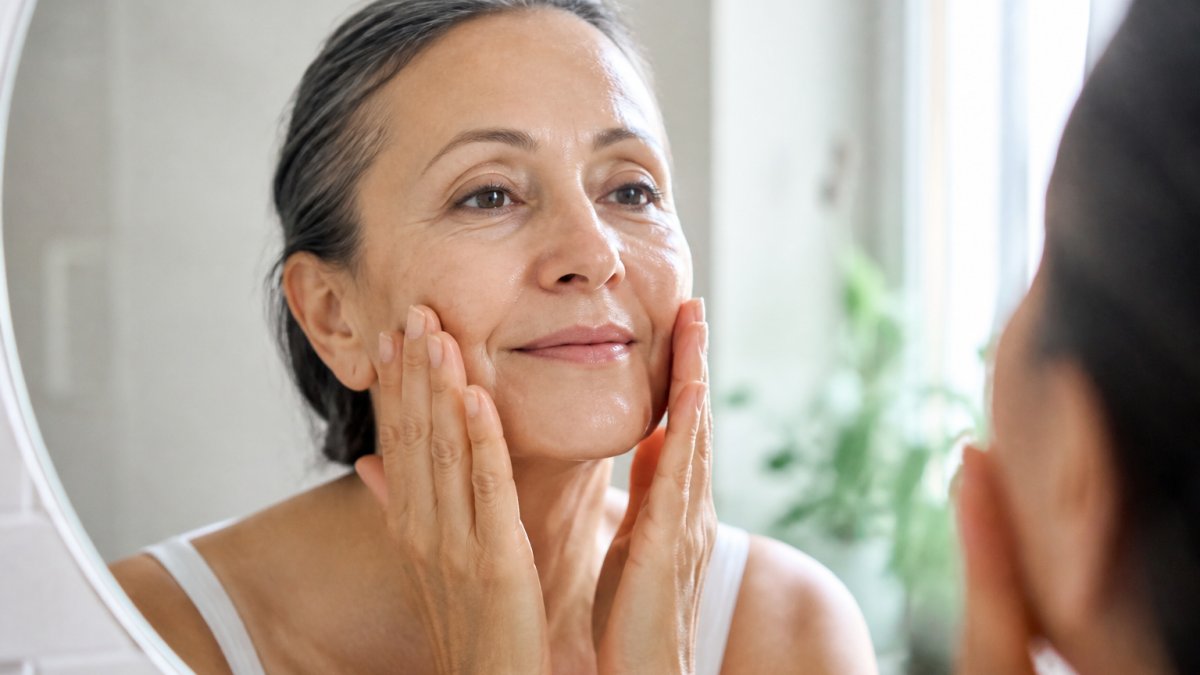
The same rule applies to your body. Step out of the shower, pat dry, and moisturize within a couple of minutes. This one habit change does more for dry skin than switching to a more expensive cream.
Watch out: applying oil to completely dry skin can leave a greasy film that never absorbs. Damp skin is the difference between a product that sinks in and one that sits on top.
3. Swap Hot Showers for Short, Lukewarm Ones
A long, hot shower feels wonderful and wrecks your skin barrier at the same time. Hot water strips away the natural oils that hold moisture in, and the longer you stay under it, the more you lose.
You don't have to take cold showers. Lukewarm water and a shorter duration are enough. Try these adjustments:
- Keep showers under ten minutes
- Turn the temperature down a notch or two
- Skip harsh bar soaps in favor of a creamy, fragrance-free body wash
- Pat dry instead of rubbing
The same logic applies to washing your face. Lukewarm water, gentle cleanser, no scrubbing. Your skin will tell you the difference within a week.
4. Choose the Best Lotion for Menopausal Dry Skin
Finding the best lotion for menopausal dry skin comes down to ingredients, not branding. Look for a formula that combines all three types of moisturizing ingredients, because each does a different job.
| Ingredient Type | What It Does | Examples |
|---|---|---|
| Humectant | Pulls water into the skin | Glycerin, hyaluronic acid |
| Emollient | Softens and smooths rough patches | Squalane, jojoba oil, shea butter |
| Occlusive | Seals moisture in | Petrolatum, dimethicone, candelilla wax |
A good moisturizer for menopausal skin usually pairs a humectant with an emollient and a light occlusive. For a deeper look at how natural and chemical moisturizers compare, see our Natural Moisturizer vs Chemical Cream for Menopause. Heavier creams suit nighttime and body use, while lighter lotions work better under makeup during the day.
Watch for fragrance if your skin is reactive. For a ready-made option, doTERRA's Ikise Skincare line is an option to consider.
5. Treat Menopause Dry Skin on Legs and Body
Menopause dry skin on legs is often worse than facial dryness, and it gets less attention. Legs, arms, and the torso have fewer oil glands than the face, and shaving plus hot showers compounds the problem. Because these larger areas need consistent, gentle care, it helps to treat menopause skin dryness with habits that protect the skin barrier from hot water and shaving.
Treat your body with the same care as your face:
- Moisturize within minutes of showering, while skin is damp
- Choose a richer cream or body butter for legs and elbows
- Apply a thicker layer at night and let it absorb
- Use a humidifier in winter if indoor air is dry
If your legs are flaky or ashy, a richer cream may help. Apply it consistently for a couple of weeks before judging results.
6. How to Get Rid of Menopausal Dry Skin With a Daily Routine
Consistency beats intensity. To get rid of menopausal dry skin, build a routine you'll actually follow, morning and night.
Morning:
- Rinse with lukewarm water or a gentle cleanser
- Apply serum to damp skin
- Seal with moisturizer
- Finish with sun protection
Evening:
- Remove makeup gently with a cleansing milk or oil
- Cleanse with a fragrance-free cleanser
- Apply serum or treatment to damp skin
- Seal with a heavier night cream
That's it. No ten-step ritual required. The routine works because it protects the barrier, adds moisture to damp skin, and seals it in twice a day.
If you wear makeup over dry, flaky skin, the right base matters too. Our Foundation for Dry Menopausal Skin: Best Picks covers options that work on dry menopausal skin. Our Flawless Finish Liquid Foundation is a breathable, buildable formula that evens the look of skin without clogging pores.

7. Dry Skin Menopause HRT: What Hormone Therapy Can and Can't Do
Hormone replacement therapy can influence skin hydration because it addresses the estrogen decline behind much of the dryness. That doesn't make it a skincare shortcut, and it isn't right for everyone.
What HRT may help with: some users report improvements in skin moisture and thickness. What it won't do: replace a barrier-repair routine, fix dryness caused by harsh products, or suit people with certain health histories.
This is a decision to make with your doctor, not a blog post. Bring it up at your next appointment and ask whether it fits your situation. In the meantime, the habits above work whether or not you're on hormone therapy.
For broader support during this stage, explore our Health And Wellness products.
Dry skin during menopause is stubborn, but it isn't a mystery. Repair the barrier, apply products to damp skin, turn down the shower temperature, and stay consistent. That combination does more than any single product.
At Clean Beauty by Joy, we formulate with organic botanicals and nontoxic ingredients. Our Organic Radiance Serum and Flawless Finish Liquid Foundation are both available in our catalog.
Get started with Clean Beauty by Joy and give your skin the gentle, consistent care it's been asking for.
Frequently Asked Questions
What is the best cream for dry skin during menopause?
The best cream depends on your skin barrier, not the label. Look for a formula with humectants like glycerin or hyaluronic acid to pull in water, emollients like squalane or jojoba to soften, and occlusives to seal it in. Declining estrogen can reduce skin's water-holding capacity, so richer textures often work well for dry skin. Apply it to damp skin within a minute of washing, then layer a facial oil like Organic Radiance Serum on top at night to hydrate dry skin without a greasy feel.
How do I get rid of menopausal dry skin on my legs?
Treat your legs like your face: short lukewarm showers, a fragrance-free gentle cleanser, and a heavier cream applied while skin is still damp. Menopause dry skin on legs often comes with itching and flaking because the barrier is thinner and loses water faster. Pat dry instead of rubbing, moisturize within three minutes of stepping out, and reapply at night. If you shave, use a moisturizing cream instead of soap and swap blades often. Persistent cracking or rash deserves a dermatologist's look.
Can hormone replacement therapy help with dry skin during menopause?
Systemic hormone therapy can influence skin hydration for some women, since estrogen supports the skin's water-holding capacity. The effect varies by dose, delivery method, and how long you use it. HRT is a medical decision with real risks and benefits, so discuss it with your doctor rather than treating it as a skincare step. Whatever you decide, a barrier-focused routine with gentle cleansing and a richer moisturizer still does the daily work.
Why does menopause make skin dry and itchy?
Falling estrogen reduces oil production, collagen, and the skin's ability to hold water, so the barrier thins and moisture loss speeds up. That combination shows up as tightness, flaking, and itching, especially on the face, legs, and hands. Hot water, long showers, and fragranced products make it worse. Start with lukewarm showers, a gentle cleanser, and a moisturizer applied to damp skin. If itching is severe or comes with a rash, see a dermatologist to rule out eczema or another condition.
What vitamin am I lacking if my skin is dry?
Dry skin is rarely a simple vitamin deficiency, and no supplement replaces a barrier-focused routine. Vitamin A, vitamin C, and vitamin E support skin health, and the Organic Radiance Serum delivers natural sources of all three plus essential fatty acids. If you suspect a deficiency, ask your doctor for a blood test rather than guessing. Drinking more water helps only if you are dehydrated; it will not fix menopausal dryness on its own, so pair hydration from within with moisturizer applied to damp skin.


