

Table of Contents
- Natural Moisturizer vs Chemical Cream for Menopause: The Core Difference
- What 'Natural,' 'Chemical,' and 'Clean' Actually Mean
- How Estrogen Decline Changes Your Skin Barrier
- Menopause Dry Itchy Skin: Why It Happens and What Calms It
- Natural vs Synthetic Ingredients: An Honest Side-by-Side
- Menopause Skin Care Ingredients to Avoid
- How to Choose the Best Moisturizer for Menopausal Skin
- A Simple Menopause Skin Care Routine
- Conclusion
- Frequently Asked Questions
Last Updated: October 18, 2026
Natural Moisturizer vs Chemical Cream for Menopause: The Core Difference
The main difference between a natural moisturizer and a chemical cream for menopause comes down to ingredients and how they treat a changing skin barrier. A natural moisturizer relies on plant oils, butters, and humectants.
Your skin is not the same skin it was ten years ago. At Clean Beauty by Joy, we hear from women every week who are frustrated that their old face cream suddenly stings.
Below, we'll show you exactly how to tell these two cream types apart, which ingredients to avoid, and how to build a menopause skin care routine that calms rather than irritates.
But first, here's what most guides get wrong: "natural" and "chemical" are not clean opposites. Water is a chemical. So is shea butter.
What 'Natural,' 'Chemical,' and 'Clean' Actually Mean
Natural means an ingredient comes from a plant, mineral, or animal source with minimal processing. Synthetic means it is made in a lab, though many synthetics are identical to nature. Clean is a marketing term, not a legal one.
That last point matters. No US regulator defines "clean beauty," so any brand can print it on a jar. Look past the label and read the ingredient list instead.
A few ground rules worth keeping in mind:
- "Chemical-free" is meaningless, since everything is a chemical
- "Natural" does not automatically mean gentle, because essential oils can irritate reactive skin
- "Synthetic" does not automatically mean harsh, since lab-made humectants are often well tolerated
The FDA's cosmetics labeling guidance requires ingredients to be listed, so you can always check for yourself.
How Estrogen Decline Changes Your Skin Barrier
Estrogen decline is the driver behind most menopausal skin changes. Estrogen supports oil production, collagen, and the barrier that holds moisture in. When it drops, that support weakens.
The result is thinner, drier, and more reactive skin. A common mistake is treating this like ordinary dryness and reaching for a heavier cream. In practice, a heavy cream can clog pores without fixing the underlying moisture loss.
What actually helps is a mix of three ingredient types:
- Humectants pull water into the skin
- Emollients soften and smooth the surface
- Occlusives seal moisture in
Menopause Dry Itchy Skin: Why It Happens and What Calms It
Soothing that itch starts with gentle cleansing and steady moisturizing. Skip hot water, harsh scrubs, and fragrance-heavy products, which strip the barrier further.
Many women find that a simple routine beats a complex one. Fewer products mean fewer chances for irritation. If itch persists or comes with a rash, see a doctor, since the AAD's guidance on skin conditions notes that persistent symptoms deserve a professional look.
Natural vs Synthetic Ingredients: An Honest Side-by-Side
Neither side wins outright, and any guide that promises a clear winner is oversimplifying. The useful comparison is ingredient by ingredient: what each type does for a menopausal barrier, what it costs you in irritation risk or stability, and where the evidence is thin. Below is that comparison, followed by the plant ingredients worth keeping and the synthetic ones that earn their place.
| Factor | Natural Moisturizer | Synthetic Cream |
|---|---|---|
| Barrier support | Strong when built on fatty-acid-rich oils and butters | Good, from lab-made emollients and occlusives like dimethicone and petrolatum |
| Irritation risk | Higher with essential oils, fragrance, and some botanical extracts | Lower and more predictable, especially fragrance-free formulas |
| Comedogenicity | Varies widely; coconut oil and wheat germ oil can clog pores | Usually tested and labeled non-comedogenic |
| Shelf life | Shorter; plant oils oxidize and go rancid | Longer; synthetic preservatives and stable emollients resist spoilage |
| Texture | Can feel heavy or greasy, especially butters | Light, consistent, and easy to layer |
| Best for | Dry, mature skin that tolerates botanicals | Sensitive, reactive, or acne-prone skin |
Plant Oils, Butters, and Humectants That Work
Plant-based ingredients earn their place when chosen for a specific job. For menopausal skin, the goal is fatty acids that rebuild the barrier, humectants that hold water, and anti-inflammatory botanicals that calm redness.
The standouts:
- Jojoba oil is a liquid wax ester that closely mimics skin's own sebum, so it absorbs well and rarely clogs pores
- Shea butter is rich in stearic and oleic acids and seals in moisture, though it can feel heavy on oily skin
- Avocado oil carries fatty acids plus vitamins A and E, and is one of the better-tolerated oils for dry, mature skin
- Rosehip seed oil contains linoleic acid and trans-retinoic acid precursors, and is often used to support elasticity and tone
- Glycerin, a humectant, pulls water into the upper skin layers and is one of the most studied moisturizing ingredients available
- Colloidal oatmeal is recognized for soothing itch and supporting the barrier, and is common in eczema-friendly formulas
A caution worth stating plainly: essential oils are the most common cause of allergic contact dermatitis in botanical skincare. Lavender, tea tree, peppermint, and citrus oils can sting a compromised barrier even when the label says natural. If your skin is reactive, choose fragrance-free plant formulas over essential-oil-scented ones.
Our Organic Radiance Serum blends jojoba, rosehip, and black seed oils with frankincense to support firmness and calm redness. It is a good example of plant oils doing real barrier work without a heavy essential-oil load.

When Synthetic Ingredients Win
Synthetic ingredients win when stability, predictability, and low irritation risk matter most. If your skin reacts to everything, a fragrance-free synthetic humectant such as glycerin or hyaluronic acid, paired with a dimethicone or petrolatum occlusive, may suit you better than a botanical oil.
Lab-made ingredients also last longer and resist spoiling, which matters if you use a jar slowly. Petrolatum is one of the most effective occlusives available and has a long safety record; dimethicone is a breathable silicone that smooths texture without clogging pores.
The honest answer is that the best pick depends on your skin, not on a label. A natural oil that stings is worse for you than a well-formulated synthetic cream that calms. Match the ingredient to your symptom, patch-test anything new, and judge results over weeks rather than days.
Menopause Skin Care Ingredients to Avoid
Some ingredients are worth avoiding when your barrier is fragile, but the goal is fewer flare-ups, not fear. The list below separates ingredients with a clear irritation mechanism from concerns that are more speculative, so you can decide what matters for your skin.
Worth avoiding or limiting when the barrier is compromised:
- Added fragrance and dyes are the leading cause of cosmetic contact dermatitis. "Fragrance" on a label can stand for dozens of undisclosed compounds, so fragrance-free is safer than unscented for reactive skin.
- Drying alcohols such as denatured alcohol, SD alcohol, and isopropyl alcohol strip lipids from the barrier and speed water loss. They are common in toners and fast-drying formulas.
- Harsh exfoliants, coarse scrubs, high-percentage glycolic or salicylic acids used daily, thin an already thin barrier. Gentle, infrequent exfoliation is the safer pattern for mature skin.
- Essential oils in high amounts can sting sensitive skin and are a common source of allergic contact dermatitis, even in products labeled natural.
- Hot water and harsh cleansers are not ingredients, but they strip the barrier faster than most products do. Lukewarm water and a mild, fragrance-free wash matter as much as what you apply afterward.
Worth a closer look if you are hormone-conscious: Some women prefer to limit certain synthetic preservatives, such as parabens, and some fragrance compounds while going through hormonal changes. The evidence for skin-level hormonal effects from cosmetics is limited, and regulatory bodies generally consider these ingredients safe at cosmetic concentrations.
A note on "chemical-free" and "nontoxic" labels: No federal regulator defines these terms for cosmetics, so any brand can print them on a jar. The FDA's cosmetics labeling guidance requires ingredients to be listed, so you can always check for yourself.
How to Choose the Best Moisturizer for Menopausal Skin
The best moisturizer for menopausal skin supports the barrier, skips common irritants, and matches your skin type. Start with your main symptom, then pick the formula that fits it.
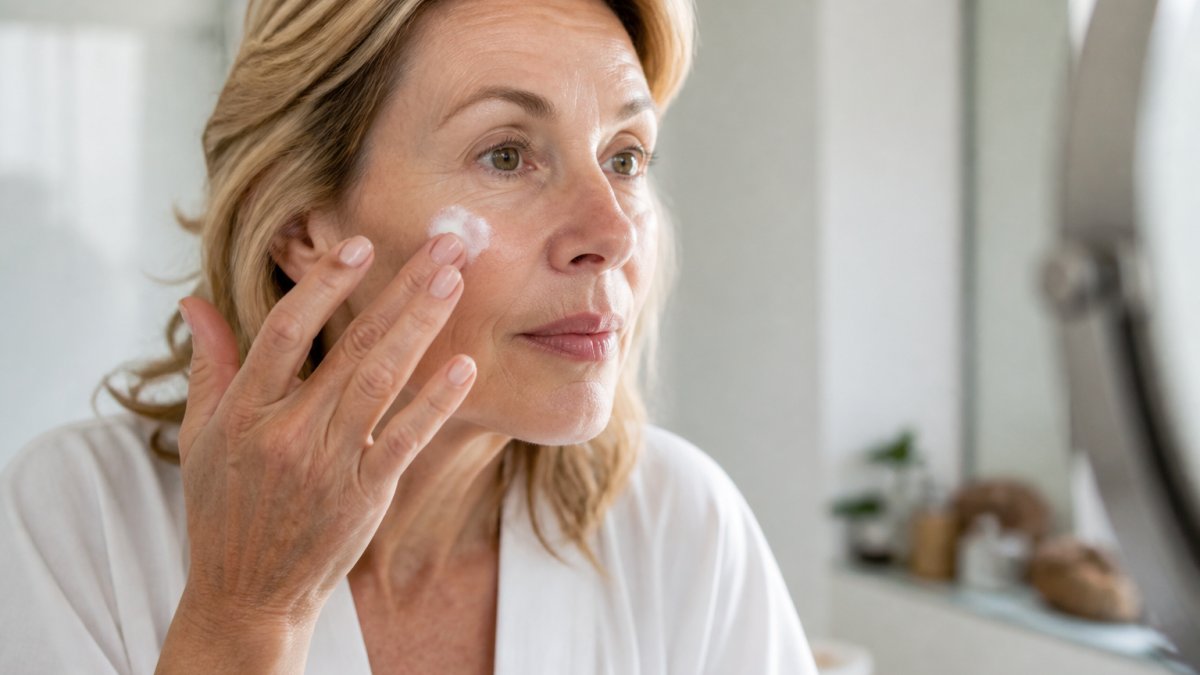
Use this checklist before you buy:
- Is fragrance low or absent?
- Does it list humectants and emollients, not just water?
- Does the texture suit your skin, light for oily, richer for dry?
- Are the plant oils ones your skin tolerates?
- Is the ingredient list short and readable?
A Simple Menopause Skin Care Routine
A short routine beats a long one for reactive skin. Keep it to four steps, morning and night, and give it a few weeks before judging results.
- Cleanse gently with a mild, fragrance-free wash
- Apply a serum to damp skin to add nutrients
- Moisturize to seal in water and support the barrier
- Protect with sunscreen each morning
Many women find that consistency matters more than the number of products. Track how your skin feels week to week rather than day to day. If redness or itching worsens, simplify back to cleanser and moisturizer, then add products one at a time.
Conclusion
Menopausal skin asks for patience and a gentler approach, not a bigger product shelf. The right pick supports your barrier, skips irritants, and fits your skin type.
At Clean Beauty by Joy, we build nontoxic, botanical-based products for exactly this stage. Our formulas use organic plant oils to nourish and calm skin, support a healthy microbiome, and defend against environmental stressors. You do not have to choose between values and results.
Get started with Clean Beauty by Joy and give your skin the gentle, restorative care it deserves.
Frequently Asked Questions
Can natural moisturizers help with menopausal dry or itchy skin?
Yes, when they are built on occlusive and emollient ingredients. Jojoba oil, shea butter, and avocado oil slow moisture loss and soften rough patches, while humectants pull water into the outer layer. Dry, itchy skin during menopause usually comes from a weakened skin barrier and lower oil production, so a natural moisturizer applied to damp skin morning and night can reduce tightness and flaking. Look for short ingredient lists and no added fragrance, since scent is a common trigger for reactive skin.
What ingredients should I look for in a moisturizer during menopause?
Prioritize barrier-supporting ingredients: jojoba oil, shea butter, avocado oil, and fatty acids for emollients; glycerin and other humectants for hydration; and antioxidants like vitamins A, C, and E to defend against environmental damage. Ceramides and squalane help whether the formula is natural or synthetic. A face cream with a gentle formulation and no fragrance is the safest starting point for sensitive or reactive skin, and you can add a body lotion with the same profile for dryness elsewhere.
Are fragrance-free creams better for sensitive menopausal skin?
For most women in menopause, yes. Fragrance is one of the most common causes of irritation and contact reactions, and menopausal skin is thinner and more reactive than it was a decade earlier. Fragrance-free does not mean unscented products with masking perfume, so read the label for 'fragrance' and 'parfum.' If you want a natural option, choose one scented only by the botanical oils themselves, and patch test on your inner arm for a few days before applying it to your face.
When should I ask a dermatologist about menopausal skin changes?
Book an appointment if itching interferes with sleep, if you see cracking, bleeding, or a rash that spreads, or if dryness does not improve after four to six weeks of consistent moisturizing. Also seek advice if you notice sudden thinning, new growths, or changes to an existing mole. A moisturizer can ease discomfort but cannot treat menopause-related skin changes on its own, and a dermatologist can rule out conditions like eczema or dermatitis that need prescription care.
Always patch-test new products and consult a doctor for persistent skin symptoms.

