

Last Updated: October 26, 2026
Quick Summary
Choose clean concealer for mature skin by reading the ingredient list first: look for glycerin, aloe vera, jojoba oil, or hyaluronic acid in the first five ingredients, and skip fragrance, parabens, phthalates, and drying alcohols. Pick a thin, creamy formula over a thick matte one, since heavy textures settle into fine lines and highlight flakes. Match your undertone before shade depth, then apply thin layers with a light hand.
- Ingredient lists are ordered by weight, so the first five ingredients tell most of the story.
- Fragrance is the most common cause of contact reactions in cosmetics, per FDA labeling guidance.
- Test texture on the back of your hand; if it drags or looks powdery, it will crease.
- Swatch on the jawline, check in natural light, and wait 10 to 15 minutes for oxidation.
- Apply three small dots under the eye, tap with a ring finger, and set only the inner corner.
Table of Contents
- What Makes a Concealer Truly Clean
- The Best Concealer for Mature Skin Starts With Hydration
- Why Concealer for Dry Mature Skin Needs a Thin, Creamy Texture
- How to Find a Concealer That Does Not Crease
- Shade Matching and Undertones for Mature Skin
- How to Apply Concealer on Mature Skin
- Build Your Base With Clean Beauty by Joy
- Frequently Asked Questions
What Makes a Concealer Truly Clean
Clean concealer is a formula built from recognizable, skin-safe ingredients and free of the additives most likely to irritate reactive or mature skin. At Clean Beauty by Joy, we read labels for a living, and the honest truth is that "clean" has no legal definition in cosmetics.
Here is the short version: fewer ingredients, no synthetic fragrance, and no drying alcohols. Everything else is detail.
Reading the Ingredient List Without Getting Fooled
Ingredient lists are ordered by weight, so the first five ingredients tell you most of the story. If water, glycerin, or aloe vera sit near the top, the formula will likely feel hydrating. If alcohol or a silicone comes first, expect a drier, slicker feel.
Watch for these red flags:
- Fragrance or parfum listed anywhere
- Parabens such as methylparaben or propylparaben
- Phthalates, often hidden inside a fragrance blend
For a deeper walkthrough on spotting parabens and phthalates, our guide to nontoxic makeup without parabens and phthalates breaks down each label term.
Fragrance, Sensitivities, and What to Skip
Fragrance is the single most common cause of contact reactions in cosmetics, according to FDA guidance on cosmetic labeling. Mature skin thins over time, so it reacts faster than it did at 30.
Skip anything with added fragrance, essential oil blends marketed as scent, or "cooling" ingredients like menthol. Your concealer does not need to smell like anything.
The Best Concealer for Mature Skin Starts With Hydration
Look for glycerin, aloe vera, jojoba oil, and hyaluronic acid near the top of the list.
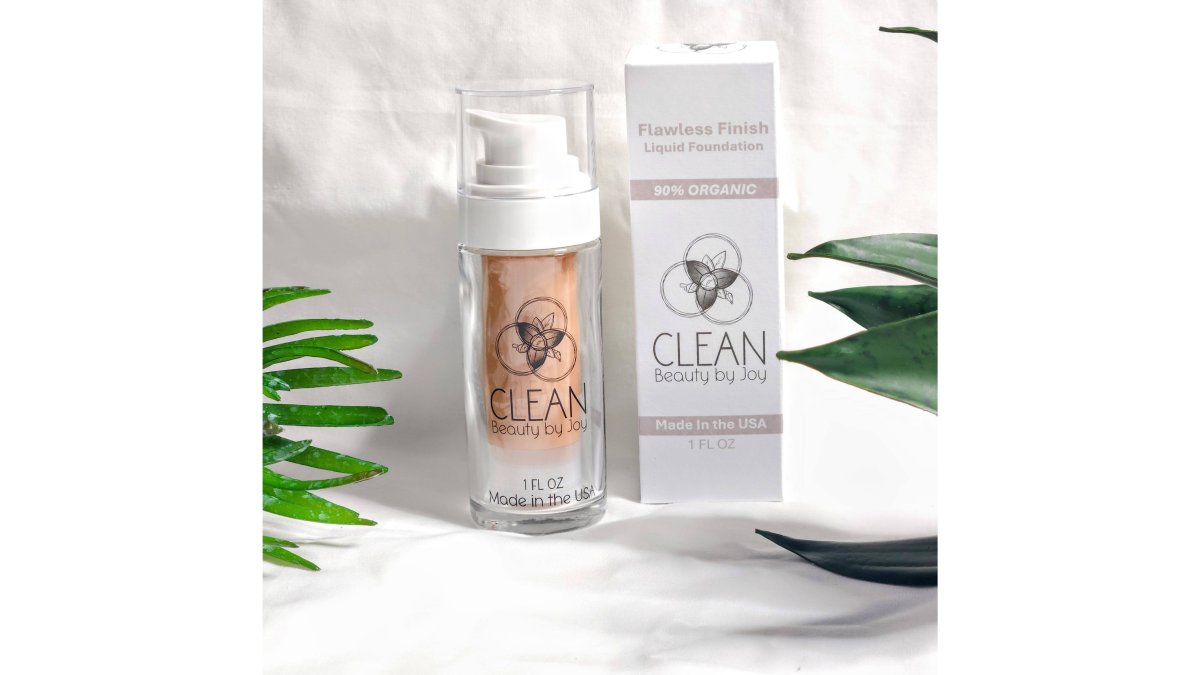
Our Flawless Finish Liquid Foundation uses glycerin to soften the look of fine lines, and the same logic applies to concealer.
If you want to compare base layers first, our breakdown of natural moisturizer vs chemical cream for menopause covers what actually supports hydration.
Why Concealer for Dry Mature Skin Needs a Thin, Creamy Texture
Concealer for dry mature skin should be thin and creamy, not thick and matte.
Thin formulas blend into skin instead of sitting on it.
Test texture on the back of your hand. If it drags or looks powdery within a minute, it will do the same under your eyes.
For base products built for the same skin type, see our picks for foundation for dry menopausal skin.
How to Find a Concealer That Does Not Crease
Creasing is not a formula failure, it is product migrating into lines that already exist. The fix is a combination of formula chemistry, skin prep, and application amount, and you can evaluate all three before you buy.
Why Concealer Creases Under Mature Eyes
The under-eye area has thinner skin and fewer oil glands than the rest of the face, so it dries out faster and holds less product. When a concealer is thick, waxy, or high in film-formers, it sits on the surface and gets pushed into fine lines every time you blink or smile. Hydration underneath matters as much as the formula itself: dry skin pulls moisture out of the concealer, leaving a chalky film that cracks along expression lines.
The Formula Signals That Predict Creasing
Read the ingredient list for these patterns before you swatch:
Flawless Finish Liquid Foundation →
- Film-formers high on the list (often listed as trimethylsiloxysilicate or similar silicone resins) create a long-wear seal that can look stiff on dry skin.
- Waxes and thickeners near the top (beeswax, carnauba wax, synthetic wax) add body that grabs texture.
- Hydrating humectants in the first five ingredients (glycerin, hyaluronic acid, aloe vera) help the formula stay flexible.
A thin, creamy formula with humectants up top and no heavy film-formers is the safest bet for mature skin.
A Wear-Test You Can Run Before Committing
Most practitioners recommend testing a concealer the way you will actually wear it, not just as a hand swatch:
- Apply a thin layer under one eye only, over your normal moisturizer, in the morning.
- Skip powder on that side so you can see the formula's natural behavior.
- Check in a mirror at the four-hour mark and again at eight hours, in natural light.
- Look specifically at the inner corner and the crease line where the lower lid meets the cheek.
If the product has settled into a visible line by hour four, a lighter application or a more hydrating formula will usually fix it. If it has cracked or gone patchy, the formula is too dry for your skin.
Prep and Application Habits That Reduce Creasing
- Hydrate first. A moisturizer or hydrating serum under the eye gives the concealer something to bond to.
- Use less than you think. Two thin layers always beat one thick one; start with three small dots and build only where you still see discoloration.
- Tap, do not rub. Pressing with a ring finger or damp sponge keeps product on the surface instead of pushing it into lines.
- Set selectively. A light dusting of finely milled powder at the inner corner stops movement without drying the rest of the under-eye.
Shade Matching and Undertones for Mature Skin
Most people shop concealer one or two shades too light, which creates a gray, ashy cast under the eye. The goal is not to lighten the under-eye, it is to match your skin's undertone and neutralize the color of the discoloration.
Why Undertone Matters More Than Shade Depth
Under-eye darkness is rarely just "dark." It has a color cast, blue, purple, green, or brown, and that cast determines which corrector or concealer tone will cancel it. Matching to the darkness level alone is why so many concealers look chalky on mature skin. Match the undertone first, then adjust depth by half a shade at most.
Identify Your Undertone in Natural Light
Stand at a window with indirect daylight (not direct sun, not bathroom lighting) and look at the skin along your jaw and inner wrist:
- Cool: pink, red, or blue undertones; silver jewelry tends to suit you.
- Neutral: a mix of pink and yellow; both gold and silver work.
- Warm: yellow, golden, or olive undertones; gold jewelry tends to suit you.
A common pattern with mature skin is that undertone shifts slightly over time, skin can read warmer or more sallow as it thins, so recheck your undertone every year or two rather than assuming your shade from a decade ago still fits.
Match the Corrector to the Discoloration Color
| Under-eye cast | Corrector tone | Why it works |
|---|---|---|
| Blue or purple | Peach or salmon | Warm peach cancels cool blue-purple |
| Green or teal | Apricot or light peach | Warm tones neutralize green |
| Brown or sallow | Peach or light orange | Adds warmth without going ashy |
| Redness around the eye | Green-tinted primer, then neutral concealer | Green cancels red before coverage |
Apply the corrector in a thin layer only where the discoloration is strongest, then follow with a concealer that matches your skin tone, not a lighter one.
How to Test a Shade Before You Buy
- Swatch on the jawline and blend down, not on the back of the hand, which is often a different depth than your face.
- Check the swatch in natural light and again under indoor lighting; a shade that matches at the window can look orange under warm bulbs.
- Let it sit for 10-15 minutes. Concealers with humectants can deepen slightly as they set, and oxidation changes the final color.
- If you are between two shades, choose the one that matches your undertone and adjust depth with a tiny amount of corrector rather than buying a lighter concealer.
A Note on Clean Formulas and Shade Ranges
Cleaner formulas sometimes carry smaller shade ranges because they avoid certain pigments and fillers. That is a trade-off worth knowing: if your undertone falls at the edge of a range, a peach corrector under a neutral concealer often gets you closer than forcing a mismatched shade. Our Flawless Finish Liquid Foundation comes in eight shades across cool, warm, and neutral tones, and the same undertone logic applies when you pair it with a concealer.
How to Apply Concealer on Mature Skin
Applying concealer on mature skin takes four steps and about two minutes. The goal is thin layers that blend into skin, never a mask.
- Prep first. Apply a hydrating primer after moisturizer. Our Pro Prep Face Primer uses aloe vera and jojoba oil to soften the look of fine lines and create a smooth base.
- Dot, do not swipe. Place three small dots under the eye, starting at the inner corner.
- Tap, do not rub. Use your ring finger or a damp sponge to press the product into skin.
- Set only where needed. A light dusting of powder at the inner corner stops movement without drying the rest.
A brush helps here. The Blend it Foundation Brush buffs product smoothly without pulling at delicate skin, and the Pro Prep Face Primer gives it something to grip.


Build Your Base With Clean Beauty by Joy
Choosing clean concealer for mature skin comes down to reading labels honestly, prioritizing hydration, and applying with a light hand. None of that requires a ten-step routine.
That is the standard we hold at Clean Beauty by Joy.
Start with our Flawless Finish Liquid Foundation in one of eight shades, pair it with the Pro Prep Face Primer, and build a base that hydrates while it covers.
Frequently Asked Questions
What should I look for in a clean concealer for mature skin?
Look for a short ingredient list built around hydrating agents like glycerin, aloe vera, and jojoba oil, and skip formulas where fragrance appears high on the list. A clean concealer for mature skin should feel creamy but thin, blend without tugging, and set without settling into fine lines.
Can concealer emphasize fine lines and texture?
Yes. Thick, matte formulas and heavy setting powders can collect in fine lines and make texture look more pronounced. A thin, hydrating formula applied sparingly and tapped in with a fingertip or damp sponge keeps the under-eye area looking smoother. Prep with a moisturizing primer first, and avoid layering too much product in one spot. Build coverage in light layers instead of applying one heavy coat.
How do I keep concealer from creasing under my eyes?
Start with hydrated skin, then apply a thin layer of concealer and blend immediately with a tapping motion rather than sweeping. Set only where you actually crease, using a light dusting of powder rather than a heavy layer. A concealer that does not crease usually has a creamy, flexible texture rather than a dry matte finish. Touch up midday by tapping out any settled product with a clean finger before adding more.
What is the best concealer shade for mature skin?
Match your undertone, not just your surface color. Cool undertones suit pink or blue-based shades, warm undertones suit yellow or peach-based shades, and neutral undertones sit between the two. For dark circles, a shade one step lighter than your foundation can brighten without looking obvious. Test on your jawline in natural light before committing, or try sample sizes first to confirm the match before buying a full size.
Your skin has changed, and your makeup should change with it. Clean Beauty by Joy makes botanical-based formulas that support a healthy skin microbiome while giving you the coverage you want. Try the Flawless Finish Liquid Foundation, the Pro Prep Face Primer, or the Blend it Foundation Brush, and see what a clean base actually feels like. Get started with Clean Beauty by Joy and build a routine your skin can live with.


