

Last Updated: October 28, 2026
Quick Summary
Microbiome skincare targets the root of clogged pores and redness by restoring microbial balance rather than stripping skin. A 2025 review calls these therapies promising but early, so we pair barrier-supporting oils with gentle cleansing and niacinamide at 2% to 5%.
- Dysbiosis shows up as redness after cleansing, jaw and forehead comedones, and breakouts that worsen with stronger actives.
- Postbiotics may strengthen the epidermal barrier, regulate inflammation, and support microbiome balance.
- Niacinamide regulates sebum at 2% to 5%; higher percentages add no benefit and can sting sensitive skin.
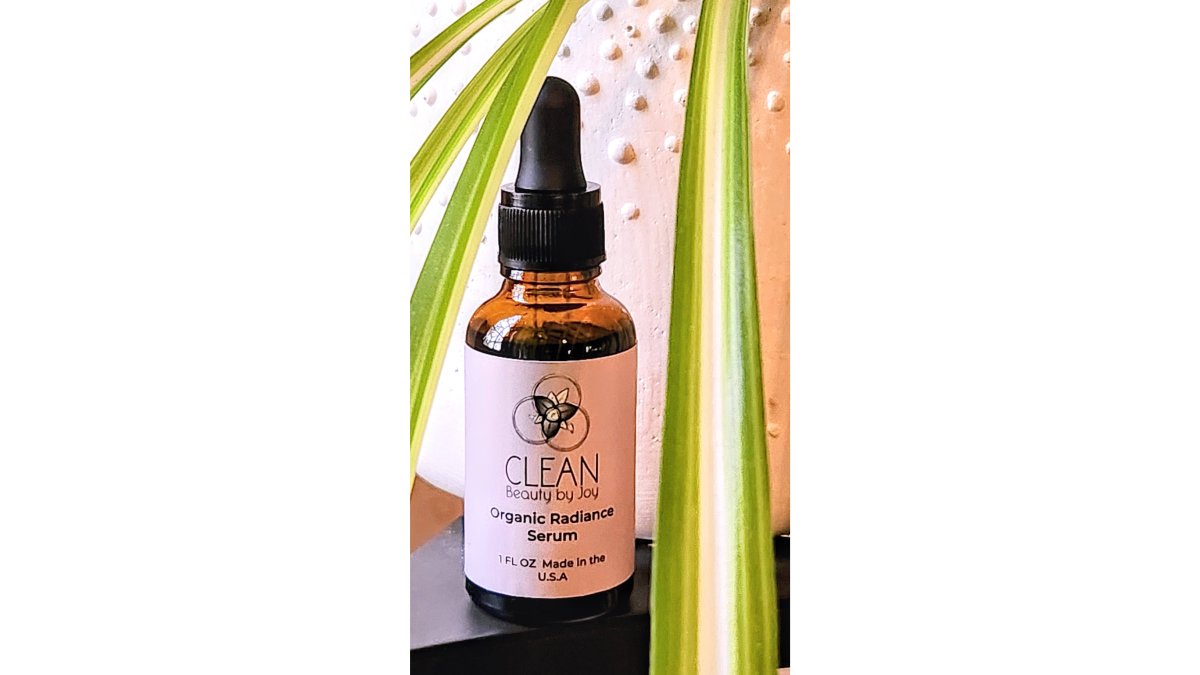
- Apply four to five drops of Organic Radiance Serum to damp skin morning and night, then moisturize.
- Give any routine six weeks before judging it and avoid changing too many products at once.
Table of Contents
- What Skin Microbiome Balance Actually Means for Clogged Pores
- How to Improve Skin Microbiome Without Over-Treating
- Probiotics for Skin: What the Evidence Says and What It Cannot Do
- Skincare for Clogged Pores and Sensitive Skin: Ingredient-Level Guidance
- Skin Barrier Repair Ingredients That Support Microbial Balance
- How to Tell Microbiome Imbalance from Acne, Rosacea, or Dermatitis
- Building a Step-by-Step Routine for Your Skin Type
- Choosing Microbiome-Friendly Products at Clean Beauty by Joy
- Frequently Asked Questions
What Skin Microbiome Balance Actually Means for Clogged Pores
Your skin microbiome is the community of bacteria, fungi, and other microorganisms on your skin's surface.
A 2025 review in Biomedicines on microbiome and postbiotics in skin health describes therapies aimed at restoring microbial balance as promising, while noting the evidence is early rather than settled.
Here's how to think about microbiome skincare.
How Dysbiosis Shows Up on Your Face
- Redness and warmth after cleansing
- Clogged pores and small comedones along the jaw and forehead
- Tightness that lasts more than a few minutes after washing
- Breakouts that worsen when you add stronger actives
How to Improve Skin Microbiome Without Over-Treating
For a practical day-by-day version of this, see our guide on how to protect skin microbiome: 7 daily steps.
Probiotics for Skin: What the Evidence Says and What It Cannot Do
A 2025 review indexed in PubMed Central on microbiome-based interventions for skin aging and the barrier reports that probiotic formulations have shown potential to improve hydration, reduce transepidermal water loss, and ease signs of inflammation. It gives no sample sizes or effect sizes.
Prebiotics, Probiotics, and Postbiotics: The Difference That Matters
Prebiotics are ingredients that feed the beneficial bacteria already on your skin. Probiotics are the live or inactivated microorganisms themselves. Postbiotics are the beneficial compounds those microbes produce, and a 2026 review in Cosmetics on the skin microbiome notes that postbiotics may strengthen the epidermal barrier, regulate inflammation, and support microbiome balance.
| Type | What It Is | What It Does | Best For |
|---|---|---|---|
| Prebiotic | Food for good bacteria | Supports existing flora | Maintenance routines |
| Probiotic | Live or inactivated microbes | May improve hydration and calm irritation | Reactive, sensitive skin |
| Postbiotic | Compounds microbes produce | May strengthen the barrier | Barrier repair after over-exfoliation |
Skincare for Clogged Pores and Sensitive Skin: Ingredient-Level Guidance
A clogged pore is a follicle filled with sebum, dead skin cells, and sometimes bacteria. To unclog it, an ingredient must dissolve the plug, speed up cell turnover so the plug sheds, or reduce the sebum feeding it, each route with a different risk profile for sensitive skin.
The Three Routes Out of a Clogged Pore
3. Regulate sebum (niacinamide). Niacinamide does not dissolve a plug, but it reduces the sebum supply that refills it and supports ceramide production, which is why it pairs well with acids. The studied range is typically 2% to 5%; higher percentages add no benefit for most people and can sting sensitive skin.
What to Avoid on Sensitive, Congestion-Prone Skin
- Daily benzoyl peroxide over the whole face. It is effective against acne bacteria but is drying and can bleach fabric. Reserve it for spot treatment, not a full-face layer.
- Physical scrubs with walnut or apricot particles. The friction damages the barrier without reaching the plug.
- Alcohol-based toners labeled "purifying." They leave skin tight, which is a barrier signal, not a clean one.
- Stacking multiple acids in one routine. Two exfoliants on the same night multiply irritation without multiplying results.
Ingredients That Feed Beneficial Bacteria vs. Ingredients That Strip Them
Our Organic Radiance Serum contains jojoba, rosehip seed, and black seed oils.

Skin Barrier Repair Ingredients That Support Microbial Balance
Our Organic Radiance Serum pairs jojoba, rosehip seed, black seed, neem, and castor oils with blue tansy and black spruce essential oils. The formula carries natural vitamins A, C, and E. It is free from parabens, synthetics, and fragrance.
Apply four to five drops to clean, damp skin morning and night, then follow with moisturizer.
How to Tell Microbiome Imbalance from Acne, Rosacea, or Dermatitis
If your skin reacts to nearly everything, that pattern points to a damaged barrier rather than a new allergy. Pull back to a three-step routine for two weeks before assuming you need a different product.
When to See a Dermatologist Instead of Switching Products
See a dermatologist if you have painful cysts, spreading rash, oozing, or symptoms that persist past six weeks of gentle care. Also go if redness comes with swelling around the eyes or if a new product causes hives. Those are not microbiome problems, and no serum will fix them.
Building a Step-by-Step Routine for Your Skin Type
Here is how we would build morning and evening routines by skin type. Every routine below assumes a pH-balanced cleanser as the base.
Sensitive or Reactive Skin
Morning: rinse with lukewarm water (no cleanser if skin is very reactive), barrier moisturizer, mineral sunscreen. Evening: pH-balanced cleanser, Organic Radiance Serum on damp skin, barrier moisturizer.
Phase-in order: moisturizer first for two weeks, then add the serum at night. Hold off on any exfoliant until skin has been comfortable for a full month.
Acne-Prone Skin
Morning: gentle gel cleanser, niacinamide serum, lightweight moisturizer, sunscreen. Evening (alternating): cleanser, then either salicylic acid (two nights weekly) or Organic Radiance Serum on the off nights, followed by moisturizer.
Phase-in order: cleanser and moisturizer first, then niacinamide, then salicylic acid. Do not add the serum and the acid in the same week.
Dry or Menopausal Skin
Morning: cream cleanser or water rinse, Organic Radiance Serum on damp skin, richer moisturizer, sunscreen. Evening: cream cleanser, serum on damp skin, richer moisturizer.
Phase-in order: swap the cleanser first, then add the serum morning and night. Dry skin often tolerates the serum twice daily because the oil base supports the barrier rather than stripping it.
Oily but Dehydrated Skin
Morning: gel cleanser, niacinamide, lightweight moisturizer, sunscreen. Evening: gel cleanser, Organic Radiance Serum at night only, lightweight moisturizer.
Phase-in order: niacinamide first, then the serum at night. Oily skin can mistake dehydration for a need to cleanse more; adding a barrier-supporting serum often reduces the oil rebound.
How to Measure Progress and Avoid Over-Treatment
Give any routine six weeks before judging it. Changing too many products at once is the most common reason people never learn what works.
Choosing Microbiome-Friendly Products at Clean Beauty by Joy
Our Organic Radiance Serum contains organic, cold-pressed oils and is free from parabens, synthetics, and fragrance. It costs $65.00 for a 1 fl oz bottle, approximately 600 drops.
Frequently Asked Questions
How long does it take to see changes after switching to microbiome skincare?
Most people notice less tightness and irritation within one to two weeks of gentle cleansing and barrier support. Visible changes in clogged pores and redness typically take four to six weeks, because the skin barrier and microbial balance recover gradually. A 2025 review in Biomedicines notes that probiotic and postbiotic approaches show promise for skin health but does not give a fixed timeline. Track one thing at a time, such as the number of new blemishes per week, rather than judging by feel alone.
What do probiotics for skin actually do, and can they clear clogged pores?
Probiotics for skin are used in two ways: topical formulas that introduce beneficial microbes or their byproducts, and fermented ingredients that feed existing species. A 2025 review indexed in PubMed Central reports that probiotic formulations have shown potential to improve hydration, reduce transepidermal water loss, and ease signs of inflammation, though the review gives no numerical results. Clearing clogged pores usually requires gentle cleansing and non-comedogenic hydration alongside these ingredients, not probiotics alone.
How can I tell if my skin has a bacterial imbalance or just acne?
Microbiome imbalance often shows up as widespread redness, stinging after products that used to feel fine, and flaking alongside breakouts. Acne tends to concentrate in the T-zone and jawline with distinct comedones or pustules. Rosacea brings flushing and visible vessels, while dermatitis brings itching and scaly patches. If over-the-counter gentle skincare does not improve things in six to eight weeks, or if you have painful cysts, see a dermatologist for a proper diagnosis before adding more actives.
Which skin barrier repair ingredients should I look for in a microbiome-friendly routine?
Clean Beauty by Joy's Organic Radiance Serum combines jojoba, rosehip, black seed, and neem oils with blue tansy and frankincense.
Your skin does not need ten steps. It needs a barrier that holds, a microbiome that stays diverse, and a routine gentle enough to let both recover. Clean Beauty by Joy makes nontoxic botanical skincare for exactly that, including pregnancy-safe and menopause-friendly formulas that support the skin's natural balance. Get started with Clean Beauty by Joy and give your skin the six weeks it needs to settle.


