

Last Updated: November 21, 2026
Quick Summary
The best makeup for menopausal dryness is a hydrating liquid or serum foundation with buildable coverage and a dewy finish, layered over a hydrating serum and primer. Look for glycerin, aloe, squalane, or shea butter, and avoid heavy matte formulas and powder on dry areas.
- Apply serum to damp skin, then moisturizer, and let it absorb fully before priming.
- Use one pump of foundation for sheer coverage and two for medium, building only where needed.
- Skip setting powder on dry areas, or use it only on the T-zone.
- Finish with cream blush, since powder blush can sit on top of dry skin.
- Patch-test any new serum or primer on the jawline for two to three days first.
Table of Contents
- Why Menopausal Dryness Changes How Makeup Behaves
- The Best Foundation for Menopausal Skin: What to Look For
- Hydrating Foundation for Dry Skin: Our Top Picks
- Makeup for Dry Mature Skin: Building a Routine That Lasts
- Best Makeup for Menopausal Dryness and Wrinkles: Coverage by Concern
- How to Stop Cakey Makeup on Flaking, Tight Skin
- Find Your Shade and Start Your Hydrating Routine
- Frequently Asked Questions
Why Menopausal Dryness Changes How Makeup Behaves
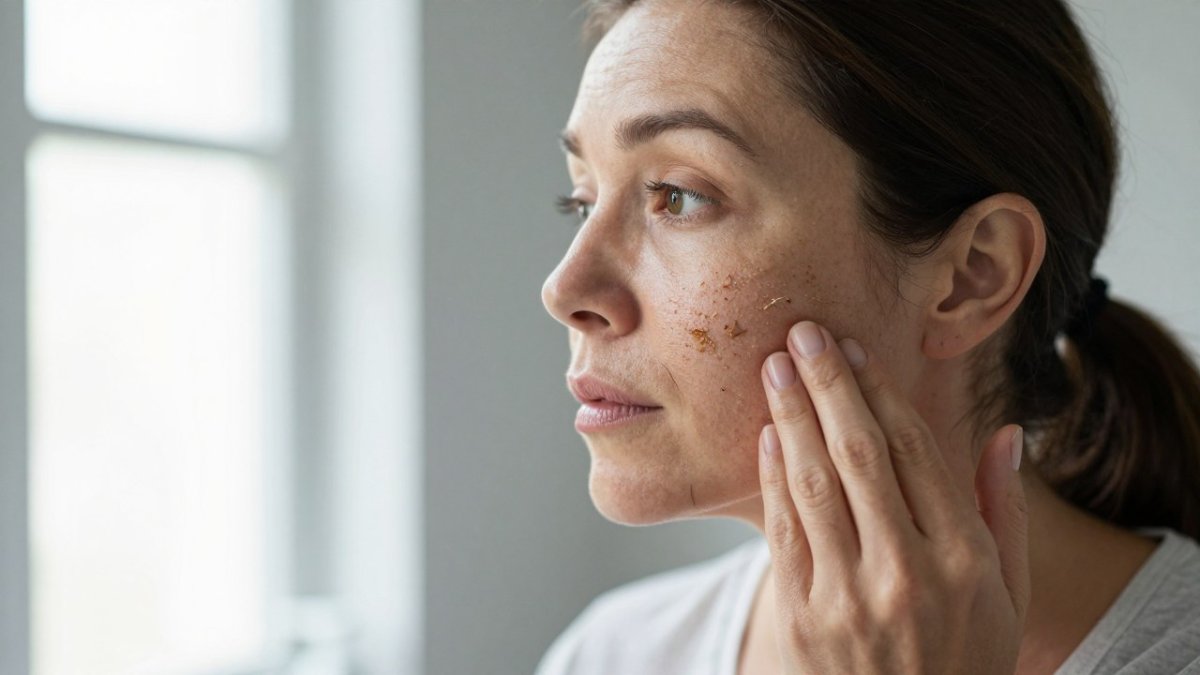
Here's the part most guides skip: the problem usually isn't your foundation. It's the state of the skin underneath it.
The practical fix is a hydrating base, a buildable liquid foundation, and a routine that layers moisture before pigment.
Cleveland Clinic overview of menopause and skin changes
The Best Foundation for Menopausal Skin: What to Look For
The best foundation for menopausal skin is a liquid or serum formula with hydrating ingredients, buildable coverage, and a dewy or natural finish. Heavy matte formulas and powder-heavy textures tend to emphasize dryness, flaking, and fine lines rather than soften them.
Three things separate a foundation that works on dry, mature skin from one that doesn't:
- A hydrating base. Look for aloe, glycerin, squalane, or shea butter near the top of the ingredient list. These help the formula glide instead of drag.
- Buildable, lightweight coverage. Sheer-to-medium coverage you can layer lets you even out tone without caking. Heavy full-coverage formulas are the ones that settle into lines.
- A radiant or dewy finish. A soft glow reflects light and blurs the look of texture. Flat matte finishes do the opposite.
Shade matching matters more than ever, too. As skin thins, undertones can shift, so a shade that matched two years ago may now read slightly off. Test on the jawline in natural light before committing.
Ingredients That Help Dry, Sensitive Skin
Ingredients that help dry, sensitive skin fall into two groups: humectants that draw in water and emollients that seal it there. Glycerin and aloe vera are classic humectants. Jojoba oil, squalane, shea butter, and rosehip seed oil are emollients that soften and support the skin barrier.
For reactive, hormonal skin, fragrance-free formulas are worth prioritizing. Our Organic Radiance Serum is built around cold-pressed jojoba, rosehip, and black seed oils plus frankincense, and it's designed to hydrate and calm without synthetic fragrance.
American Academy of Dermatology guidance on dry skin care
Hydrating Foundation for Dry Skin: Our Top Picks
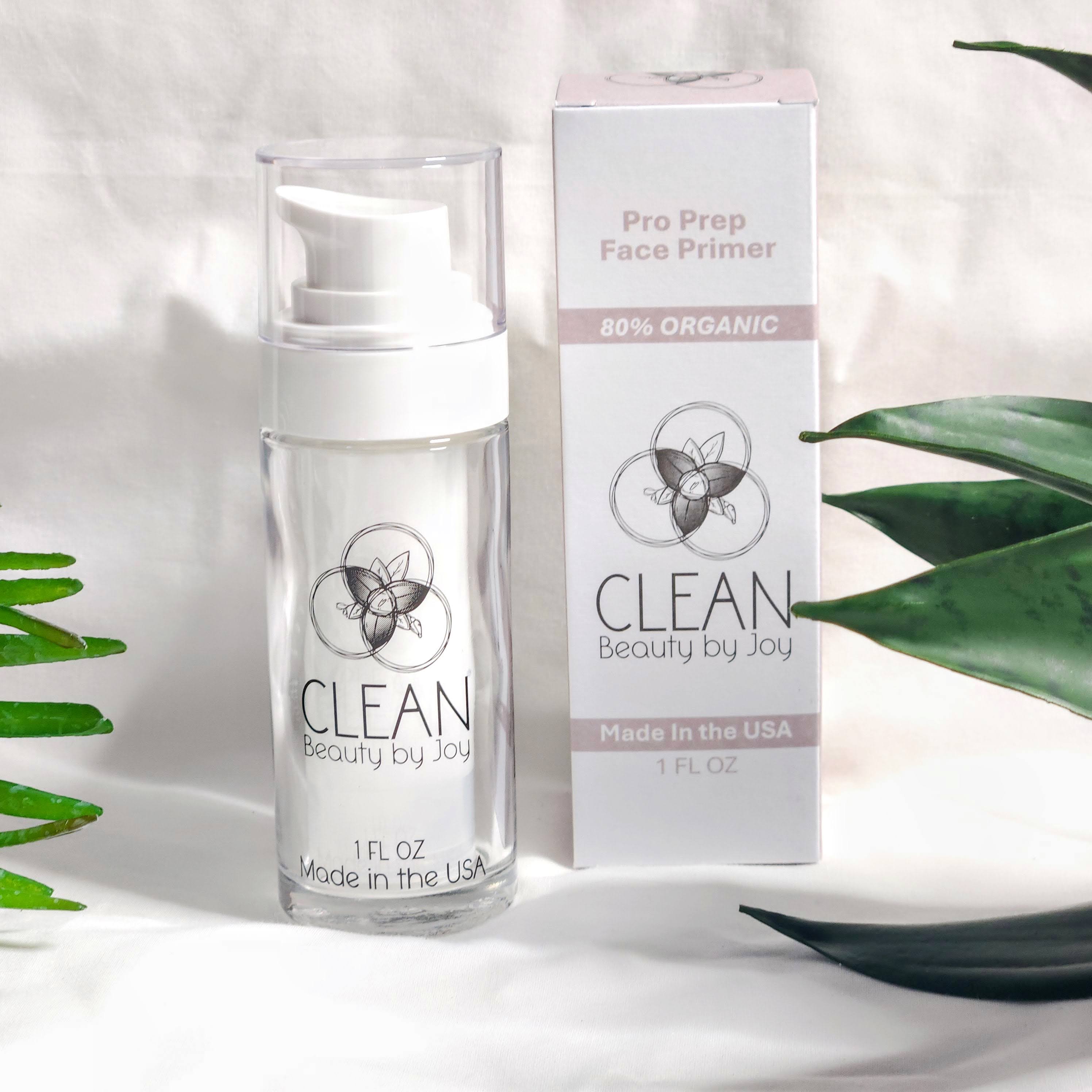
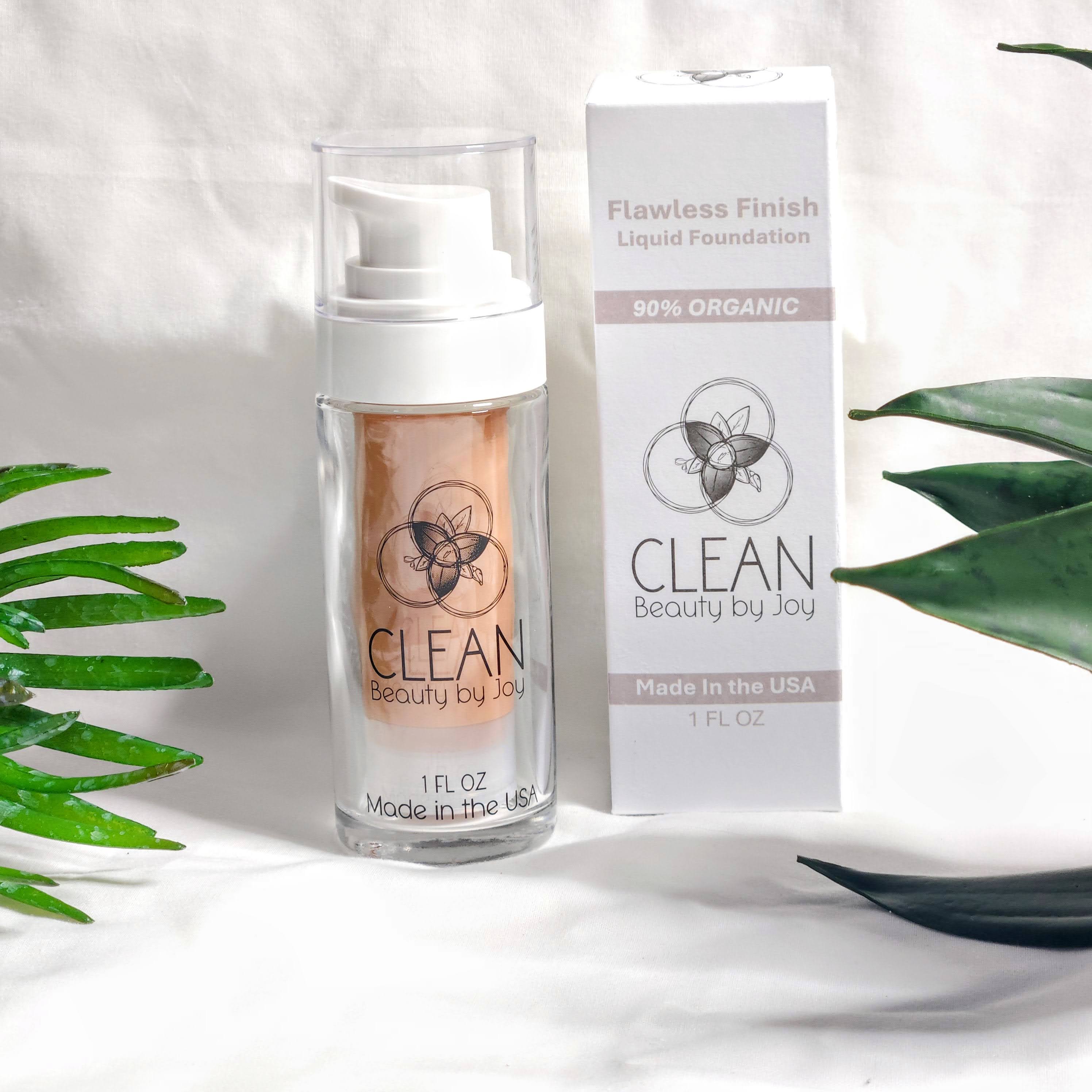
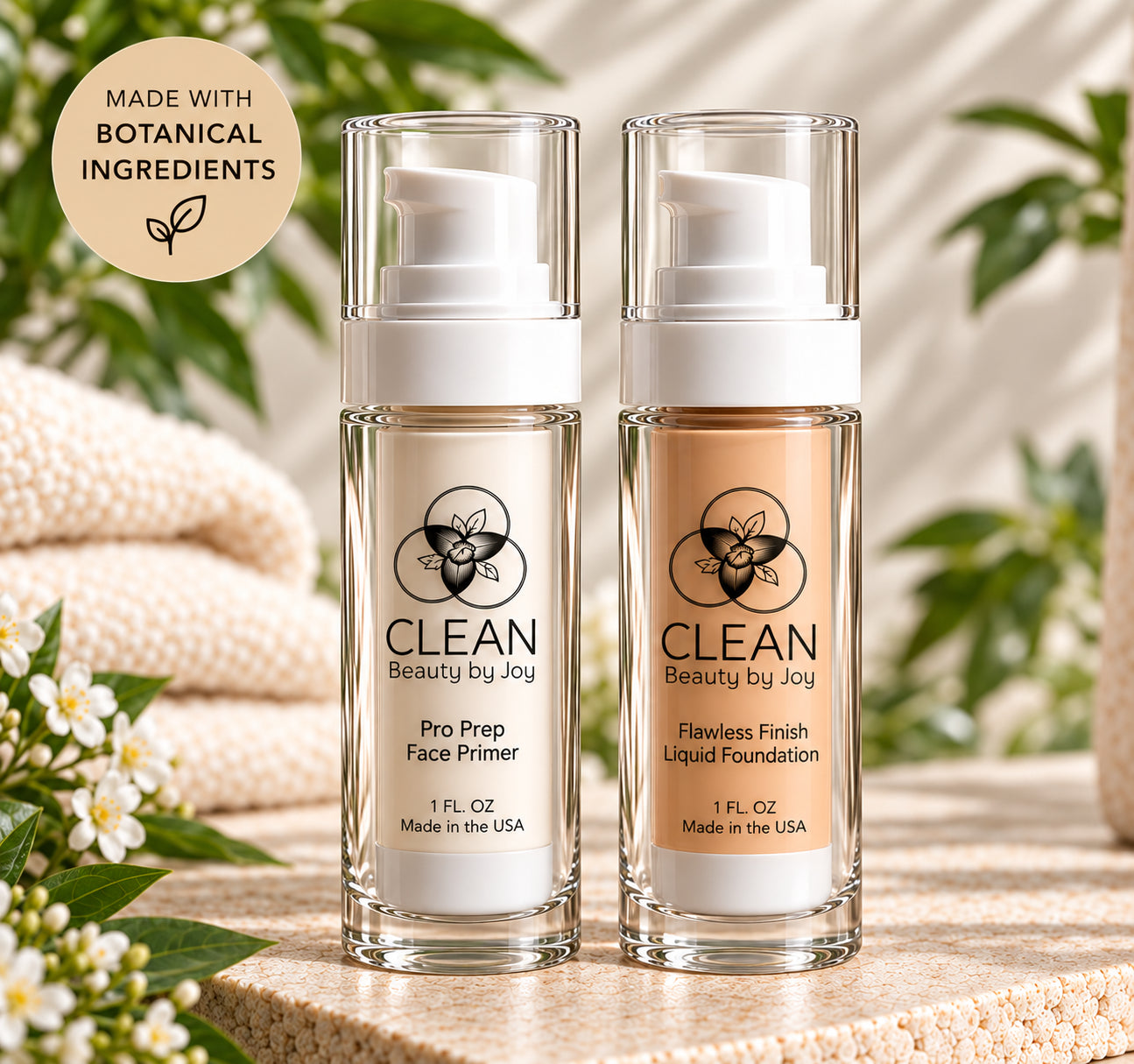
Our top pick for hydrating foundation on dry skin is the Flawless Finish Liquid Foundation, a buildable formula with aloe vera and glycerin that gives a natural, dewy finish. For extra staying power and smoothing, pair it with the Pro Prep Face Primer as a two-step system. Each pick is chosen for how it behaves on menopausal dryness specifically: thin, tight, reactive skin that loses moisture faster and grips pigment less evenly.
Here's how the options compare:
| Product | Finish | Coverage | Best For |
|---|---|---|---|
| Flawless Finish Liquid Foundation | Natural, dewy | Sheer to medium, buildable | Everyday coverage on dry, reactive skin |
| Two-Step Primer + Foundation System | Soft-focus, smooth | Medium, buildable | Smoothing fine lines and pores |
| Pro Prep Face Primer | Velvety base | N/A (primer) | Gripping foundation all day |
| Organic Radiance Serum | Radiant prep | N/A (skincare) | Hydrating before makeup |
Flawless Finish Liquid Foundation
This is our pick for most people dealing with menopausal dryness. The formula includes aloe vera to soothe, glycerin to soften the look of fine lines, and zinc oxide for sun protection, and it comes in ten shades across cool, warm, and neutral undertones.
Best for: dry, mature, and sensitive skin that wants a natural finish. Skip if: you prefer a matte, full-coverage look, or if you react to zinc oxide, which some sensitive-skin users find drying over long wear.
Two-Step Primer + Foundation System
If foundation alone still catches on texture, this system addresses the cause. The Pro Prep Face Primer creates a velvety, non-greasy canvas that blurs the look of pores and fine lines, then the foundation layers over it for seamless coverage.
Best for: anyone who wants a smoother, soft-focus finish. Skip if: you prefer a minimal one-product routine, or if your skin is currently flaking heavily, since primer can emphasize flakes until the underlying dryness is addressed.
Pro Prep Face Primer
Used on its own under a different foundation, this primer is the smoothing step. It's non-greasy and designed to blur texture without the silicone-heavy slip that can pill on dry skin.
Best for: anyone whose foundation separates or settles into pores by midday. Skip if: your skin is tight or stinging, which usually signals a barrier issue that primer will not fix.
Organic Radiance Serum
This is the skincare step that makes the makeup step work. For a fuller skincare routine, doTERRA's Ikise Skincare line is another fragrance-conscious option to layer underneath makeup.
Best for: prep before foundation on dry, reactive skin. Skip if: you prefer a single-step routine, or if you are sensitive to essential oils such as frankincense and need to patch-test first.
How to Choose Between Them
If you want one product, start with the Flawless Finish Liquid Foundation and add the serum underneath. If foundation alone still looks patchy by afternoon, add the Pro Prep Face Primer.
Watch out: patch-test any new serum or primer on the jawline for two to three days before using it on your full face, since reactive menopausal skin can respond to ingredients that were fine a few years ago.
International Journal of Women's Dermatology on menopause and skin
Makeup for Dry Mature Skin: Building a Routine That Lasts
Makeup for dry mature skin lasts when you layer hydration first, then primer, then foundation, and keep powder to a minimum. The order matters more than the products.
Here's the routine we recommend:
- Hydrate. Apply serum to damp skin, then a moisturizer. Let it absorb fully.
- Prime. Smooth on a thin layer of primer to create a soft canvas and help foundation grip.
- Apply foundation in thin layers. One pump for sheer coverage, two for medium. Build only where you need it.
- Spot-conceal. Use concealer sparingly under the eyes and on redness rather than all over.
- Skip setting powder on dry areas. If you must set, use it only on the T-zone.
- Finish with cream blush. Cream formulas melt into dry skin; powder blush can sit on top.
Watch out: applying foundation to skin that hasn't fully absorbed moisturizer is the most common cause of patchy, separating makeup. Give your skincare a minute to settle.
Best Makeup for Menopausal Dryness and Wrinkles: Coverage by Concern
The best makeup for menopausal dryness and wrinkles depends on which concern bothers you most, how much coverage you actually want, and what the air around you is doing. Fine lines call for a smoothing primer and a dewy finish. Flaking calls for hydration and light layers. Redness calls for buildable coverage in the right undertone. The decision guide below matches coverage level and finish to the concern, then adjusts for climate and season.
| Concern | Coverage Level | Finish | What Helps | What to Avoid |
|---|---|---|---|---|
| Fine lines | Sheer to medium | Dewy or natural | Smoothing primer, serum underneath | Heavy matte formulas, powder |
| Flaking, tightness | Sheer, layered | Natural | Serum under makeup, thin layers, damp sponge | Powder over dry patches, thick coats |
| Redness | Medium, buildable | Natural to soft-focus | Buildable coverage in the right undertone | Full-coverage cakey layers |
| Dullness | Sheer to medium | Radiant | Radiant finish, cream blush | Flat matte textures |
| Loss of firmness | Medium | Soft-focus | Primer that blurs, cream formulas | Stiff, drying textures |
Choosing Coverage Level
Sheer coverage evens out tone while letting skin show through, which is the most forgiving option on dry, textured skin. Medium coverage hides more redness and uneven tone but needs a hydrating base underneath so it doesn't settle. Fuller coverage is the hardest to wear on menopausal dryness because it needs more product, and more product is what catches on flakes and lines.
Adjusting for Climate and Season
Dry indoor heating in winter pulls moisture from skin, so winter is the time to lean sheerer and add a richer serum step. Summer humidity can make dewy finishes look greasy, so a soft-focus primer helps. If you spend the day in air conditioning, treat it like winter dryness and keep a hydrating serum in your bag. The same foundation can look flawless in July and patchy in January, and the fix is the prep layer, not a new product.
Matching Finish to Concern
A radiant finish reflects light and blurs texture, which helps with dullness and fine lines. A soft-focus finish scatters light to soften pores and firmness loss.
For a deeper comparison of hydrating options, our guide to foundation for dry menopausal skin breaks down the best picks by shade and finish.
Watch out: layering a full-coverage foundation over a rich serum without letting the serum absorb is the most common cause of pilling and separation, so give skincare a minute to settle before you build coverage.
How to Stop Cakey Makeup on Flaking, Tight Skin
Cakey makeup on flaking, tight skin usually comes from too much product applied to skin that's too dry. The fix is less foundation, more hydration, and a damp application tool.
Try these adjustments:
- Use a damp sponge or a quality brush. A damp sponge presses product into skin instead of sitting on top. Our Blend it Foundation Brush is designed to buff and blur.
- Apply in thin layers. Build coverage gradually rather than applying one thick coat.
- Exfoliate gently once or twice a week. Removing dead surface cells helps foundation glide.
Watch out: over-exfoliating reactive skin can make tightness and flaking worse. Keep it gentle and infrequent.
Harvard Health on skin care as you age
Find Your Shade and Start Your Hydrating Routine
Finding your shade starts with undertone, not depth. Check the veins on your wrist: blue or purple suggests cool, greenish suggests warm, and a mix suggests neutral. Then test two close shades on your jawline in daylight and pick the one that disappears into your skin.
Not sure? Our samples of primer and foundation let you test shades before committing. Once you've matched, the Flawless Finish Liquid Foundation and the Two-Step Primer + Foundation System give you a complete hydrating base. If you'd like to support skin from the inside as well, doTERRA's Yarrow|Pom Oil Capsules are a supplement aimed at better hair, skin, and nails, and the Foundational Wellness Bundle covers everyday nutritional support.
Menopausal dryness doesn't have to mean giving up on foundation. It means choosing formulas that hydrate, layering them properly, and being patient with your skin as it changes.
Frequently Asked Questions
What is the best foundation for menopausal skin?
Look for a liquid or serum foundation with hydrating ingredients like aloe vera, glycerin, and squalane, and a dewy or natural finish rather than matte. A buildable formula lets you control coverage without caking. The Flawless Finish Liquid Foundation is one option: it uses aloe vera to nourish, glycerin to soften the look of fine lines, and zinc oxide for sun protection, and it comes in ten shades across cool, warm, and neutral undertones.
How can I keep foundation from looking cakey on dry skin?
Prep is the deciding factor. Apply a hydrating serum and moisturizer first, then a primer like Pro Prep Face Primer to create a smooth, velvety base. Use one pump of foundation for sheer coverage and build up only where you need it, pressing the product in with a damp sponge or brush instead of sweeping it. Skip setting powder on dry areas, or use it only on the T-zone.
Does menopause make skin drier?
Yes. Falling estrogen levels reduce oil production and the skin's ability to hold moisture, which is why many women notice tightness, flaking, and more visible fine lines during perimenopause and menopause. That shift changes how makeup sits on the skin, so formulas that worked in your thirties can suddenly look patchy. Switching to hydrating, buildable formulas and adding a barrier-supporting serum usually makes the biggest difference.
What makeup ingredients should I look for in foundation for dry skin?
Prioritize humectants and emollients: glycerin, aloe vera, squalane, shea butter, and jojoba oil. These help the formula glide rather than cling to flakes. Avoid heavy fragrance and drying alcohol if your skin is reactive. A serum step before foundation, such as Organic Radiance Serum with jojoba, rosehip, and black seed oils, adds lasting moisture and helps the foundation blend more smoothly.
How should I apply makeup to dry, mature skin?
Apply skincare first and let it settle for a minute. Use a primer to blur the look of pores and fine lines, then apply foundation with a damp sponge or a dense brush using pressing motions. Build thin layers rather than one heavy one. Cream blush and a hydrating lip color keep the whole look consistent, and avoiding powder on the cheeks and forehead prevents the flat, dry finish that emphasizes texture.


