

Last Updated: November 19, 2026
Quick Summary
During the first trimester, avoid alcohol, tobacco, cannabis, and unprescribed drugs, along with raw meat, raw seafood, and undercooked eggs. Cap caffeine at about 200 mg per day, skip high-mercury fish, and stay out of hot tubs and saunas. Wash your hands after handling raw food or cat litter.
- Cook poultry to 165°F and ground meat to 160°F, and skip sushi, raw oysters, and runny eggs.
- Avoid shark, swordfish, king mackerel, tilefish, and bigeye tuna; choose salmon, shrimp, or canned light tuna.
- Do not stop a prescribed medication on your own; call your provider or pharmacist before your next dose.
- Have someone else change the cat litter, or wear gloves and wash your hands well.
- Call your provider right away for heavy bleeding, severe one-sided pain, fainting, or fluid leaking from the vagina.
Table of Contents
- First Trimester Basics: What Changes in Weeks 1-13
- Foods to Avoid in the First 3 Months of Pregnancy Care Food Plan
- Substances to Stop: Alcohol, Tobacco, Cannabis, and Other Drugs
- Medication and Supplement Safety Before You Stop Anything
- Household Activities to Avoid During Pregnancy
- Heat, Exercise, and Contact Sports: Everyday Activity Guidance
- Danger Signs of Pregnancy in the First Trimester
- Dos and Don'ts of Pregnancy First Trimester: A Quick Checklist
- Frequently Asked Questions
First Trimester Basics: What Changes in Weeks 1-13
The first trimester is the first 13 weeks of pregnancy, when the placenta forms and the baby's brain and spinal cord begin to develop. This is why so many everyday choices suddenly matter.
You do not need to wrap yourself in bubble wrap. You do need to know which risks are real. A qualitative study on first-trimester experiences found that seeking information during these early weeks helps pregnancy feel real and meaningful.
Here is our short answer: skip alcohol, tobacco, cannabis, and unprescribed drugs. Avoid raw meat, raw seafood, and undercooked eggs. Cap caffeine, skip high-mercury fish, and stay out of hot tubs and saunas.
Below, we walk through each one, plus the exposures most guides skip.
Foods to Avoid in the First 3 Months of Pregnancy Care Food Plan
Food safety is the most practical place to start. A 2025 Midwifery study on early-pregnancy food adaptations notes that pregnant women are advised to avoid foods that may carry bacteria linked to toxoplasmosis, listeria, and salmonella. The risk is foodborne illness, not the food itself, which is why the fix is usually a substitution or a cooking step, not a permanent ban.
Raw and Undercooked Meat, Seafood, and Eggs
Cook meat until it is no longer pink inside, and order steaks and burgers well done for now. Use a food thermometer when you can: poultry should reach 165°F, and ground meat should reach 160°F. Skip sushi, raw oysters, clams, and ceviche. Avoid runny eggs and homemade cookie dough. Also pass on unpasteurized milk, soft cheeses like brie and feta unless labeled pasteurized, and deli meats unless heated until steaming.
Safer swaps: cooked sushi rolls with cooked shrimp or imitation crab, pasteurized feta and mozzarella, fully cooked eggs, and deli meat heated until steaming before it goes on the sandwich. Wash produce under running water, keep raw meat away from ready-to-eat foods on the cutting board, and refrigerate leftovers promptly.
Caffeine Limits and High-Mercury Fish
Caffeine crosses the placenta, so keep total daily intake modest. That includes coffee, tea, soda, energy drinks, and chocolate. A commonly cited ceiling is about 200 milligrams per day, roughly one 12-ounce cup of brewed coffee, but ask your healthcare provider what limit fits you, since body weight and other health factors change the answer.
For fish, avoid shark, swordfish, king mackerel, tilefish, and bigeye tuna. Salmon, shrimp, canned light tuna, and tilapia are lower-mercury choices. A common pattern is two to three servings of low-mercury fish per week. Ask your provider about local fish advisories if you catch your own.
Listeria, Toxoplasma, and the Handling Steps That Matter
Listeria is a bacteria that can grow at refrigerator temperatures and is linked to soft cheeses, unpasteurized dairy, and ready-to-eat deli products. Toxoplasma is a parasite that can live in undercooked meat and cat feces. If you are rethinking your makeup bag while you audit your routine, our guide to the best pregnancy-safe foundation for sensitive skin covers what to look for. You can also read whether nontoxic makeup for pregnancy is worth it, or check our guide to nontoxic makeup without parabens and phthalates before your next label read.
Here are the key food safety limits and swaps the article lays out for the first trimester.
| Item | Guidance | Note |
|---|---|---|
| Poultry | Cook to 165°F | Use a food thermometer |
| Ground meat | Cook to 160°F | No longer pink inside |
| Caffeine | About 200 mg per day | Roughly one 12-ounce brewed coffee |
| High-mercury fish | Avoid shark, swordfish, king mackerel, tilefish, bigeye tuna | Salmon, shrimp, canned light tuna, tilapia are lower-mercury |
| Low-mercury fish | Two to three servings per week | Ask about local fish advisories |
| Deli meats | Heat until steaming | Otherwise skip |
| Soft cheeses | Only if labeled pasteurized | Brie and feta otherwise avoided |
| Raw seafood and runny eggs | Skip sushi, raw oysters, clams, ceviche, runny eggs | Cooked sushi rolls are a safer swap |
Substances to Stop: Alcohol, Tobacco, Cannabis, and Other Drugs
No amount of alcohol is known to be safe in pregnancy, so the safest choice is none at all. That includes wine, beer, and the occasional "just one" cocktail. There is no trimester where drinking becomes fine.
Tobacco and nicotine raise real risks for fetal development and placental health. That covers cigarettes, vaping, chew, and nicotine pouches. Quitting is hard, and your healthcare provider can help with safer strategies.
Cannabis, stimulants, opioids, and recreational drugs all fall in the same category: stop, and tell your provider what you were using. They are not there to judge. They are there to keep you and your baby safe.
Medication and Supplement Safety Before You Stop Anything
Here is the part most guides get wrong. Do not stop a prescribed medication on your own.
Call your healthcare provider or pharmacist before your next dose. Bring the bottle, the exact dose, how often you take it, and the reason you take it. Ask three questions: Is this medicine still the right choice in pregnancy? Is there a pregnancy-preferred alternative?
A common pattern is that providers keep a medicine when the risk of an untreated condition outweighs the medication risk, and switch when a safer option exists.
Common Categories Worth Asking About
- Pain and fever relievers. Ask before using any over-the-counter pain reliever, including aspirin and combination cold medicines that contain several ingredients.
- Acne and skincare actives. Ask your provider before using any product with a retinoid, high-concentration salicylic acid, or hydroquinone.
- Herbal blends and 'natural' sleep aids. Many are not studied in pregnancy, and some interact with prenatal care. Treat a supplement label the same way you would a prescription label.
- High-dose vitamins. A prenatal vitamin is designed for pregnancy; megadoses of single vitamins are a different question. Ask before adding anything beyond your prenatal.
Watch out: never share or borrow a prescription from a friend or family member to 'bridge' a gap while you wait for an appointment, dosing and interactions are not transferable between people.
If you are weighing what goes on your skin, we cover ingredient guidance in our article on safe makeup ingredients for pregnancy. Our Organic Radiance Serum and doTERRA's Ikise Skincare are available if you want them, and you can ask your provider about any active ingredient you are unsure of before adding a new step. If you are looking for supplements that support the body and skin, doTERRA's Foundational Wellness Bundle is worth asking your provider about, too.
Household Activities to Avoid During Pregnancy
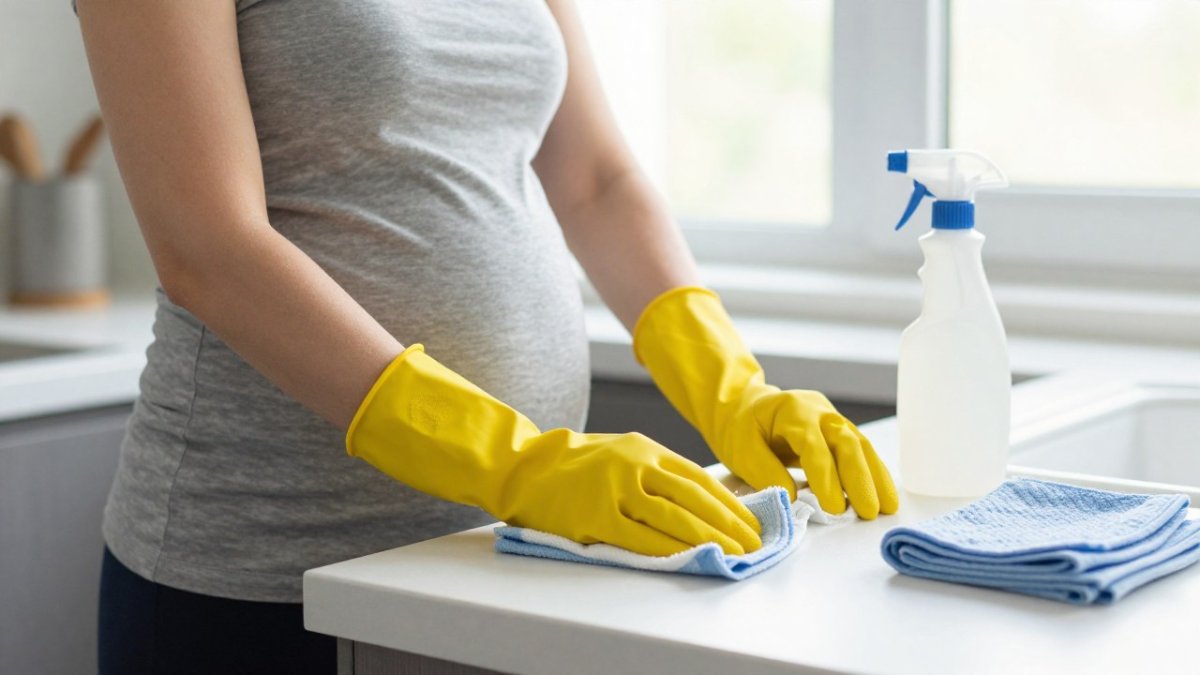
Household chores are fine in most cases, but a few carry real exposure risk. The biggest is cat litter, which can carry toxoplasmosis. Second is harsh chemical cleaners, especially in closed rooms.
If you are rethinking your makeup bag while you audit your routine, our guide to the best pregnancy-safe foundation for sensitive skin covers what to look for.
Cat Litter, Toxoplasmosis, and Cleaning Products
Toxoplasmosis is a parasite that can live in cat feces. If possible, have someone else change the litter box. If that is not an option, wear gloves, wash your hands well, and keep the box away from food areas.
For cleaning, ventilate the room, wear gloves, and skip oven cleaners and strong solvents. Vinegar, baking soda, and soap handle most jobs.
Heat, Exercise, and Contact Sports: Everyday Activity Guidance
Overheating is the concern here, not movement. Skip saunas, hot tubs, and steam rooms. Keep baths warm rather than hot. Drink water and take breaks when you exercise.
Walking, swimming, and prenatal yoga are usually great choices. Avoid contact sports where a ball or body could hit your belly, plus horseback riding, skiing, and anything with a fall risk. Ask your provider about your specific routine.
Danger Signs of Pregnancy in the First Trimester
Most symptoms are normal. Some are not. Call your healthcare provider right away if you notice:
- Heavy bleeding or bleeding with cramps
- Severe one-sided belly or pelvic pain
- Fainting, dizziness, or a racing heartbeat
- Fever, chills, or burning with urination
- Severe vomiting that keeps you from keeping fluids down
- Fluid leaking from the vagina
Trust your gut. If something feels wrong, call. No one will think less of you.
Dos and Don'ts of Pregnancy First Trimester: A Quick Checklist
Here are the dos and don'ts of pregnancy first trimester in one place. Save this list to your phone.
- Do take a prenatal vitamin and attend prenatal care visits
- Do cook meat, seafood, and eggs fully
- Do wash produce and your hands often
- Do ask before starting or stopping any medication
- Do keep moving with low-impact exercise
- Don't drink alcohol, smoke, or use cannabis
- Don't eat raw fish, raw meat, or runny eggs
- Don't use saunas or hot tubs
- Don't change cat litter bare-handed
- Don't ignore warning signs
Our makeup is built for this season of life. It uses natural botanicals and organic ingredients, and it is made for pregnant and nursing skin. You can shop the line whenever you are ready.
Your body is doing enormous work right now, and the avoid list can feel endless. Start with the big items, ask questions early, and give yourself grace on the rest. Clean Beauty by Joy makes nontoxic makeup for pregnancy, nursing, and postpartum skin, with botanicals that support the microbiome and ingredients chosen to reduce redness and hormonal breakouts.
Frequently Asked Questions
What should I do if I accidentally ate or used something I should avoid?
Don't panic. Most single exposures, like a bite of soft cheese or a glass of wine before you knew you were pregnant, are unlikely to cause harm, but you should still call your healthcare provider and tell them exactly what happened and when. Write down the food, product, or substance, the amount, and the timing. Watch for fever, vomiting, or unusual symptoms and report them right away. Your provider can decide whether any testing or monitoring is needed for your first trimester.
Can everyday exercise or work activities harm a pregnancy?
Most everyday movement is fine, and moderate exercise is generally encouraged during the first trimester. The activities to avoid are the ones with a real risk of falling or abdominal injury, such as contact sports, horseback riding, or downhill skiing. At work, steer clear of heavy lifting, climbing ladders, and exposure to solvents or strong fumes, and ask about accommodations if your job involves those tasks. Check with your healthcare provider before starting a new routine.
Which foods should I avoid during pregnancy?
Skip raw or undercooked meat, poultry, seafood, and eggs, plus unpasteurized dairy and juices. Deli meats and hot dogs should be heated until steaming, and refrigerated smoked seafood is best avoided. Limit high-mercury fish like shark, swordfish, and king mackerel, and keep caffeine to a modest level your provider confirms. Wash all produce and keep raw meat separate from ready-to-eat foods. These steps lower the risk of foodborne illness like listeria and salmonella during the first trimester.
What are the danger signs of pregnancy in the first trimester?
Call your healthcare provider right away for heavy bleeding, severe cramping, fever above 100.4 F, painful urination, or fluid leaking from the vagina. Seek emergency care for sharp one-sided abdominal pain, fainting, or shoulder pain, which can signal an ectopic pregnancy. Persistent vomiting that keeps you from keeping fluids down also needs urgent attention. Keep your provider's after-hours number saved in your phone so you can reach someone quickly during these first weeks.


