

Table of Contents
- What Safe Makeup Ingredients for Pregnancy Really Means
- Makeup Ingredients to Avoid During Pregnancy
- Is Salicylic Acid Safe During Pregnancy?
- Mineral Makeup During Pregnancy: Zinc Oxide, Titanium Dioxide, and Mica
- Safe Ingredients to Look For, by Product Type
- How to Read a Product Label and Spot Ingredient Synonyms
- Building a Pregnancy-Safe Makeup Routine
- If You Used Something You Shouldn't Have: Next Steps
- Frequently Asked Questions
Last Updated: October 5, 2026
What Safe Makeup Ingredients for Pregnancy Really Means
Safe makeup ingredients for pregnancy are those with established safety profiles when used topically at typical cosmetic concentrations, avoiding compounds linked to hormone disruption or developmental concerns.
The phrase gets thrown around loosely. "Safe" is not a single list of banned ingredients, and it is not a marketing badge.
Exposure context matters more than headlines.
Here is the practical takeaway: you do not need to overhaul your entire routine.
Makeup Ingredients to Avoid During Pregnancy
The ingredients most often flagged during pregnancy fall into a few clear groups: retinoids, hydroquinone, formaldehyde-releasing preservatives, certain parabens and phthalates, and the chemical sunscreen filter oxybenzone. These are the ones worth checking on a label before you buy.
Retinoids, hydroquinone, and formaldehyde-releasing preservatives
Retinoids are vitamin A derivatives used for acne and anti-aging. High-dose oral retinoids are known to cause birth defects, and while topical use delivers far less, most healthcare professionals advise avoiding topical retinoids during pregnancy as a precaution (pubmed.ncbi.nlm.nih.gov).
Hydroquinone is a skin-lightening agent used for melasma and hyperpigmentation. Because it is absorbed through the skin and its safety data in pregnancy is limited, it is generally recommended to avoid it and use gentler brightening alternatives instead.
Formaldehyde-releasing preservatives slowly release small amounts of formaldehyde to prevent bacterial growth. On labels, look for names like DMDM hydantoin, diazolidinyl urea, imidazolidinyl urea, and quaternium-15. Many people choose to avoid these during pregnancy out of caution.
Parabens, phthalates, and oxybenzone
Parabens (methylparaben, propylparaben, butylparaben) are preservatives with weak estrogen-like activity in lab studies. The evidence from typical cosmetic use is not strong, but many pregnant women prefer paraben-free formulas anyway, and that is a reasonable choice.
Phthalates are used to make fragrances last and plastics flexible.
Oxybenzone is a chemical sunscreen filter that is absorbed through the skin and has been detected in breast milk. For that reason, mineral sunscreens are usually the preferred choice during pregnancy.
Is Salicylic Acid Safe During Pregnancy?
Salicylic acid is generally considered safe during pregnancy in low concentrations and in rinse-off products, but leave-on treatments at higher concentrations are usually avoided.
This is one of the most common questions we hear, and the answer is more nuanced than a simple yes or no.
- Rinse-off products with salicylic acid, such as cleansers and toners, are widely considered acceptable because contact time is short and absorption is minimal.
- Leave-on products at higher concentrations, like peels and spot treatments, are typically avoided because more of the acid stays on the skin and can be absorbed.
- Oral salicylic acid (as in high-dose aspirin) is a different matter entirely and should only be used under a doctor's guidance.
The rule of thumb: if it tingles or burns, it is probably too strong for now.
Mineral Makeup During Pregnancy: Zinc Oxide, Titanium Dioxide, and Mica
Mineral makeup is often the easiest choice during pregnancy because its core ingredients, zinc oxide, titanium dioxide, and mica, are physically inert and sit on top of the skin rather than being absorbed.
Zinc oxide and titanium dioxide are the two mineral sunscreen ingredients. They work by reflecting and scattering UV light at the skin's surface.
Mica is a mineral used for shimmer and slip. It is chemically stable and widely used in pressed and loose powders.
Mineral sunscreen versus chemical sunscreen in your foundation
Your foundation can double as sun protection if it contains mineral filters. This is where a makeup-specific choice pays off, because you are already applying it every day.
| Feature | Mineral Sunscreen | Chemical Sunscreen |
|---|---|---|
| Active ingredients | Zinc oxide, titanium dioxide | Oxybenzone, avobenzone, octinoxate |
| How it works | Sits on skin, reflects UV | Absorbs into skin, converts UV |
| Absorption concern | Minimal | Higher, detected in breast milk |
| Best for pregnancy | Generally preferred | Often avoided |
Our Flawless Finish Liquid Foundation is built around zinc oxide for sun protection, alongside aloe vera to soothe and glycerin to hydrate. That combination means your base is working for your skin while it covers, not just sitting on top of it.

Safe Ingredients to Look For, by Product Type
The safest ingredients depend on where the product goes. A lipstick is ingested in small amounts throughout the day, while a blush stays on your cheeks. Matching the ingredient to the product type is the part most guides skip.
Foundation, lip products, eye products, and blush
Foundation: Look for zinc oxide, titanium dioxide, glycerin, and aloe vera. These hydrate and protect without the absorption concerns of chemical filters.
Lip products: This is the category to be strictest about, because you swallow a little with every meal. Our The One Organic Lipstick uses organic castor seed oil, candelilla wax, and shea butter, with no parabens or phthalates.

Eye products: Mascara and shadow sit near a mucous membrane, so gentleness matters. Chamomile and botanical extracts calm the area.
Blush: Mineral-based powders with mica and iron oxides are the simplest choice. Skip cream blushes heavy with synthetic fragrance.
How to Read a Product Label and Spot Ingredient Synonyms
Reading a label well comes down to knowing that the same ingredient can appear under several names. Cosmetic labels use INCI names, the international naming standard, so a flagged ingredient may not appear in the plain English you expect.
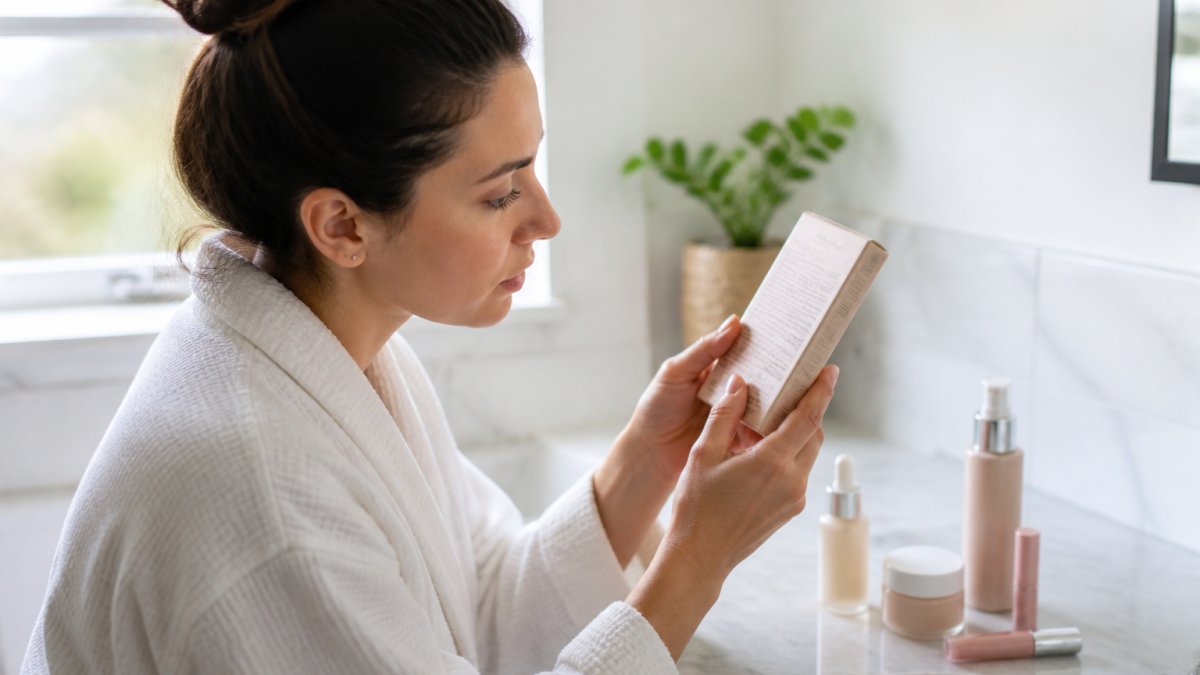
Here are the synonyms worth memorizing:
- Vitamin A / retinol appears as retinyl palmitate, retinyl acetate, retinoic acid, or tretinoin.
- Formaldehyde releasers hide as DMDM hydantoin, diazolidinyl urea, imidazolidinyl urea, or quaternium-15.
- Parabens end in "-paraben": methylparaben, ethylparaben, propylparaben, butylparaben.
- Phthalates often sit inside the word "fragrance" or appear as diethyl phthalate (DEP).
- Oxybenzone may also be listed as benzophenone-3.
A practical label check takes about thirty seconds: scan the last third of the ingredient list, where preservatives and fragrance usually sit, and look for those names. The FDA's guidance on cosmetic ingredient labeling explains how ingredients must be listed, which helps you know where to look.
One more thing worth knowing: terms like "natural," "clean," and "nontoxic" are not defined or enforced by any regulator for cosmetics. A certification like Leaping Bunny, which several of our products carry, is third-party verified.
Building a Pregnancy-Safe Makeup Routine
A pregnancy-safe makeup routine is less about buying all-new products and more about a few smart swaps plus better habits. Most women can keep the majority of their routine and change only the items that contain flagged ingredients.
Start by auditing what you already own:
- Set aside any retinoid or retinol product
- Replace hydroquinone with a gentler brightening option
- Swap chemical sunscreen for mineral
- Check lip products for parabens and phthalates
- Choose fragrance-free where you can
Application and hygiene habits that reduce risk
How you apply matters as much as what you apply. These habits lower your exposure and keep your skin calmer while hormones are already shifting it.
- Wash your hands before applying makeup. This sounds obvious, but it is the most common source of irritation and breakouts.
- Clean your brushes every week or two. Bacteria builds up on bristles and transfers to skin, which is more reactive during pregnancy.
- Do not share makeup. This is especially true for eye products.
- Replace mascara every few months. It is the product most likely to harbor bacteria near a mucous membrane.
- Apply less where it matters. A thinner layer of foundation means less product on your skin overall.
Hormonal skin changes during pregnancy often bring acne, redness, and melasma. A gentle routine that supports the skin's microbiome tends to handle those shifts better than an aggressive one.
If You Used Something You Shouldn't Have: Next Steps
Using a flagged ingredient once is not a reason to panic. Topical absorption from a single application is limited, and the ingredient categories worth avoiding are flagged for precautionary reasons, not because occasional use causes harm.
Here is what to do:
- Stop using the product. That is the main step.
- Do not start a detox or cleanse. There is nothing to flush out from a topical product.
- Write down what you used and when. Bring the list to your next prenatal appointment.
- Call your healthcare professional if you are worried. They can give you guidance specific to your situation, which no article can.
- Replace the product with a safer alternative and move on.
The evidence-based approach is calm and practical. One product does not undo months of careful choices, and the goal is a routine you can sustain, not a perfect one.
If you are looking for a starting point, our Flawless Finish Liquid Foundation, The One Organic Lipstick, and Baked Mineral Eye Shadow Trio are all built on the mineral and botanical ingredients covered here and are formulated with pregnancy, nursing, and postpartum skin in mind.

Pregnancy brings enough decisions without turning your makeup bag into a research project.
Frequently Asked Questions
What ingredients should I avoid in makeup when pregnant?
The main ones to skip are retinoids (retinol, retinyl palmitate, tretinoin), hydroquinone, and formaldehyde-releasing preservatives like DMDM hydantoin. Also limit oxybenzone in chemical sunscreens and check for phthalates hidden under the term 'fragrance.' Parabens are worth avoiding where you can, though the evidence on topical use is mixed. For salicylic acid, low concentrations in rinse-off or occasional products are generally considered acceptable, but ask your healthcare professional about leave-on formulas.
Is salicylic acid safe during pregnancy in makeup?
Salicylic acid is the ingredient most people ask about. At low concentrations in a rinse-off or spot-treatment product, it is generally considered low risk. The concern is with high-concentration leave-on products or oral forms. In makeup, salicylic acid appears in small amounts, often in acne-fighting foundations or concealers. If you use it once a day in a small area, most healthcare professionals consider that acceptable. Talk to your doctor if you use it across large areas of your face or body.
Are mineral makeup ingredients safe during pregnancy?
Mineral makeup is often a good choice during pregnancy because the main ingredients, zinc oxide, titanium dioxide, and mica, are not absorbed into the bloodstream in meaningful amounts when applied topically. Zinc oxide and titanium dioxide also provide physical sun protection, which is useful because pregnancy can make skin more sensitive to UV and melasma. Look for mineral foundations and eyeshadows that skip talc and added fragrance if your skin is reactive.
How can I check whether a makeup product is pregnancy-safe?
Start with the ingredient list on the product label. Look for INCI names, which are the standardized international terms. Search for the ingredients you want to avoid: retinol, retinyl palmitate, hydroquinone, oxybenzone, and DMDM hydantoin. Be aware that 'fragrance' or 'parfum' can hide phthalates. If a brand does not list full ingredients or uses vague terms, that is a red flag. When in doubt, ask your healthcare professional before using a new product.
What is a simple pregnancy-safe makeup routine?
Keep it minimal and focused on clean formulas. Start with a mineral-based foundation that contains zinc oxide or titanium dioxide for sun protection. Add a cream or powder blush with simple pigments like mica and iron oxides. For eyes, choose a baked mineral eyeshadow without talc. Finish with an organic lipstick made from castor seed oil, candelilla wax, and shea butter. Wash your brushes weekly and avoid sharing products to reduce bacteria.
Are retinoids in makeup safe to use during pregnancy?
No. Retinoids, including retinol and retinyl palmitate, are recommended to be avoided during pregnancy. They are related to vitamin A, and high doses of vitamin A have been linked to birth defects. Even though the amount in a makeup product is small, most healthcare professionals advise skipping them entirely while pregnant or breastfeeding. Check your foundation, concealer, and anti-aging products for any ingredient starting with 'retin-'.

