

Table of Contents
- Why Menopause Causes Itchy Skin
- Common Symptoms of Menopausal Pruritus
- How to Treat Itchy Skin Naturally During Menopause
- Building a Menopausal Skin Care Routine That Works
- Choosing the Best Moisturizer for Menopausal Skin
- Lifestyle Changes That Support Skin Health
- When to Seek Professional Help
- Frequently Asked Questions
Last Updated: October 4, 2026
Why Menopause Causes Itchy Skin
Menopause brings a cascade of changes to your body, and your skin often bears the brunt. If you're experiencing menopause itchy skin, persistent itching, dryness, or that maddening sensation that nothing seems to soothe, you're not alone. The reason menopause causes itchy skin is rooted in one critical shift: your body's production of estrogen declines sharply.
This hormonal drop isn't just an inconvenience. It fundamentally changes how your skin functions. When estrogen levels fall, your skin loses its ability to retain moisture effectively. The protective barrier that kept your skin plump and hydrated begins to weaken.
Understanding the mechanism behind menopause itchy skin is the first step to relief. Once you know what's happening, you can take targeted action to restore comfort and resilience to your skin.
The Role of Estrogen Decline in Skin Health
Estrogen does far more than regulate your menstrual cycle. This hormone actively supports skin health by stimulating collagen production and maintaining the skin's lipid barrier, the layer of natural oils that locks in moisture.
When estrogen declines during perimenopause and postmenopause, collagen production slows dramatically (Managing Menopausal Skin Changes). Your skin becomes thinner and loses elasticity. The lipid barrier weakens, allowing transepidermal water loss to increase. This means water evaporates from your skin faster than it can be replaced.
Additionally, estrogen helps regulate sebum production. Less estrogen means less natural oil, leaving your skin drier and more prone to irritation. The endocrine system's shift also affects your skin's ability to heal itself and maintain its natural pH balance.
How Hormonal Fluctuations Damage Your Skin Barrier
The skin barrier is your body's first line of defense. It keeps irritants out and moisture in. During perimenopause, hormonal fluctuations destabilize this barrier in multiple ways.
Hyaluronic acid, a molecule that holds water in your skin, becomes less abundant when estrogen drops. Skin sensitivity increases because the barrier can no longer filter out environmental irritants and allergens effectively. Inflammation rises as your skin struggles to maintain its protective function.
This is why you might notice that products you've used for years suddenly irritate your skin. Your skin barrier has become compromised.
Common Symptoms of Menopausal Pruritus
Menopausal pruritus, the medical term for itching related to menopause, shows up in distinct ways. Recognizing these symptoms helps you distinguish them from other skin conditions.
The itching often strikes without warning. It can be mild and manageable or intense enough to disrupt sleep. Many women report nighttime itching as particularly frustrating, since scratching during sleep causes additional damage.
Common symptoms include:
- Persistent itching on the face, neck, or décolleté
- Intense itching in intimate areas
- Dry, flaky patches that don't improve with regular moisturizer
- Redness and sensitivity to products you've used before
- Skin that feels tight, especially after cleansing
- A burning or prickling sensation beneath the skin
- Itching that worsens in dry environments or during winter months
Some women experience itching as their primary menopausal symptom. Others notice it alongside hot flashes, mood changes, and sleep disruption. The intensity varies widely, what matters is recognizing that this is a real, treatable symptom of hormonal change, not a sign that your skin is fundamentally damaged.
How to Treat Itchy Skin Naturally During Menopause
Relief doesn't require harsh chemicals or prescription medications. Many women find that natural approaches address the root cause: restoring hydration and supporting the skin barrier.
The key is consistency. Treating itchy skin naturally takes time because you're rebuilding your skin's function from the inside out. Most women notice improvement within 2-4 weeks of starting a dedicated routine.
Hydration and Moisture Retention Strategies
Hydration is your foundation. But it's not just about drinking water, it's about getting moisture into your skin and keeping it there.
Start with hydrating cleansers. Avoid foaming or stripping cleansers that remove natural oils. Use lukewarm water, not hot, which opens pores and increases moisture loss. Pat your skin dry gently rather than rubbing.
Apply serums while your skin is still damp. This traps water in the outer layers of your skin. Look for serums with hyaluronic acid, which holds up to 1000 times its weight in water.
Hydration strategies that work:
- Cleanse with gentle, cream-based or oil-based cleansers
- Apply serums to damp skin before moisturizer
- Use a heavier moisturizer at night than during the day
- Add a facial oil as the final step in your evening routine
- Keep a hydrating mist nearby to refresh skin throughout the day
- Avoid products with alcohol or strong fragrance
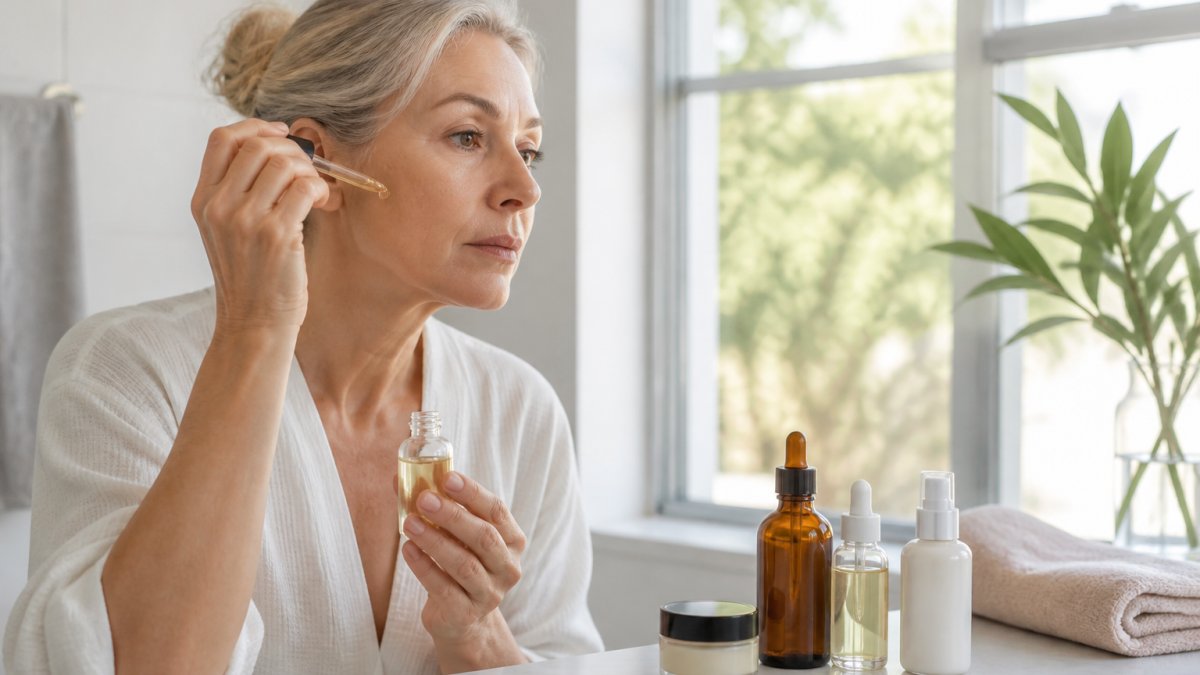
Consider the Organic Radiance Serum from Clean Beauty by Joy, which combines jojoba, rosehip seed, and black seed oils with frankincense and blue tansy.

Ingredient-Specific Skincare Approach
Not all moisturizers are created equal. During menopause, your skin needs specific ingredients that address hormonal dryness directly.
Ceramides are critical. These lipids are naturally present in your skin barrier but decline with age and hormonal change. Ceramide-rich products help restore the barrier's integrity.
Niacinamide supports sebum production and reduces inflammation. It's particularly helpful if your skin is both dry and sensitive.
Peptides and retinol support collagen production, though retinol should be introduced slowly since menopausal skin is often more sensitive.
Natural botanicals matter too. Frankincense has been used for centuries to support skin elasticity and reduce inflammation. Blue tansy soothes irritation.
Ingredients that support menopausal skin:
- Ceramides (restore barrier function)
- Hyaluronic acid (holds moisture)
- Niacinamide (reduces inflammation, supports oil production)
- Peptides (stimulate collagen)
- Natural oils: jojoba, rosehip seed, black seed, castor oil
- Botanical extracts: frankincense, blue tansy, neem
- Glycerin (humectant that draws water to skin)
Avoid ingredients that can irritate sensitive, menopausal skin: fragrance, alcohol, strong acids without buffering, and products designed for oily skin.
Building a Menopausal Skin Care Routine That Works
A successful routine for menopausal itchy skin has a specific structure. It's not complicated, but it must be consistent.
The goal is to cleanse gently, hydrate deeply, and protect your skin barrier. You don't need 10 products. You need the right ones, used in the right order.
Morning and Evening Steps for Optimal Hydration
Morning routine (5 minutes):
- Cleanse with a gentle, cream-based cleanser. Avoid hot water.
- Apply a hydrating toner or essence while skin is damp.
- Apply serum to damp skin (this is the hydration step).
- Apply lightweight moisturizer.
- Use SPF 30+ sunscreen (UV damage worsens menopausal skin issues).
Evening routine (10 minutes):
- Cleanse with the same gentle cleanser.
- Apply hydrating toner while skin is damp.
- Apply serum to damp skin.
- Apply richer moisturizer (heavier than morning).
- Optional: Add facial oil as final step for extra nourishment.
The order matters. Serums penetrate better on damp skin. Moisturizer seals in hydration. Oils go last because they're occlusive.
Consistency beats perfection. A simple routine you follow every day outperforms a complex routine you skip. Many women find that adding just one product, a quality serum like the Organic Radiance Serum, makes a dramatic difference within weeks.
Choosing the Best Moisturizer for Menopausal Skin
Not every moisturizer works for menopausal skin. The best formulas combine hydration with barrier support.
Look for moisturizers that feel nourishing without being greasy. During menopause, you need richer formulas than you might have used before, but they should absorb fully rather than sitting on your skin.
What to Look for in Formulations
The best moisturizer for menopausal skin contains:
- Ceramides (restore barrier)
- Hyaluronic acid (hold water in skin)
- Natural oils (provide lipids your skin isn't producing)
- Antioxidants (protect against environmental damage)
- Soothing botanicals (reduce inflammation)
Avoid moisturizers with:
- Fragrance (even "natural" fragrance can irritate)
- Alcohol (drying)
- Silicones (can trap bacteria and irritants)
- Heavy waxes that don't absorb
The texture should feel luxurious but not suffocating. You should be able to apply makeup over it without pilling or sliding.
Consider your climate and season. In winter or dry climates, you may need a heavier formulation. In summer, a lighter gel-cream might work better while still providing adequate hydration.
Many women find that the right serum matters more than the moisturizer. A quality serum with botanical oils and hyaluronic acid can transform your skin even when paired with a simple moisturizer. Clean Beauty by Joy's Organic Radiance Serum, with its blend of jojoba, rosehip seed, black seed, and neem oils, supports the skin's natural ability to retain moisture while reducing inflammation.
Lifestyle Changes That Support Skin Health
Your skincare routine is only half the equation. What you do outside your routine matters just as much.
Sleep quality directly affects skin health. During sleep, your body increases blood flow to the skin and rebuilds collagen. Poor sleep worsens inflammation and itching. Aim for 7-9 hours nightly.
Hydration from within supports skin from within. Drink water consistently throughout the day. Most women benefit from 8-10 glasses daily, though individual needs vary.
Stress increases inflammation and can trigger or worsen itching. Practices that calm your nervous system, meditation, gentle movement, time in nature, directly support your skin.
Environmental factors matter. Dry air worsens menopausal itching. Use a humidifier, especially in your bedroom. Avoid very hot showers, which strip natural oils.
Lifestyle changes that support menopausal skin:
- Get 7-9 hours of quality sleep
- Drink 8-10 glasses of water daily
- Practice stress-reduction techniques
- Use a humidifier in dry environments
- Take lukewarm showers instead of hot
- Avoid tight clothing that irritates skin
- Protect skin from sun damage with SPF daily
- Limit alcohol, which dehydrates skin
- Eat foods rich in omega-3 fatty acids and antioxidants
These changes work synergistically with your skincare routine.
When to Seek Professional Help
Most menopausal itching responds well to dedicated skincare and lifestyle changes. But sometimes professional support makes a difference.
See a dermatologist if:
- Itching is severe or interferes with daily life
- Your skin shows signs of infection (warmth, pus, increased redness)
- Itching persists despite consistent skincare for 6-8 weeks
- You develop new symptoms like hives or severe swelling
- You're unsure whether your symptoms are related to menopause
A dermatologist can rule out other conditions and recommend treatments if needed. Some women benefit from topical corticosteroids for short-term relief during the most intense periods.
Your primary care doctor can also help.

Menopausal itching is frustrating, but it's also temporary. Your skin is responding to a real, measurable change in your body's hormone production.
The combination of targeted skincare, lifestyle support, and patience creates lasting relief. Start with a simple routine focused on hydration and barrier support.
Frequently Asked Questions
Does low estrogen cause dry, itchy skin during menopause?
Yes. Estrogen decline directly impacts collagen production and the skin's ability to retain moisture. Lower estrogen levels reduce hyaluronic acid in the skin, weaken the lipid barrier, and increase transepidermal water loss. This combination causes the dryness and itching many women experience during perimenopause and postmenopause. Addressing hydration and supporting skin barrier function can help restore comfort.
What are the best natural ways to treat menopausal skin itching?
Natural approaches include using plant-based oils rich in essential fatty acids (jojoba, rosehip seed, black seed), applying hyaluronic acid serums to lock in moisture, and using emollients that support the lipid barrier. Avoiding irritants, staying hydrated internally, managing stress, and getting adequate sleep all support skin healing. Many women find that consistent, gentle moisturizing with nontoxic formulations designed for sensitive skin provides significant relief.
How often should I moisturize my skin during menopause?
Apply moisturizer twice daily—morning and night—on damp skin to seal in hydration. Many women benefit from adding an extra hydrating layer at night, since nighttime itching is common during menopause. If your skin feels tight or itchy during the day, a lightweight hydrating mist or serum can provide relief without feeling heavy. Consistency is key; regular moisturizing helps restore and maintain skin barrier function.
When should I see a dermatologist about menopausal skin itching?
See a dermatologist if itching is severe, persistent despite consistent skincare, spreads to large areas, causes bleeding or infection from scratching, or interferes with sleep and daily life. A dermatologist can rule out other conditions, recommend topical corticosteroids if needed, and discuss whether hormone replacement therapy might help. Persistent symptoms warrant professional evaluation to ensure proper diagnosis and treatment.

