

Last Updated: November 24, 2026
Quick Summary
Choosing the right pregnancy skin primer means matching the formula to the skin shift you actually have, whether that is dryness, oiliness, sensitivity, or uneven texture. Look for a short ingredient list with hydrating bases like aloe vera and jojoba oil, and skip retinoid hybrids, strong fragrances, and chemical exfoliants. Patch-test every new primer for at least three days before wearing it on your full face.
- Dryness in pregnancy can be addressed with a hydrating primer containing aloe vera, jojoba oil, and glycerin.
- Oily skin does best with a lightweight, non-greasy, soft-focus primer rather than a harsh mattifying formula.
- Reactive skin needs a short ingredient list with no strong fragrances or essential oil blends.
- Apply one to two pumps after moisturizing and let primer set for a minute before foundation.
- Layer a dedicated broad-spectrum sunscreen underneath, since primer with SPF is applied too sparingly to protect.
Table of Contents
- How Pregnancy Changes Your Skin and Your Primer Needs
- What Makes a Pregnancy-Safe Makeup Primer
- Using a Pregnancy-Safe Makeup Checker Before You Buy
- The Best Primer for Dry Skin During Pregnancy
- The Best Primer for Oily Skin During Pregnancy
- Patch-Testing and Applying Your Primer Without Irritation
- Find Your Primer Match at Clean Beauty by Joy
- Frequently Asked Questions
How Pregnancy Changes Your Skin and Your Primer Needs
Pregnancy rewrites your skin, often week by week, and choosing the right pregnancy skin primer starts with understanding what actually shifted. Hormonal changes can leave skin drier, oilier, more reactive, or all three at once. A primer that worked before pregnancy may now pill, cling to flakes, or trigger irritation.
Reviews indexed in PubMed Central have examined the safety profile of topical products used during pregnancy, and researchers consistently note that hormonal changes drive noticeable skin issues. That is the practical starting point: your primer needs to match your skin today, not the skin you had a year ago.
At Clean Beauty by Joy, we hear from expectant mothers every week who are unsure where to begin. Below, we break down the most common shifts and which primer formula suits each one.
The Most Common Skin Shifts in Pregnancy
Four changes come up again and again:
- Dryness and dehydration: oil production can drop, leaving skin tight and flaky
- Increased oiliness: some women swing the other way, especially in the T-zone
- Sensitivity and reactivity: skin that tolerated a full routine may sting or flush
- Uneven texture and visible pores: hormonal acne and congestion change how makeup sits
Your primer should address the shift you actually have. A pore-blurring formula on flaking skin makes texture look worse. A rich hydrating base on oily skin slides off by noon.
Here are the four common skin shifts in pregnancy and the primer formula that suits each one.
| Skin shift | What happens | Primer that suits it |
|---|---|---|
| Dryness and dehydration | Oil production can drop, leaving skin tight and flaky | Hydrating formula with aloe vera, jojoba oil, glycerin |
| Increased oiliness | Some women swing the other way, especially in the T-zone | Lightweight, non-greasy, soft-focus formula |
| Sensitivity and reactivity | Skin that tolerated a full routine may sting or flush | Short ingredient list, no strong fragrances or essential oils |
| Uneven texture and visible pores | Hormonal acne and congestion change how makeup sits | Soft-focus formula that minimizes pores and fine lines |
What Makes a Pregnancy-Safe Makeup Primer
A pregnancy skin primer is a cosmetic base chosen for texture and wear, not a treatment product. The most important caveat: primer is not a replacement for sunscreen or acne treatment, and retinoid-containing primer hybrids are best avoided during pregnancy.
That distinction matters more than any ingredient list. Many primers are marketed as skincare hybrids, and those hybrids are where the risk concentrates.
The FDA's cosmetics and pregnancy guidance notes that U.S. law does not require cosmetic products or ingredients to have FDA approval before they go on the market. That is not a verdict on any product's safety. It simply means "clean" and "FDA approved" are not the same claim, and you should read labels rather than trust front-of-pack language.
We look for three things in a primer: a short ingredient list, hydrating base ingredients like aloe vera and jojoba oil, and no active drug ingredients. For a deeper look at gentle base formulas, see our guide to pregnancy safe foundation for sensitive skin.
Ingredients to Avoid in a Primer
Keep the avoid list short and specific:
- Retinoids and retinoid esters: skip primer hybrids that include them
- Salicylic acid in leave-on hybrids: fine in a rinse-off cleanser, worth skipping in a primer
- Strong fragrances and essential oil blends: a common trigger for reactive skin
- Chemical exfoliants: not what a primer is for
If you are cross-checking a broader list, our first trimester avoid list covers foods, substances, and activities in one place.
Using a Pregnancy-Safe Makeup Checker Before You Buy
A pregnancy-safe makeup checker is a simple screening process, not an app or a certification. Run every primer through the same four questions before you spend money.
- Read the full ingredient list, not the marketing panel. Look for the avoid list above.
- Check the product type. Is it a cosmetic base or a treatment hybrid? Cosmetic bases are simpler.
- Search the brand's own ingredient glossary. If a brand will not list ingredients plainly, that tells you something.
- Ask your provider about anything you do not recognize. A pharmacist or your prenatal care team can answer specific ingredient questions faster than a forum can.
What most guides miss is that a product labeled natural or organic is not automatically safer in pregnancy. Botanicals can be sensitizers too. The question is not "natural or synthetic," it is "what is actually in this, and does my skin tolerate it."
The Best Primer for Dry Skin During Pregnancy
For dry, flaky, or dehydrated skin, the best primer is a hydrating one that locks in moisture and creates a smooth base without gripping flakes. Look for aloe vera, jojoba oil, and glycerin near the top of the ingredient list.
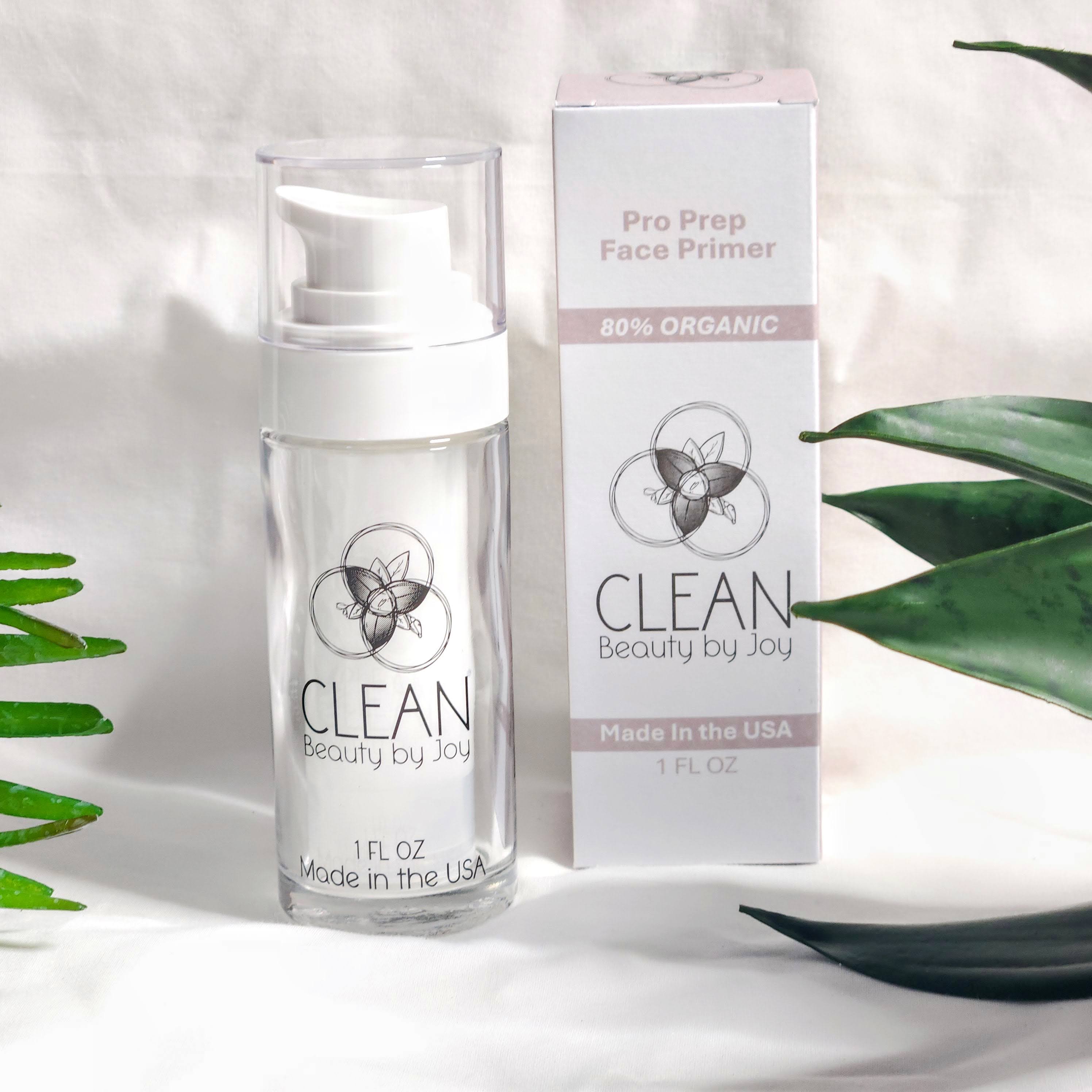
Our pick is the Pro Prep Face Primer. It uses aloe vera for healing and nourishing, plus jojoba oil for moisturizing and improving elasticity. It is lightweight, non-greasy, and odorless, so it preps skin without adding another scent trigger. Vitamin E, green tea leaf extract, and rosemary leaf extract round out the formula.
If dryness is the underlying issue, layer a skin-supporting serum underneath. Our Organic Radiance Serum is designed for exactly that step, and it pairs well under primer.
Best for: dry, tight, or flaky skin that needs hydration before foundation. Skip if: your skin is oily and breaks down primers within a few hours.
The Best Primer for Oily Skin During Pregnancy
The best primer for oily skin during pregnancy is a lightweight, non-greasy formula that blurs pores without adding heavy silicones or oils. Texture control matters more than oil absorption here.
A common mistake is reaching for the most mattifying primer on the shelf. Harsh mattifiers can trigger rebound oiliness and irritation on already reactive skin. A soft-focus formula that minimizes the appearance of pores and fine lines gives you the finish without the tightness.
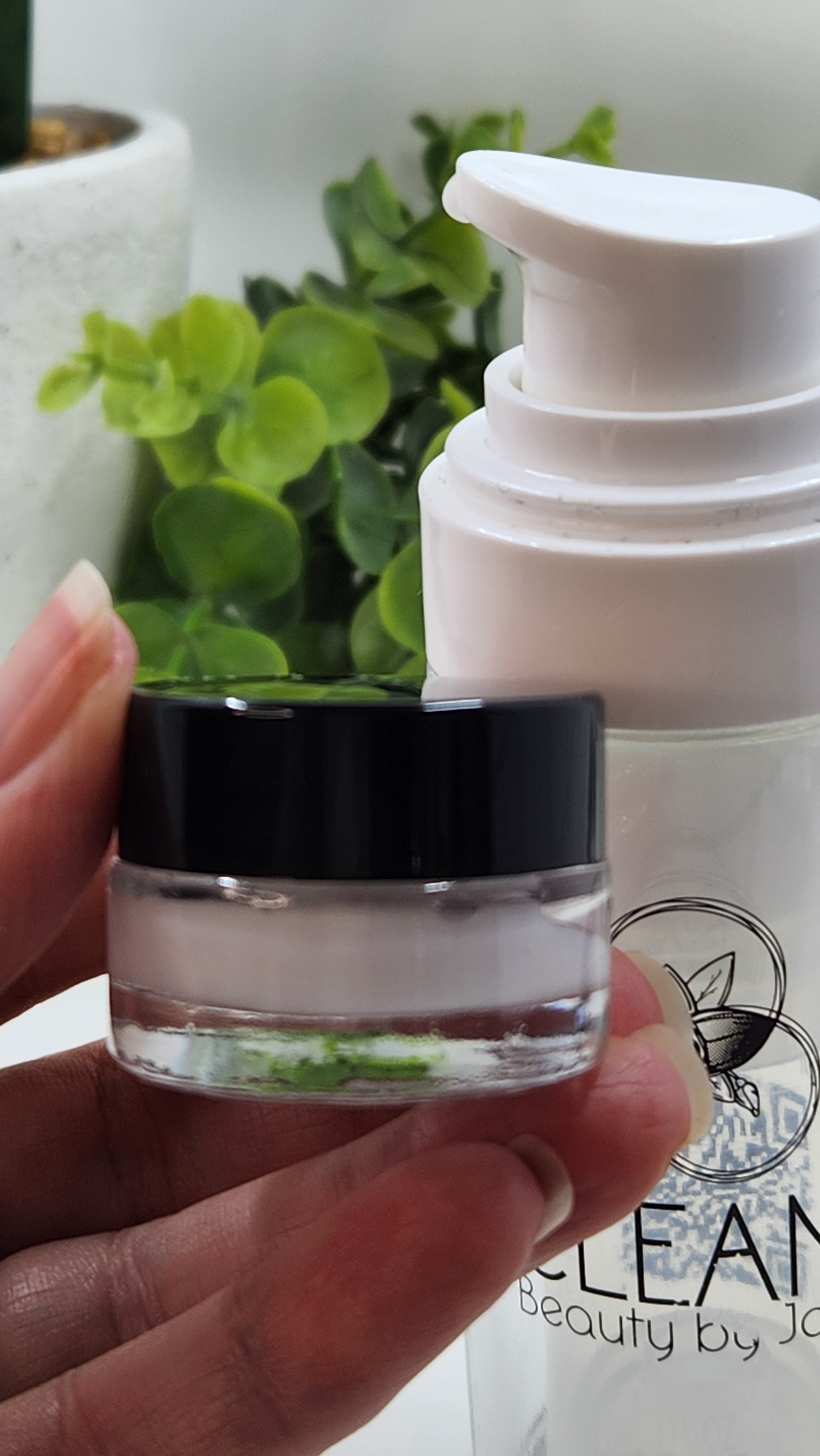
The Pro Prep Face Primer works for oily skin too, because it is non-greasy and grips foundation rather than sitting on top of it. Apply one to two pumps after moisturizing, and let it set for a minute before foundation. If you want to test it first, the sample size is a low-commitment way to see how your skin responds.
Best for: combination and oily skin that needs pore blurring and all-day grip. Skip if: you want a mattifying finish, since this formula is soft-focus rather than matte.
Patch-Testing and Applying Your Primer Without Irritation
Patch-test every new primer for at least three days before wearing it on your full face. Reactive skin during pregnancy can react to products it previously tolerated, so a test run is not optional. Here is the routine we recommend:
- Apply a small dot to your inner forearm or jawline
- Wait 24 hours and check for redness, stinging, or bumps
- Repeat for two more days in the same spot
- If clear, apply to half your face for one day before going full-face
Stop using the product and return it if you see spreading redness, swelling, or a rash that does not settle within a day. If a reaction is severe or does not improve, contact your prenatal care team rather than waiting it out.
Application matters as much as the formula. Use clean fingertips, one to two pumps for face and neck, and always apply after moisturizing. Let your moisturizer absorb for a minute or two before primer goes on.
Watch out: pilling is usually a layering problem, not a formula problem. If your primer balls up under foundation, check the order first. The reliable sequence is moisturizer, then sunscreen, then primer, then foundation. Give each layer a moment to set.
Wear and touch-ups are the other half of application. A hydrating primer generally holds foundation for six to eight hours before shine breaks through, while a soft-focus formula may need a blotting paper at midday rather than more powder.
Finally, remember that primer is not sunscreen. A primer with SPF is applied too sparingly to deliver the labeled protection, so layer a dedicated broad-spectrum sunscreen underneath and reapply it through the day. If you want a skin-supporting step before primer, our Organic Radiance Serum is designed to go on after cleansing and before moisturizer.
Find Your Primer Match at Clean Beauty by Joy
Your skin will keep changing through pregnancy, nursing, and postpartum, so the primer that fits in month two may not fit in month eight. Start with the shift you have now, patch-test, and adjust as your skin settles.
That is the whole approach: match the formula to the change, keep the ingredient list short, and do not treat primer as skincare. If you are ready to see the product this guide has been building toward, you can shop the Pro Prep Face Primer and read the full ingredient list yourself.
Pregnancy skin changes are unpredictable, but your makeup base does not have to be. Clean Beauty by Joy formulates with organic, vegan, gluten-free, non-GMO ingredients, including aloe vera and jojoba oil for hydration and vitamin E, green tea leaf extract, and rosemary leaf extract for protection against blue light and free radicals. Every formula is made for pregnant, nursing, and postpartum skin. Get started with Clean Beauty by Joy and give your changing skin a base it can actually tolerate.
Frequently Asked Questions
How do I choose a makeup primer during pregnancy?
Start with what your skin is doing now, not what it did before pregnancy. Dry, flaky patches call for a hydrating primer with aloe or jojoba, while an oily T-zone does better with a lightweight, non-greasy formula. Read the full ingredient list rather than trusting a 'clean' label, and patch-test on your inner arm for a few days before using it on your face. A pregnancy skin primer should support your makeup and your comfort, not replace sunscreen or acne treatment.
What ingredients should I avoid in makeup primer during pregnancy?
Pay closest attention to retinoid-containing primer hybrids, since these combine makeup with an active that many women choose to skip during pregnancy. The FDA notes that cosmetics do not require pre-market approval, so a product being sold does not confirm it is safe for pregnancy. Reviews of topical products in pregnancy also flag hormonal skin changes as a reason to keep your routine simple. If an ingredient list is unclear, ask the brand directly before buying.
Can I use my usual primer while pregnant?
Sometimes, but check the formula first. If your regular primer contains retinoids or a long list of actives, set it aside until you have spoken with your doctor. A simple, hydrating primer with recognizable ingredients is usually easier to tolerate when skin turns reactive. Your skin may also have changed type entirely, so a primer that worked for oily skin last year may now feel tight and drying. Reassess rather than assume.
What should I do if a primer irritates my skin?
Stop using it and return to the plain moisturizer your skin already tolerates. Note what was in the primer so you can compare it with products that have worked before. Wait for redness or stinging to settle before trying anything new, then patch-test the next option on your inner arm for two to three days. If irritation is severe or persists, contact your healthcare provider, especially if you are also nursing.


